Showing posts with label blog issues. Show all posts

Monday, August 20, 2018

The First Ten Years of The A&P Professor!

On July 4, 2008, I published the first post on this blog—thereby launching The A&P Professor. 

I picked July 4—U.S. Independence Day—as my start date so that it would be easy for me to remember. It didn't work, though. It just yesterday occurred to me that I'd missed the tenth anniversary! Better a tiny bit late than never, eh?

I started The A&P Professor as a way to share what I'd learned—and am still learning—about the teaching of human anatomy & physiology. Having had a wonderful mentor in my early years of teaching of A&P (thank you, Sr. Virginia), and scores of colleagues sharing their A&P teaching wisdom in the Human Anatomy & Physiology Society (HAPS), I felt like I wanted to pass along the many treasures I'd collected over three decades.

And, well, I'm a writer. Meaning it's my nature to write things and share them. So I guess a blog was a natural fit for me, eh?

At first, I thought it might also be a way to share the "inside story" of my various textbooks, lab manuals, and other publications. But I soon realized that The A&P Professor works best when I don't do that. So I soon moved that aspect to other outlets and focus on the art and science of teaching A&P, period.

Soon came the website at theAPprofessor.org where I posted a lot of resources for teaching A&P. A year or so ago, the website got a big makeover and more modern design that works well on mobile devices. During that process, a lot of old stuff was tossed out and the website streamlined to be more of a professional development venue.

Along the way, I added a newsletter version of the blog, so that you can get an emailed copy of each new post as soon as it's posted—so you don't have to keep an eye on the blog.

The A&P Professor has long been registered as a trademark in the U.S., so we can all count on it being what it is and with the same person running it—and not something else entirely.

Along the way, I've added social media presence in Facebook, Twitter, Instagram, YouTube, and other channels. And a daily, curated roundup of science and teaching headlines at Nuzzel.

And, oh boy, have I heard from many of y'all over the years! It warms my heart when you stop me at a HAPS meeting, drop me an email note or tweet, or give me a call and tell me how much this or that thing I mentioned in my blog or another outlet has helped you. Or better, has got you thinking about a new direction to go in. You know, that feeling you get when a student or alum has told you that something you shared with them has truly helped them—or lit their own creative spark. There's not a feeling like it in the world, is there?

You're probably tired of hearing about (or just hearing) my podcast featuring content updates and teaching strategies for A&P. This latest (ad)venture is just the latest of the many ways I've been working to promote continuous improvement in the teaching of human anatomy and physiology. Mostly my own. As they say... when we teach, we learn. They're right!

I hope you'll continue your support of The A&P Professor for the next ten years.


For those who have not yet heard any of the new podcast series, try the first episode and move forward from there.


Monday, November 27, 2017

Planning The A&P Professor Podcast Series

I've been looking at the possibility of launching a podcast series from The A&P Professor. Doing a bit of preliminary planning, taking workshops on how to do it right, doing daily vocal warm-ups—that sort of thing.

But since all my The A&P Professor work is done on my own time and my own dime—and only if and when it actually helps other A&P teachers—I want to make sure it'll be something y'all want before I jump in with both feet.

I also need some input on what you'd be most interested in hearing on a hip podcast from The A&P Professor.

So I'm taking the obvious next step—a quick survey.

Can you spare about two minutes of your time to give me your vote up or down on this idea?

Just go to my-ap.us/2hReiGb and take the brief, anonymous survey.

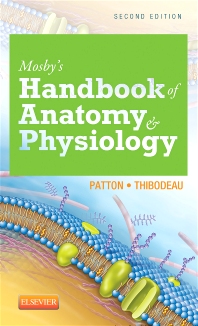
If you also leave your name and address, I'll put you in a drawing for a free signed copy of Mosby's Handbook of Anatomy & Physiology.

Please forward this message to others you think might want to put in their two cents on this project—or want to put their names in for a free A&P handbook.

If you want to offer suggestions for topics, names of people to interview, or to volunteer to write some theme music, then fill out the Contact Form at The A&P Professor.  Use the same form if you are interested in being interviewed, want to act as a co-host, or occasional guest host, or want to help with production.


Links


Thursday, May 4, 2017

Reboot of The A&P Professor Website

Next time you head over to the companion website for this blog at theAPprofessor.org, you'll see a whole new website. Literally. The old website is enjoying a well-deserved rest on the beach of a sea of electrons, and a whole new—completely rebuilt—website has taken its place.

Like rookie professors who replace veteran A&P professors, it still has a lot to learn. So I'm actively seeking your input on the kinds of things you'd like me to add or subtract from the website. Either comment on this blog post, or use the CONTACT form on the website.

This new version of The A&P Professor retains a few of the design elements of the old one, like the Hip Logo. However, the website design is now "responsive" to allow resizing and rearrangement of page elements for easy viewing on any device—from desktop to pad to phone.

I did a lot of pruning during the rebuild of The A&P Professor . I removed dated topics and book reviews, and the curated lists of websites and images. The latter just got out of hand for one guy with several "real" jobs, plus tending to a bunch of websites and blogs and a daily newsletter. When I started curating those collections, it was hard to find what we needed to teach A&P successfully—but now it's now much easier to find what you want on your own.

The new website is now closely linked to another of my websites, the Lion Den. The Lion Den has also recently been rebuilt to focus entirely on the teaching and learning of human anatomy and physiology.

So check out the Lion Den offerings as you explore the new The A&P Professor website! As always, I continue to appreciate your support!


Thursday, April 20, 2017

Huge Breakthrough in Human Anatomy & Physiology!

This trend in misleading "click bait" headlines among science news outlets continues to spiral into infinity. Okay, "infinity" is an exaggeration, but apparently that's what it takes these days to get us reading the actual content of science articles. And a growing phenomenon is that the articles themselves include exaggerations within their content. That's the topic of my rant, er, post today.

I've been thinking about this for a long while. I often discuss it in class with my students. Yesterday, I ran across a recent (January 2017) example of the perennial "scientists discover that the appendix has a function" headline: Your Appendix Might Serve an Important Biological Function After All 

That example actually has a pretty good article about a study analyzing the evolutionary appearances and reappearances of the appendix in mammals and what that may tell us about this organ's function. But we already know enough about the functions of the vermiform appendix in humans that it's hardly true that its functions are completely unknown. The article clearly acknowledges that fact within the content, despite that attention-grabbing headline.

Megakaryocyte producing platelets
Another recent example was the round of excited shares on social media regarding the "discovery" that hematopoiesis (blood development) occurs in lung tissue. There were a lot of "wow, who knew?" tweets that week. Even from highly trained experts in A&P. But my Anatomy & Physiology textbook (p. 624) already has this information—and it surely cannot be the only textbook to do so.

The journal article that prompted this wave of tweets and posts described some research in mice that expands our knowledge about this phenomenon—turns out that more is going in the lungs than we thought. The lungs may be the primary site for thrombopoiesis (platelet development), if human lungs work like mice lungs. But the fact that the lungs are sites of hematopoiesis—specifically platelet formation—is not new.

I've shared these and other posts with exaggerated headlines myself—mostly on Twitter, Facebook, or my new daily newsletter from Nuzzel.

However, I think it's way to easy to succumb to the excitement of a potential "new discovery" that turns out to be not new, or even a discovery, at all. As a blogger I know full well that exaggerated headlines get more "engagement", which leads to more "followers," which leads to better "brand recognition" and thus, more future "engagement." Who wants to spend time researching and writing when nobody is reading?

But in science, maybe the public perception of how science works is better served by a more toned-down approach that recognizes what we already think we know, why we think we know it, and what any new studies can do to clarify, correct, or extend what we know.

I know that none of us individuals can stop the tide of exaggerated science news headlines. I'm just using a platform I have to express my concern that we may be making a mistake by doing so. If everything is a "breakthrough" or even a "huge breakthrough," then maybe casual observers will miss those truly game-changing ideas when they come along.

At least it's something to keep in the back our minds and we do our daily scan of science new headlines.


What can we use from this in teaching undergraduate A&P?


  • Consider challenging your student to find the first new "science discovers the function of the appendix" article or post of the semester. (or spleen or gallbladder or any organ).

  • Find some posts or articles that have exciting "new discovery" headlines and analyze them as a class. The may help us all learn better the critical analysis needed when reading science content.

  • Have a class discussion regarding the balance between the excitement of discovery that drives science and the exaggerations of discovery that may mislead.

  • Consider making sure that your students know that the appendix has functions (and that the lungs make platelets). Just in case they become science journalists.

  • Consider throwing out science journalism or science writing as career options. They already have an interest in human biology—and they may soon discover they don't like the career path they first chose, after all.


Want to know more?


Your Appendix Might Serve an Important Biological Function After All

  • BEC CREW Science Alert 10 JAN 2017
  • Article about an evolution study of the appendix in many organisms and how that may relate to the organ's function.
  • my-ap.us/2pDQofu

An Unexpected New Lung Function Has Been Found - They Make Blood

  • This article, with the subtitle Things just got complicated, outlines the recent work done in mice to show that most platelets (not just some platelets) may form in lungs. 
  • BEC CREW Science Alert 24 MAR 2017
  • my-ap.us/2p5JUdl
Megakaryocyte image: A. Rad


Monday, December 8, 2014

5 Useful Features of The A&P Professor Blog That You May Have Missed


Okay, the title is a bit misleading because a some of the five features you may have missed are new, so it may just be too early to have noticed them yet.  But there are some that have been around a while and you may not have given them much thought until now.

  1. Top menu bar.  

    I recently added a menu bar to the top of the blog page, just under the blog description.   You can link to the Home Page, Site Map, Subscription and various off-blog resources.  Explore each one to see if it's useful to you.

  2. Site Map.

    This new feature is a table of contents that lists blog posts in alphabetical lists by topic.  It's pretty big because I've been doing this blog for many years, and some posts are listed under more than one topic.  But if you are "into" the teaching of A&P, this might be a fun treasure hunt to find things you may have missed—or have simply forgotten about.

  3. Email Newsletter.

    The email newsletter for this blog, powered by Feedblitz, is a way to subscribe to this blog and be notified by email each time a new article is posted in blog.  It's free and you can safely unsubscribe at any time.  Then re-subscribe later when you find that you missed getting updates!  You may not realize that by subscribing, you also get additional content.  For example, once a month, I send out a Throwback Thursday newsletter reprising a popular article from the past that remain relevant.  I occasionally send out other "extra issues" that do not appear in the blog itself.

  4. Social Media.

    As more and more of you join the rest of the world on Facebook, Twitter, and other social media networks, you may want to follow The A&P Professor there, too.  As with the email newsletters, my Twitter and Facebook followers get additional content not found on the blog or other channels.  You can even follow my YouTube channel, where I post videos with study tips for A&P that you can share with your students.

  5. Family of Blogs and Websites.

    I have other blogs that are focused on particular topics that overlap your interest in teaching A&P.  For example, The A&P Student blog is directed at, er, A&P students.  Teachers who follow that blog pick up ideas for sharing with students who are having difficulty in your class, or link to blog posts in their course pages or syllabus.  My o-log-y blog relates specifically to the terminology of human science and medicine.  There, you may find tips for helping your students learn the language of A&P or you may find information about some of the tricky aspects of terminology that you may not already know. Check out each one to see if any of them interest you.

    Oh, and don't forget the separate website theAPprofessor.org, where you can find my free image library, sign up to get free bookmarks for your students, participate in teaching seminars, and gain access to my free library of teaching slides.

Play around the edges of this blog and see what other helpful little tools you may have missed.

Monday, September 1, 2014

Help Your A&P Students Get Off to a Good Start

Your Brain on A&P


I recently posted an article in The A&P Student called Getting a Good Start in Your Anatomy & Physiology Course. In it, I run down a brief list of practical strategies students can employ from the start of their course to get a solid start in a rigorous course—a course that intimidates many beginners who are not fully prepared.

My suggested strategies are organized under three subheadings:

  • Learn to read and raid your textbook
  • Brush up on your study skills
  • Take A&P seriously

For each of these broad categories, I list several practical and proven tips for A&P students to get a handle on things early in the course.  All have links to more detailed and specific advice from various resources.


What can we use from this in teaching undergraduate A&P?


  • Early in your course, mention the importance of getting off to a good start—not waiting until the first test looms to get organized and begin working.
  • Link to the article in your syllabus and/or your course web page or LMS course shell.
  • QR code for the Getting a Good Start article
    • Consider putting an unlabeled QR code (shown) in your syllabus or on your classroom wall.  Many students will scan the code and find the article simply out of curiosity.  Just like a snare trap!
  • Have a link to the article ready to give to students who contact you about being overwhelmed with the rigor of your course.
  • Consider suggesting to your students that they subscribe to The A&P Student newsletter (delivered by email, FB, LinkedIn or Twitter).
    • Consider subscribing yourself—a great way to keep up with various tips and strategies you can pass on to your students.
  • Even if your course has already started it's not too late to share these strategies with your students!


Want to know more?


Getting a Good Start in Your Anatomy & Physiology Course

  • Kevin Patton The A&P Student 26 August 2014
  • Outlines several practical strategies to begin the anatomy and/or physiology course on solid footing.  Link to this article from your syllabus and/or course web page.
  • my-ap.us/1onII8I

Subscription for The A&P Student

  • Choice of FREE delivery by email, Facebook, Twitter, or LinkedIn
  • my-ap.us/1oxkJIM

A&P is the Foundation

  • Kevin Patton Lion Den Slide Collection
  • FREE animated PowerPoint slide you can use in your introductory course presentation.  The link takes you to information on accessing the entire collection.  Find this one in v2, Study Tips, AP-is-foundation
  • lionden.com/slides-form.htm
Download free slides, including this one, to use in your A&P course
Free animated slide

Monday, July 28, 2014

Syllabus Resources for A&P


Fall is the traditional start of the academic year, so as we approach that mark it may be a good time to think about ways to tweak our course syllabus in ways that may promote student success.  There are some "teaching moments" in a syllabus that we don't want to miss!

I have few suggestions for you to consider.

Chunking

Experts call it excessive cognitive load and I say it's just plain rude to put all your policies, procedures, advice, and explanations in one or two big lumps, then expect students to actually read it and be familiar with the contents.

Go ahead and get it all down there—then chunk it by dividing it up into short sections, each with a short, descriptive heading.  Next, rearrange all your newly chunked sections into logical groupings with a short descriptive heading.  Now students will more likely read through it all, comprehend it better, and be more likely to refer to the syllabus before emailing you with their questions that can easily be answered by the syllabus.

Deadlines

We often blame it on which generation's pesonality they are ruled by—X, Y, millenial, baby-boomer—but I think it's just human nature to miss deadlines when you are unaware of the effects of doing that.

A syllabus is a good place to establish deadlines in a course, of course, but it's also a great place to briefly explain why deadlines are important.  You may want to get some ideas from this brief article—or simply link to the article from your syllabus:

Academic Integrity

The most effective deterrent against academic dishonesty—cheating—is to promote a culture of honesty in your course.  The syllabus is a great way to get that on the right footing at the outset.  Here's an example from one of my syllabi, in a chunked section titled Academic Integrity:
This course relies on the principle that all who participate will do so with the honesty befitting adult, professional studies.  Without integrity of all students, the integrity of the course, this school, and your own credentials all suffer. This means that all students are expected to submit only their own work, whether for assignments, papers, online tests or quizzes, in-class tests or quizzes, or any other component of this course.  Thus, students may not receive inappropriate help nor give inappropriate help to other students.
 SCC academic integrity policies outlined in the Student Handbook and other documents stipulate a variety of possible outcomes of violation of principles of basic academic integrity.  
In this course, receiving or giving inappropriate help in online tests, in-class exams, or assignments will ordinarily result in receiving "F" for the course.  Inappropriate help may include having someone do all or part of the work for you, providing or receiving copies of current in-class exam items or answers to in-class exam items, and copying someone else's work and submitting it as your own.  
Students who witness or have reason to suspect violations of academic integrity in this course and do not report it promptly, thus further enabling the dishonesty, will themselves also be subject to disciplinary action.
I strongly suggest that you read the brief article Why be honest?
Feel free to adapt this (perhaps shorten it a bit?) for your own syllabus.  Or use this link—  my-ap.us/zHHd7H —in your syllabus to simply send them directly to an article that explains it all.

Handcrafted Uniqueness

This is kind of silly—but that's the point.  I always include something like this in each and every syllabus:
Minor imperfections further enhance the  handcrafted uniqueness of this document.
It's a joke, right?  Well, sort of.  It's actually true, and so it is fair warning that there are bound to be mistakes in my syllabus. But it's also lighthearted enough to set the light, informal tone that improves student engagement and openness to a new instructor and a new course.

For more ideas like this, check out Professors are from Mars, Students are from Snickers: How to Write and Deliver Humor in the Classroom and in Professional Presentations by Ronald A. Berk (Stylus Publishing, 2003)


Terminology

Students in the anatomy and physiology course are likely to learn more new "foreign" words than they would in a beginning Spanish, French, or German course.  So it's important to set that fact out there early, so that students can get a handle on that aspect of A&P from the get-go.

Besides a brief statement about the need to learn a new language in the syllabus, I've found it helpful to link to (or embed) these resources:


Spelling is Important

Your peritoneum is not your perineum, right?  And in a medical chart, that could get through all the checks and alerts even in today's "smart" electronic environment.  I, for one, am not willing to put my life—or my perineum—in the hands of a medical spell-checker.  So it's important that A&P students learn that an incorrectly spelled term term is an incorrect term.

I suggest spelling that out (pardon the pun) in the course syllabus.  Because not all instructors "take off for spelling," it may unnecessarily shock your students when misspelled terms are not accepted at all in A&P. If they know ahead of time that correct spelling of scientific terms is part of the course, they'll be more accepting of the idea and—even better—prepared for it.

Consider adding a link to the article Is Spelling Important? to your syllabus:

Renting or Borrowing Books

You may have trouble buying this one, I realize, but I can't tell you how many of my former A&P students have sold back their A&P textbook, or returned their rented book, or lent it out on permanent loan to a friend or relative.  And then regretted it.  Why? Because they need it for their health professions courses—and even in their jobs.  A good A&P textbook is not just a learning tool for use in the A&P course, it's a valuable addition to their own professional reference library.

I usually add a phrase like this to the list of required books and manuals for my courses:
Don't rent your A&P text book!  Click here for the reasons.
And don't sell it back at the end of the course. Here's why.
Here are the URLs if you want to use a similar approach—and save some students a bit of heartache when they realize they've lost a valuable resource they'll need later:
Rental URL my-ap.us/1rJKmHg
Sell-back URL my-ap.us/mhYggB

You may not agree with this approach.  Or perhaps your school rents or lends textbooks to all students and you can't officially go against that in your syllabus.  But it's an idea worth considering if you have the latitude to advise your students in this manner—and the insight to see the value of such advice.

The A&P Student

Lastly, there are a lot of A&P-specific study tips, tools, and advice available FREE for your students at my blog for students called The A&P Student.
  • Use this URL to link to it from your syllabus or course site: theAPstudent.org 
  • If your learning management system allows for an RSS feed in your course, why not add this one? my-ap.us/1otlNx2
  • If you want some FREE bookmarks for your students with the URL for the resource, click here. 

Photo credit: Handcraft

Tuesday, January 3, 2012

Free bookmarks for your students!

As you begin another term of A&P, don't forget to stock up on those FREE eyeball bookmarks for your students!

These unique "anatomically correct" first-day-of-class gifts for your students include information for your students on how to access my blog The A&P Student.  This blog has a continuously updated library of study tips for A&P, shortcuts, links to learning resources, and more.

These bookmarks are available in packs of 50 to qualified A&P instructors.  And if you act now, you'll also get some fun freebies for yourself!

Get your free bookmarks here: my-ap.us/99NNTx

Thursday, May 27, 2010

New blog feature


This blog now has a new feature . . . AnswerTips. If you double-click any word or phrase in this blog, a floating box will appear with additional information.

You can use this handy feature to:
  • look up the meaning of an unfamiliar term
  • find the acronym or abbreviation of a term (or, conversely, find the meaning of the acronym)
  • get a written and audio pronunciation guide for a term
  • find the word origin and word parts of a term
  • find related links
Try it right now by clicking this term . . . erythropoietin (used in a recent blog posting).

Now try it on ANY other word in this or any other post on this blog.

Yes . . . I've also added this feature to The A&P Professor website that serves as a resource-rich companion to this blog.

Oh, and another thing . . .YOU can add this feature to your online syllabus, class notes, blog, wiki, or other online resource for FREE!  It's incredibly easy. You can automatically and instantly give your students access to audio pronunciations (especially useful for ESL students) and definitions to unfamiliar terms.

If you want to see how that works, check out this example from my course website: Learning Outline for Skin.

And did I mention that AnswerLink is free? 

Just go to http://my-ap.us/bwkmpX to learn more.

.

Monday, May 17, 2010

Encouraging students to start their library

Today, I posted an entry at The A&P Student blog encouraging students to begin a personal library of professional books.  I encouraged them to start with their A&P textbook.

Many students sell their textbooks back to the bookstore as a regular thing . . . without stopping to realize that SOME textbooks should be going into their individual professional library.
 
A professional library is the set of references that a student can begin to build NOW and continually add to throughout their professional career. Such individual libraries serve as indispensable tools to help professionals survive and excel in a health-related career.

For health professionals, the A&P textbook will be needed for  upcoming health professions courses and clinicals/practicums. It will also serve well later, when students finally begin their careers.

You may want to post one or more of these links to share with your students:
[Recent blog post from The A&P Student]
[Blog post from The A&P Student from May 2009]

[Brief article from my Lion Den collection of Study Tips and Tools]


Sunday, January 24, 2010

Now's the time for FREE student bookmarks!


It's time once again to get our students thinking about ways to organize their time and implement some study strategies and learning shortcuts so they can survive and thrive in a new semester of A&P.

What better way to start a new semester than with the blog that's all about student survival and success . . . The A&P Student?

Just send them to theAPstudent.org for tips, tricks, resources, and secrets to success in A&P.

To help them find it (and remember it) . . . and start off the semester by giving them gifts . . . why not order some FREE eyeball bookmarks to give them?  Just go to the EYEBALL BOOKMARK page at The A&P Professor to order yours now!

Even if your students don't use the blog with all the FREE learning resources, at least they'll have a cool anatomy bookmark to use, eh?

And don't forget to tell them about the handy Survival Guide For Anatomy And Physiology: Tips, Techniques And Shortcuts

Sunday, October 4, 2009

Keep up with this blog on your phone

The A&P Professor blog is now available on your mobile device!

Check it out at http://theapprofessor.mofuse.mobi/

Even if you prefer to view the blog at the Blogger interface or Facebook or the free email newsletter, you might find that being able to browse (or quickly find a reference) on your iPhone, BlackBerry, or other smartphone is a handy thing to be able to do.

Sunday, September 13, 2009

FREE anatomic bookmarks for your students

To help you help your students, I'm still offering those FREE "anatomical eyeball" bookmarks for your students!

Some of you have already received and distributed yours. But the rest of you should act now . . . while supplies last!

The bookmark is a whopping 2" by 7" printed on thick card stock—not one of those wimpy little bookmarks others give away. OK, nobody else gives away such anatomical bookmarks (as far as I know) but this is an unusually large size for a bookmark.

On the obverse side is an anatomically correct rendering of an eyeball in its bony orbit on the (anatomical) right and the eyeball partly covered by the palpebrae (lids) on the left. When you distribute them to your class, you might even take the opportunity to quiz them on anatomical directions (anatomical left and right vs. the viewer's left and right) to hone some skills, eh?

The reverse side contains information about The A&P Student blog.

The blog is mainly aimed at undergraduate college students but is also useful for high school students and even students in professional studies (medicine, allied health, etc.).

Just email me at kevin@theAPprofessor.org and tell me how many packs of 50 bookmarks you need for your class. And tell me where to send it (it MUST be a school address).

But wait!

That's not all!

Act now, and I'll throw in a few FREE humerus bookmarks for your own use!

That's right! These anatomic bookmarks (of the same sturdy structure as the eyeball bookmarks) feature a human humerus on one side and The A&P Professor hip logo on the other side.

You can use them yourself . . . and have some spares to share with your colleagues.

So, again, email me NOW at kevin@theAPprofessor.org and tell me how many packs of 50 bookmarks you need for your class. And tell me where to send it (it MUST be a school address).

Monday, August 31, 2009

Street Anatomy blog


I ran across this crazy and interesting blog the other other day and thought I'd share it with you. It's called Street Anatomy and it "obsessively covers the use of human anatomy in medicine, art, and design."

It has some fantastic, gross, insane, and interesting examples of human anatomical art that you might want to use to spice up your classroom presentation.

For example, I was looking for an example of a tattoo that I could use in my presentation on the skin and found the Street Anatomy gallery of anatomical tattoos. Check it out: http://streetanatomy.com/galleries/anatomy-tattoo-gallery/

For the latest entry in the Street Anatomy blog, go to

Monday, August 24, 2009

The A&P Student blog


Way back in January I told you about my blog to assist A&P students as they struggle through the course . . . The A&P Student.

Well, as many of us begin a new academic year, with all new students, this might be a good time to remind our students that they CAN find shortcuts and tips for success if they look for them . . . and an easy place to look is The A&P Student blog.

You are welcome to link to the blog from your online syllabus, your course webpage (including Blackboard, Angel, etc.), or post it on the classroom bulletin board.

The blog features study tips, test-taking strategies, hints for using their textbook more effectively, and more. The conversational, occasionally silly, tone of the blog will engage students looking for more efficient ways to learn A&P . . . or tips on simply surviving.

Please pass the information along to your students and colleagues. You are welcome to link to the blog from your online syllabus, your course webpage (including Blackboard, Angel, etc.), or post it on the classroom bulletin board.
The A&P Student blog
http://theAPstudent.blogspot.com

The A&P Student newsletter

http://theAPstudent.feedblitz.com

The A&P Student on Facebook
http://www.facebook.com/pages/The-AP-Student/90694738693
To help you help your students, I'm offering some FREE "anatomical eyeball" bookmarks for your students! While supplies last!

The bookmark is a whopping 2" by 7" printed on thick card stock—not one of those wimpy little bookmarks others give away.

On the obverse side is an anatomically correct rendering of an eyeball in its bony orbit on the (anatomical) right and the eyeball partly covered by the palpebrae (lids) on the left. When you distribute them to your class, you might even take the opportunity to quiz them on anatomical directions (anatomical left and right vs. the viewer's left and right) to hone some skills, eh?

The reverse side contains information about The A&P Student blog.

The blog is mainly aimed at undergraduate college students but is also useful for high school students and even students in professional studies (medicine, allied health, etc.).

Just email me at kevin@theAPprofessor.org and tell me how many packs of 50 bookmarks you need for your class. And tell me where to send it (it MUST be a school address).

Tuesday, June 23, 2009

Facebook update


For those of you who are fans of the The A&P Professor Facebook page, you may have already noticed that updates are now finally showing up on your wall (if you allow them to).

Longtime fans know that we had trouble for a while with this, but apparently the folks at Facebook got around to fixing this. As always, if you have any suggestions for the Facebook page, the blog, the newsletter, the website, the blimp, or whatever, please let me know!

For those of you who use Facebook but are not yet fans of The A&P Professor page, you might want to check into this option. Starting this week, fans will get occasional "early warnings" of upcoming topics in The A&P Professor blog and website.

The A&P Professor

Tuesday, May 19, 2009

A skull a day . . .


There's a crazy, wonderful blog called SKULL-A-DAY that you should visit.

The project started out when this guy named Noah Scalin made a paper skull and posted it, then kept on making skulls in various media and in different forms every day for a year.

Then folks just kept adding to it and, well, now it's a pretty big project. There's even a book version now! The book is called SKULLS of course.

As most A&P professors are skull fans, or ought to be, I thought you might like to see all those skulls.

And maybe this'd be an interesting way to start class each day? Put the "skull of the day" on the first PowerPoint slide you use each day (or print it out and hang it up). Then maybe . . . just maybe . . . a few more students that usual will get there before class to see and discuss the new skull for the day.

And maybe . . . just maybe . . . some of them will intrigued enough to make and contribute their own image of a skull to the project! In fact, there's a contest going on right now to choose the favorite from among the original 365.25 skulls.

For Facebook users, there's an application called Send-A-Skull that allows you to send skulls to your friends. For any of you who are my Facebook friends, you probably already got one of these!

Hey, you never know what will be the thing to get an individual student more engaged in A&P!


Tuesday, May 5, 2009

Find The A&P Professor on Facebook


The A&P Professor blog now has a page on Facebook.

Come visit us there, become a fan, and participate in our Facebook community!

And don't forget to share it with your friends and colleagues teaching A&P.

Tuesday, April 14, 2009

New index of topics


If you're reading this article at The A&P Professor blog site, then you've already noticed a new feature to the left sidebar . . . the Topic Index.

This index will make it easier for users to find previous articles and resources of interest.

Topics include subject-matter topics like neuroscience and cardiovascular, as well as other labels such as free stuff and study tips.

If you have any suggestions for new features (or rearranging or eliminating existing features) just let me know!

Tuesday, March 24, 2009

Updated newsletter format

News flash
Those of you who subscribe to The A&P Professor email newsletter, you have already noticed the sleek new look of your newsletter.

For those of you who don't subscribe, why not?

The newsletter is a FREE weekly summary of the latest blog entries from The A&PProfessor blog. It's an easy and convenient way to keep up with what's going on in your favorite forum for news, updates, and FREE stuff related to the teaching and learning of human anatomy and physiology.

To subscribe, use the form here:
Enter your Email


Preview | Powered by FeedBlitz
If you want to preview the new look of newsletter, click this link: The A&P Professor Preview

The new look sports a new banner similar to that seen in the blog and website.

It also features summarized blog entries so that you can quickly scan through the entries to see what's there at a glance. That way, you don't have scroll through (sometimes) long articles just to see what the main stories are for the week. And there's no worry of clogging up your mailbox with huge files.

In the weeks ahead look for expanded content in the blog and newsletter, too!

[Some forms and other features may not appear in the feed or newsletter form of this article. Go to The A&P Professor blog to see these features.]