Showing posts with label dissection. Show all posts

Monday, February 11, 2019

The Last Best Story in Teaching Anatomy & Physiology | Episode 37


01:17 | Feedback in Online Tests
08:17 | The Anatomical Compass
14:47 | Sponsored by AAA
15:12 | Reserve hematopoiesis
18:09 | Sponsored by HAPS
18:54 | Featured: Last Best Story in Adult Neurogenesis & ANS Pathways
If you cannot see or activate the audio player click here.

Questions & Feedback: 1-833-LION-DEN (1-833-546-6336)
Follow The A&P Professor on Twitter, Facebook, Blogger, Nuzzel, Tumblr, or Instagram!

Scientific theories are tested every time someone makes an observation or conducts an experiment, so it is misleading to think of science as an edifice, built on foundations. Rather, scientific knowledge is more like a web. The difference couldn’t be more crucial. A tall edifice can collapse – if the foundations upon which it was built turn out to be shaky. But a web can be torn in several parts without causing the collapse of the whole. The damaged threads can be patiently replaced and re-connected with the rest – and the whole web can become stronger, and more intricate. (Massimo Pigliucci)

1 | Feedback in Online tests

7 minutes
In Episode 36, Adam Rich called in regarding how we can provide feedback to students taking online tests. I responded that I encourage students to get the correct response from their study buddies—or from me. After the episode aired, Krista Rompolski pointed out that this could be a challenge in very large courses. What do y'all think? Tell us. Really.


2 | The Anatomical Compass

6.5 minutes
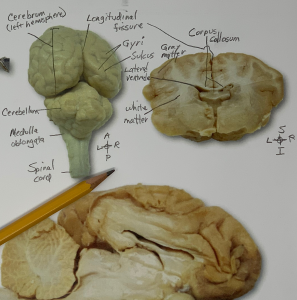
Although you and I are comfortable in orienting ourselves to anatomical directions when looking at diagrams, photographs, and specimens in anatomy, our beginning student often are not. The simple process of adding an "anatomical rosette" reflecting the anatomical directions in each encountered diagram can  help students develop the skill of understanding anatomical perspective.
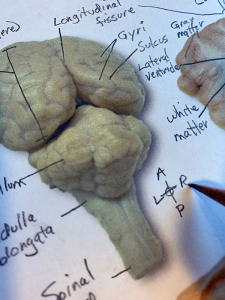
 anatomical rosette


3 | Sponsored by AAA

0.5 minutes
The searchable transcript for this episode, as well as the captioned audiogram of this episode, are sponsored by The American Association of Anatomists (AAA) at anatomy.org. Their big meeting is in April at the Experimental Biology (EB) meeting in Orlando FL. Check it out!
 American Association of Anatomists

4 | Reserve Hematopoiesis

3 minutes
Hematopoietic stem cells  (HSCs) may have a "back-up system" that helps out after damage to the working population. These "reserve" HSCs (rHSCs) may step up when the primed HSCs (pHSCs) cannot keep up with the demand for hematopoiesis.
  • Scientists have identified a bone marrow backup system (summary article) my-ap.us/2BmcoE0
  • N-Cadherin-Expressing Bone and Marrow Stromal Progenitor Cells Maintain Reserve Hematopoietic Stem Cells
    (report by Zhao, et al. in Cell Reports) my-ap.us/2Bk7vLN

 hematopoietic stem cell


5 | Sponsored by HAPS

0.5 minutes
The Human Anatomy & Physiology Society (HAPS) is a sponsor of this podcast. Did you know there's a one-day regional HAPS conference in March? Check it out. You can help appreciate their support by clicking the link below and checking out the many resources and benefits found there.
 HAPS logo

6 | Featured: Last Best Story in Adult Neurogenesis & ANS Pathways

12 minutes
The "last best story" is what I tell my students I'm providing to them. That approach emphasizes the evolving nature of scientific understanding. In this episode, I mention two stories that are evolving right now.
reading a book

If the hyperlinks here are not active, go to TAPPradio.org to find the episode page.

Amazon and TextExpander referrals help defray podcasting expenses.

Transcript and captions for this episode
are supported by theAmerican Association of Anatomists.anatomy.org


The Human Anatomy & Physiology Societyalso provides support for this podcast.
theAPprofessor.org/haps


(Clicking on sponsor links 
helps let them know you appreciatetheir support of this podcast!)

Click here to listen to this episode—or access the detailed notes and transcript.


Monday, December 31, 2018

Power Tips for Dissection Activities | TAPP Episode 34


0:43 | Summer neuroscience workshop
3:45 | Ganglion cells
10:52 | Sponsored by HAPS
11:13 | Featured topic 1: Dissection lists
30:49 | Sponsored by AAA
31:02 | Featured topic 2: Pre-dissection practice

If you cannot see or activate the audio player click here.

Questions & Feedback: 1-833-LION-DEN (1-833-546-6336)
Follow The A&P Professor on Twitter, Facebook, Blogger, Nuzzel, Tumblr, or Instagram!

Students don't often realize that they are their own best teacher. (Sr. Virginia Brinks)

1 | Summer neuroscience workshop

3 minutes
Thirteenth Annual Summer Workshop: Hardware and Software Experiments to Teach Neuroscience. Kevin participated in an earlier version of this workshop and got a lot out of it.
  • During 2019, partial costs associated with the Workshop (lodging in MU dorms + meals) will be provided by a grant.
  • See Neuro Workshop Flyer Summer 2019
  • 1-week Summer Course
    • July 14 to July 20, 2019
    • Starts at 7 p.m. on Sunday, July 14, and ends at 5 p.m. on Saturday, July 20 (travel days of Sunday 14 July and Sunday 21 July)
    • Limited to 10 participants
    • Deadline of February 15, 2019
      • Review of applications may begin earlier


2 | Ganglion cells

7 minutes
Light-sensitive ganglion cells contain the visual pigment melanopsin that is involved a non-imaging kind of vision that helps us detect sunlight levels in our environment. This information helps us sync our biological clocks to our environment—and may affect our mood.
  • Scientists Find A Brain Circuit That Could Explain Seasonal Depression (brief article and audio story)
  • Luxotonic signals in human frontal-polar cortex: A possible substrate for effects of light on mood (abstract of a presentation at Neuroscience 2018)
  • Light Affects Mood and Learning through Distinct Retina-Brain Pathways (research article)
  • Ganglion cell (overview of the ganglion cell of the retina)

 retina


3 | Sponsored by HAPS

0.5 minutes
The Human Anatomy & Physiology Society (HAPS) is a sponsor of this podcast. Did you know there's a one-day regional HAPS conference in March? Check it out. You can help appreciate their support by clicking the link below and checking out the many resources and benefits found there.
Anatomy & Physiology Society 
theAPprofessor.org/haps
 HAPS logo

4 | Dissections lists

19.5 minutes
Dissection lists are a type of "lab list" in which each structure required for discovery, familiarization, and/or mastery is listed in a clearly organized handout. This handout can be used by students for organizing learning and clarifying their learning objectives—and by teachers to help monitor student progress for effective coaching.
 checklist


5 | Sponsored by AAA

0.5 minute
The searchable transcript for this episode, as well as the captioned audiogram of this episode, are sponsored by The American Association of Anatomists (AAA) at anatomy.org

 American Association of Anatomists


6 | Pre-dissection practice activity

7 minutes
A simple handout with photographs of dissection specimens can be used by students to walk through their dissection activity before they arrive in the lab. This gives them a stronger preparation that a "cold start" in lab, which often gets chaotic of students aren't practiced in finding structures.
pre-dissection

If the hyperlinks here are not active, go to TAPPradio.org to find the episode page.
Amazon referrals help defray podcasting expenses.
Transcript and captions for this episode are supported by the
American Association of Anatomists.anatomy.org
The Human Anatomy & Physiology Societyalso provides support for this podcast.theAPprofessor.org/haps
(Clicking on sponsor links 
helps let them know you appreciatetheir support of this podcast!)

Click here to listen to this episode—or access the detailed notes and transcript.

Monday, February 28, 2011

Prezi practice practicals

In my blog The Electronic Professor, I recently wrote about the Prezi alternative to PowerPoint presentations.

In a nutshell, Prezi creates large, complex sets of information that you can zoom into either at will or in a preplanned way.

As I was exploring around the Prezi presentations that have been made public, I found a great idea . . . why not use Prezi to create practice lab practicals?

My students always find it hard to get ready for practicals.  Obviously, part of the issue is the massive amount of content that we ask them to learn.  But, perhaps more imporatantly, it's hard for them to imagine the kinds of questions that they are likely to get. We set up "practice practicals" in our open lab when we can . . . and that helps a lot.  But wouldn't it be great to have an easy to access online place our students can practice for their praticals?

Well, Rob Swatski at the York Campus of Harrisburg Area Community College (York, PA) has already cracked this egg!

Take a look at his Virtual Lab Exam for muscles in A&P 1.


You have to start clicking around and get the feel for how this practice lab practical is set up . . . but once you have the hang of it, it's amazing.  You can see how students can practice the content and also get a feel for EXACTLY the kinds of things they'll be asked to do on their practical.

Another idea that Rob came up with is shown in this presentation that introduces the microscope.  Rob uses the particular characteristics of Prezi to full advantage to produce a resource that is useful for both teaching and learning in the A&P lab.


Imagine how useful this sort of thing can be for
  • online tests and quizzes for labs
  • exploring large, complex anatomical structures in a lecture class
  • virtual dissections
  • student presentations
  • zooming in on tissues or bone markings while teaching histology
Let's hear YOUR ideas!

Tuesday, December 28, 2010

Google Body Browser

My editor Jeff recently pointed me to a story about Google's recently launched Body Browser.  I was amazed at this latest creation of Google Labs.

The Body Browser is a FREE online tool that you and your students can use to explore the anatomy of the human body in a "virtual dissection" format.  Using the familiar Google Maps navigation tools, you can . . .
  • Peel (or fade) away layers of the body . . . removing the skin, then muscles, then bones, to reveal the internal organs

  • Select systems (skeletal, muscular, nervous, cardiovascular) to view

  • Click on any structure to show its label

  • Type the name of any structure in the search box to find it in the body

  • Tilt, zoom, turn the body to a variety of positions to see organs in more views that usually available in a textbook, atlas, or chart
The Body Browser runs inside any WebGL-enabled browser, meaning that you don't have to worry about having the latest Flash or Java plugins installed.

I think Body Browser a is a great FREE tool for A&P students to have access to an online model of the human body that can be used for a beginning study of anatomy.  Because it allows the user to type in the names of organs for which they are looking, you don't need to worry about it being too high (or too low) a level for your course.

There are a few minor limitations of the Body Browser:
  • The only available specimen is female (that is, there is no male specimen available to complement the female specimen)

  • The specimen is partially clothed.  Although one can see some of the underlying surface structures as the "skin" layer fades back, it's not the same as seeing these structures clearly.  An odd feature that makes certain regions of the body "off limits." (I've seen some hacks to fix this, but none of them work for me using the Chrome browser)

  • Some of the organs are roughly rendered, so it's not as detailed (at least in some areas) as you may like to see

  • Only a few systems can be shown in entirety.  Some useful system views that are missing are the lymphatic system and the respiratory system

  • You cannot select or hide individual organs for display
     
  • I could find no documentation or even a help button (pretty typical of Google Labs resources)
Even with some minor limitations, Body Browser is still a fantastic study and teaching tool.  As an A&P professor, you might use Body Browser as . . .
  • a presentation tool during a class lecture or discussion to demonstrate the location and structure of specific organs

    • you could use it live or you could record a session with Jing or similar recording tool and use the pre-recorded exploration

  • a tutoring tool with which you can send the URL of a specific view (perhaps with a label) to a student or group of students

  • a testing tool with which you can create specific views that can then be used to test from on a quiz, test, or lab practical . . . perhaps using a screen capture tool such as Jing

  • alternative lab model to use along with, or in place of, physical models in the lab

    • it may be useful as a reference to side by side with a laboratory model

    • use it in place of a laboratory model in a distance learning course
I'll be listing some ideas for student  uses of Body Browser at my blog The A&P Student.

Do you have some other ideas for using Body Browser in an undergraduate A&P course?  Just use the comment feature and share your ideas with us!

Check out this video to see a demo of the currently available features of Body Browser

Wednesday, December 9, 2009

Too late for cadaver class!


I had hoped to tell you all about a great new course offered by HAPS Institute . . . Anatomy of the Abdomen and Thorax . . . but it filled up in less than half a day!

Lucky for us (and the dozen or so folks on the waitlist), this is the first in a series of several courses that center around a weekend workshop in a cadaver lab with expert dissectors.

The Anatomy of the Abdomen and Thorax course held in February in San Diego is just the first in a series of courses that will be held at various locations in North America in the coming months and years.

These courses carry three graduate credits from the University of Washington (Seattle) biology department. All HAPS-I courses are meant for folks who already teach anatomy and physiology (high-school through graduate levels) fill in their background in various topics within human biology . . . or simply to brush up on the lastest concepts.  Even if you already have a graduate degree and "don't need the credit" you'll find these courses to be both fun and useful.

All HAPS-I courses also involve emerging methods of active learning and thus showcase methods of teaching and learning that participants can adapt into their own courses.

Want to know more about HAPS-I and its courses? Click here for more information.

However, when new HAPS-I courses open up . . . ACT QUICKLY because they DO fill quickly!

Tuesday, January 6, 2009

The Anatomist


Having just just celebrated the 150th anniversary of the original publication of Gray's Anatomy, and with most of us having a bit of time between terms to catch up on our reading, why not check out the story behind this classic?

A book called The Anatomist: A True Story of Gray's Anatomy not only reveals the roots of the classic anatomy text, it tells the personal and fascinating stories of the principle players. We find out, for example, that it wasn't Gray who drew the classic dissection sketches that we've come to love, but rather his fellow anatomist Henry Van Dyke Carter.

For more details, including a FREE timeline of the history of Gray's Anatomy, and a source of FREE images from the original Gray's Anatomy, visit this entry at The A&P Professor website:

Virtual dissection


The science magazine New Scientist recently published a collection of prize-winning "virtual dissections."

These images reconstruct portions of a body using advanced CT imaging techniques that allow the operator/artist to use precise medical images to build a 3D view of one or more parts of a body.

For teaching A&P, such images could be useful in helping students understand the anatomical relationships among the structures of the body in ways that ordinary medical illustrations cannot. And these images are FREE to access!

Check them out yourself at this New Scientist online gallery:

Virtual Autopsies Dissection Humans and Animals

All galleries from New Scientist

More sources of FREE images at The A&P Professor website.

Monday, August 4, 2008

Cadaver scholarship

Remember that course in USING HUMAN CADAVERS TO TEACH A&P that I told you about?

Some of you were asking about funding and scholarships!

Yes! It's true . . . we now have scholarships available for HAPS Institute courses, thanks to Morton Publishing.

For information on the scholarships, go to http://www.hapsweb.org/displaycommon.cfm?an=1&subarticlenbr=236 and click the link to the Grants and Scholarship page (FYI, it's in the members-only section).

What better way to use it than for that Using Cadavers to Teach A&P course I told you about yesterday?

You can use this scholarship for other HAPS Institute courses instead.

We're still arranging the schedule of our other courses. Make sure that you subscribe to the The A&P Professor Newsletter to stay informed about the HAPS-I schedule! Or subscribe to the HAPS-I Update Google Group.

Sunday, August 3, 2008

Cadavers, anyone?

People are DYING to get into this course!

Some of you already know that I'm the Director of HAPS Institute (HAPS-I), the professional continuing education program of the Human Anatomy and Physiology Society (HAPS). This program offers graduate biology courses in flexible formats to A&P professors just like you!

I'll explain more about HAPS-I in later posts, but right now I have urgent news:

We're offering a repeat of one of our most popular courses SOON!

USING CADAVERS IN A&P
(3 credits, Univ of Washington)

This is for anyone who is using cadavers, wants to use cadavers, or is just curious about using cadavers in their undergraduate program. You'll go back with a lot of great photos of organs, etc, that you can use in your own courses plus plenty of great tips on how to implement cadaver use at your institution. I sat in on last spring's course and it was GREAT. I picked up a lot just by OSMOSIS. Think how much more you'll get by actually PARTICIPATING!

The course begins September 8 with online readings and discussions.

The workshop will be at the cadaver lab at Grand Rapids Community College (downtown Grand Rapids MI) on Sep 26-27-28. We'll have a session Friday evening in the hotel following an optional pay- your-own welcome dinner. Then all day Saturday on campus in various sessions in and out of the lab. Saturday optional pay-your-own dinner in Grand Rapids. Then a Sunday morning wrap-up session on campus until 11am.

Then you'll discuss things and work on your learning object through the end of November.

Accommodations at $89 per night are available at the nearby Days Inn Hotel (a few easy blocks from campus). Call (616) 235-7611 and ask for the HAPS Institute rate.

The enrollment form, syllabus, faculty, course details, and so on, are posted at
at http://www.hapsweb.org/displaycommon.cfm?an=1&subarticlenbr=204

THIS COURSE FILLED FAST last time and HAD A LONG WAIT LIST so if you are interested, you have to ENROLL NOW to ensure a spot. Last time there was crying and wailing when we had to shut the door . . . don't let that happen to you. Those on the waiting list from last year are mostly already in the course (we're almost half full already!).