Showing posts with label study tips. Show all posts

Monday, February 11, 2019

The Last Best Story in Teaching Anatomy & Physiology | Episode 37


01:17 | Feedback in Online Tests
08:17 | The Anatomical Compass
14:47 | Sponsored by AAA
15:12 | Reserve hematopoiesis
18:09 | Sponsored by HAPS
18:54 | Featured: Last Best Story in Adult Neurogenesis & ANS Pathways
If you cannot see or activate the audio player click here.

Questions & Feedback: 1-833-LION-DEN (1-833-546-6336)
Follow The A&P Professor on Twitter, Facebook, Blogger, Nuzzel, Tumblr, or Instagram!

Scientific theories are tested every time someone makes an observation or conducts an experiment, so it is misleading to think of science as an edifice, built on foundations. Rather, scientific knowledge is more like a web. The difference couldn’t be more crucial. A tall edifice can collapse – if the foundations upon which it was built turn out to be shaky. But a web can be torn in several parts without causing the collapse of the whole. The damaged threads can be patiently replaced and re-connected with the rest – and the whole web can become stronger, and more intricate. (Massimo Pigliucci)

1 | Feedback in Online tests

7 minutes
In Episode 36, Adam Rich called in regarding how we can provide feedback to students taking online tests. I responded that I encourage students to get the correct response from their study buddies—or from me. After the episode aired, Krista Rompolski pointed out that this could be a challenge in very large courses. What do y'all think? Tell us. Really.


2 | The Anatomical Compass

6.5 minutes
Although you and I are comfortable in orienting ourselves to anatomical directions when looking at diagrams, photographs, and specimens in anatomy, our beginning student often are not. The simple process of adding an "anatomical rosette" reflecting the anatomical directions in each encountered diagram can  help students develop the skill of understanding anatomical perspective.
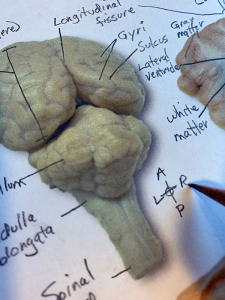
 anatomical rosette


3 | Sponsored by AAA

0.5 minutes
The searchable transcript for this episode, as well as the captioned audiogram of this episode, are sponsored by The American Association of Anatomists (AAA) at anatomy.org. Their big meeting is in April at the Experimental Biology (EB) meeting in Orlando FL. Check it out!
 American Association of Anatomists

4 | Reserve Hematopoiesis

3 minutes
Hematopoietic stem cells  (HSCs) may have a "back-up system" that helps out after damage to the working population. These "reserve" HSCs (rHSCs) may step up when the primed HSCs (pHSCs) cannot keep up with the demand for hematopoiesis.
  • Scientists have identified a bone marrow backup system (summary article) my-ap.us/2BmcoE0
  • N-Cadherin-Expressing Bone and Marrow Stromal Progenitor Cells Maintain Reserve Hematopoietic Stem Cells
    (report by Zhao, et al. in Cell Reports) my-ap.us/2Bk7vLN

 hematopoietic stem cell


5 | Sponsored by HAPS

0.5 minutes
The Human Anatomy & Physiology Society (HAPS) is a sponsor of this podcast. Did you know there's a one-day regional HAPS conference in March? Check it out. You can help appreciate their support by clicking the link below and checking out the many resources and benefits found there.
 HAPS logo

6 | Featured: Last Best Story in Adult Neurogenesis & ANS Pathways

12 minutes
The "last best story" is what I tell my students I'm providing to them. That approach emphasizes the evolving nature of scientific understanding. In this episode, I mention two stories that are evolving right now.
reading a book

If the hyperlinks here are not active, go to TAPPradio.org to find the episode page.

Amazon and TextExpander referrals help defray podcasting expenses.

Transcript and captions for this episode
are supported by theAmerican Association of Anatomists.anatomy.org


The Human Anatomy & Physiology Societyalso provides support for this podcast.
theAPprofessor.org/haps


(Clicking on sponsor links 
helps let them know you appreciatetheir support of this podcast!)

Click here to listen to this episode—or access the detailed notes and transcript.


Monday, January 14, 2019

Big Ideas: The Essential Concepts of A&P | TAPP Episode 35


0:39 | Cholesterol & ApoB in Cardiac Risk
5:48 | How Oxytocin Works
9:49 | Sponsored by HAPS
10:11 | Smell Affects Cortisol / Stress
14:38 | Sponsored by AAA
14:52 | Featured topic 2: Big Ideas - Essential Concepts in A&P
If you cannot see or activate the audio player click here.

Questions & Feedback: 1-833-LION-DEN (1-833-546-6336)
Follow The A&P Professor on Twitter, Facebook, Blogger, Nuzzel, Tumblr, or Instagram!
The big ideas are usually simple ideas. (David Ogilvy)

1 | Cholesterol & ApoB in Cardiac Risk

5 minutes
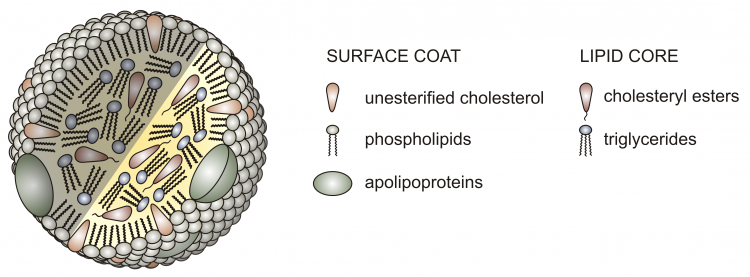
Apolipoprotein B (ApoB) is the protein part of the lipoprotein particles in our bloodstream that contain cholesterol. In primary medical care, we often measure total low-density lipoprotein (LDL) or non-high-density lipoprotein (non-HDL) to help us determine risk for cardiovascular disease. As protocols are reviewed, some believe measuring ApoB is a better measure of cardiovascular risk.

lipoprotein structure


2 | How Oxytocin Works

4 minutes
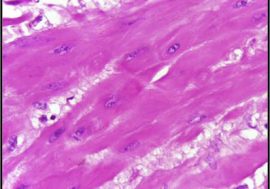
We know oxytocin (OT) promotes labor contractions of the uterine myometrium. But how? New evidences helps explain the mechanism.
  • Oxytocin can regulate myometrial smooth muscle excitability by inhibiting the Na+‐activated K+ channel, Slo2.1 (research article from The Journal of Physiology) my-ap.us/2AJsDLf

myometrium of uterus 


3 | Sponsored by HAPS

0.5 minutes
The Human Anatomy & Physiology Society (HAPS) is a sponsor of this podcast. Did you know there's a one-day regional HAPS conference in March? Check it out. You can help appreciate their support by clicking the link below and checking out the many resources and benefits found there.
Anatomy & Physiology Society 
theAPprofessor.org/haps
 HAPS logo


4 | Smell Affects Cortisol / Stress

4.5 minutes
Smells in our environment can increase or decrease blood cortisol levels, indicating modulation of our stress response. In particular, the smell of a romantic partner can reduce a woman's stress. Hmmm. Might it also reduce test anxiety? Interesting...
 smell


5 | Sponsored by AAA

0.5 minute
American Association of Anatomists
The searchable transcript for this episode, as well as the captioned audiogram of this episode, are sponsored by The American Association of Anatomists (AAA) at anatomy.org


6 | Big Ideas - Essential Concepts in A&P

11.5 minutes
When telling the story of human structure & function, we want our students to identify the "big ideas" and even just the "kinda big ideas," as well as both the "main characters" and "minor characters." By making a habit of looking for the kinda big ideas, perhaps running a concept list to collect them, students may begin to understand the essential concepts of A&P. And it may help them see the connectness of the structures and functions of the body.
big idea

If the hyperlinks here are not active, go to TAPPradio.org to find the episode page.

Amazon referrals help defray podcasting expenses.
Transcript and captions for this episode are supported by the
American Association of Anatomists.anatomy.org


The Human Anatomy & Physiology Societyalso provides support for this podcast. theAPprofessor.org/haps

(Clicking on sponsor links 
helps let them know you appreciatetheir support of this podcast!)

Click here to listen to this episode—or access the detailed notes and transcript.

Thursday, January 10, 2019

Episode 35 Intro | TAPP Radio Preview


Host Kevin Patton previews the content of the upcoming full episode, which focuses on the big ideas (essential concepts) of the A&P course.
 big idea

There's more... a few content updates... plus some word dissections, a toast to Elaine Marieb, and a recommendation from The A&P Professor Book Club.
If you cannot see or activate the audio player click here and scroll down to the Preview section.

Questions & Feedback: 1-833-LION-DEN (1-833-546-6336)
Follow The A&P Professor on Twitter, Facebook, Blogger, Nuzzel, Tumblr, or Instagram!

Topics
.5 minute
  • News about how smell relates to stress
  • News about how oxytocin works
  • Cholesterol testing for cardiac risk - are changes coming?
  • Big ideas - the essential concepts of A&P
  •  
Word Dissections
9.5 minutes
  • Dissection
    • Section
  • Concept
  • Gradient
  • Apolipoprotein B (ApoB)
Elaine Marieb
1.5 minute
Book Club
3.5 minutes
  • The Core Concepts of Physiology: A New Paradigm for Teaching Physiology
    • by Joel Michael , William Cliff, Jenny McFarland, Harold Modell, Ann Wright
  • Book details:
  • 15 core concepts of physiology
    • Explanations and applications of a concept-based approach to the physiology course
    • Concepts:
      • Evolution
      • Homeostasis
      • Causality
      • Energy
      • Structure/function
      • Cell theory
      • Levels of organization
      • Cell–cell communication
      • Cell membrane
      • Flow down gradients
      • Genes to proteins
      • Interdependence
      • Mass balance
      • Physics/chemistry
      • Scientific reasoning
If the hyperlinks here are not active, go to TAPPradio.org to find the episode page.
Amazon referrals help defray podcasting expenses.
Transcript and captions for this episode are supported by the 
also provides support for this podcast.theAPprofessor.org/haps

(Clicking on sponsor links 
helps let them know you appreciate their support of this podcast!)

Click here to listen to this episode—or access the detailed notes and transcript.
Monday, December 3, 2018

Helping Students With Test Anxiety | TAPP Episode 32 | BONUS


  0:53 | It's a BONUS episode!
  1:15 | Mitochondrial inheritance
  4:28 | Cardiac stem cells
  6:48 | Sponsored by HAPS
  7:20 | Help getting journal articles
11:18 | Sponsored by AAA
11:31 | Featured: Helping students with test anxiety

If you cannot see or activate the audio player click here.
Follow The A&P Professor on Twitter, Facebook, Blogger, Nuzzel, Tumblr, or Instagram!
I'm trying to stay as calm as possible and focus one day at a time, but when reality sets in, I feel everything: anxiety, excitement, nerves, pressure and joy. (Shawn Johnson)
This is a BONUS episode—which means it's a long one!

1 |Mitochondrial inheritance 3 minutes
New research shows that in some cases, paternal mtDNA may be passed along to offspring in a pattern that resembles autosomal dominant inheritance.
  • Biparental Inheritance of Mitochondrial DNA in Humans (research article) my-ap.us/2PeptDl
mtDNA
2 | Cardiac stem cells 2 minutes
Do cardiac stem cells exist? We thought so. But maybe not.
  • Dozens of Retractions Requested for Heart Stem Cell Studies (news item) my-ap.us/2PanzUx
  • Adult Cardiac Stem Cells Don’t Exist: Study (news item) my-ap.us/2Pdvdxg
  • More Doubt Cast Over Cardiac Stem Cells (older news item) my-ap.us/2Pd9a9O

3 | Sponsored by HAPS 0.5 minutes
The Human Anatomy & Physiology Society (HAPS) is a sponsor of this podcast. Did you know there's a reduced "early bird" registration rate for the annual HAPS confercnce in Portland OR next May? Check it out. You can help appreciate their support by clicking the link below and checking out the many resources and benefits found there.
Anatomy & Physiology Society  |  theAPprofessor.org/haps

HAPS logo

4 | Help getting journal articles 4 minutes
Follow one of my links (or some other hyperlink) and it takes you to journal article that's behind a paywall? Kevin explains a legal, ethical way to access the full article with no costs to you. You'll have to listen to hear this super secret trick!

5 | Sponsored by AAA 0.5 minute
The searchable transcript for this episode, as well as the captioned audiogram of this episode, are sponsored by The American Association of Anatomists (AAA) at anatomy.org
 American Association of Anatomists


6 | Helping students with text anxiety 45 minutes
Kevin's Theory of Test Anxiety states that we are ALL subject to test anxiety. Perhaps occasionally. Perhaps often. In any case, it can affect our ability to retrieve and apply the information we've practiced and thereby affect our performance—and score—on a test or exam. Sometimes significantly. What, if anything, can be done to avoid text anxiety or manage it once it strikes? What can teachers do? What can students do? Well, here's a place to start!
Here are some links you can share with your students:
test anxiety
If the hyperlinks here are not active, go to TAPPradio.org to find the episode page.
Amazon referrals help defray podcasting expenses.

Transcript and captions for this episode are supported by the American Association of Anatomists.

The Human Anatomy & Physiology Society also provides support for this podcast.

(Clicking on sponsor links helps let them know you appreciate their support of this podcast!)

Click here to listen to this episode—or access the detailed notes and transcript.
Friday, February 16, 2018

Concept Maps Help Students Find Their Way| TAPP Radio 5


Use concept mapping for student learning and assessment.
Blood doping is a perennial news topic that helps apply central concepts of A&P.

If you cannot see the audio player click here.

(0:48) Blood doping stories related to the 2018 Winter Olympics (or in any context) are effective in helping student students apply and integrate diverse concepts in anatomy and physiology

(6:32) The featured topic is concept mapping and its uses in helps students learn and helping instructors assess learning and diagnose misconceptions and other learning concerns.
Sample concept map

Click here to listen to this episode—or access the detailed notes and transcript.

Thursday, June 22, 2017

Why You Want Your A&P Students to Fail

I want my students to fail. Of course I don't want them to fail the course, but I do want to give them a lot of opportunities to get things wrong as they learn new facts, apply new knowledge, and build their conceptual frameworks.

Learning scientists have plenty of research that shows that failing to get things right at first, then correcting one's thinking by relearning forgotten facts and applying knowledge in better ways, strengthens mastery. And it reinforces long-term memory of facts—and long-term memory of how to solve problems.

So I give my A&P students a lot of opportunities to fail. So that they can stop failing and be more consistent in succeeding.

One way I do that is by using clickers—a student response system—during lectures, labs, and discussion. I do assign "participation points" for answering questions using this system in class, but I do not assign points based on whether the answers were correct or incorrect. I want them take risks—to fail sometimes.

By failing to get something right on a "clicker question," they wake up to where their deficiencies in learning are. Then we work together to correct their knowledge. It's more likely that when they encounter a similar challenge later on in my course, they'll be in a better position to succeed.

I also give my students a lot of opportunity to fail in taking online tests. In my courses, I give a lot of online tests that act primarily as formative assessments. That is tests that help them gain knowledge at the beginning of their learning and tell them how they are doing—not tests that primarily evaluate if they've succeeded at the end of their learning process (summative testing). Most of my summative testing is instead done in written exams.

My frequent online tests do have grade points associated with them, but because multiple attempts are allowed, they have a built-in formative component. Because the questions are randomly drawn from question sets containing many items, each test attempt has different items—but is testing the same set of learning objectives. Students fail, then fail again, then succeed in such tests.

Because those online tests are cumulative—testing over all prior concepts—they get continuous practice in retrieving and applying concepts. And ongoing opportunities to fail—then succeed. By the time we get to their midterm and final exams, they are ready to succeed.

But wait! There's more.

I also require my student to take pretests before they begin their online testing. The pretests come before any learning activity in a new unit. Thus, they have an initial opportunity to fail—and fail miserably—by taking a test on a new set of topics that they may have never seen before. Learning research—and my own experience—shows that such pretests really prime student learning. Maybe a miserable failure at the start gets our brains into a mode that helps us really figure out how to avoid such failure again!

I realize that it may seem counterintuitive for either teachers or learners to embrace failure as desirable. But considering how we really learn—by falling, then getting up and trying again—it makes a lot of sense. And the science of learning backs up this approach.

What can we use from this in teaching undergraduate A&P?

  • Consider adding opportunities for students to fail early in their learning by using low-stakes or zero-stakes tests and quizzes.

  • Consider using clickers or mobile-based student response systems to embed questions in lectures, labs, group activities, and discussions.

  • Consider embedding quiz items in your pre-class "flipped" course materials.

  • Encourage students to test each other outside of class to give additional opportunities for failure. Flash cards, concept maps, and similar study activities also provide failure opportunities that enhance learning.

Want to know more?


Small Teaching: Everyday Lessons from the Science of Learning
  • James M. Lang, John Wiley & Sons, Feb 16, 2016 
  • Book that summarizes many different ideas about how to apply learning science to your courses, it gives practical advice and a lot of examples of how to do "small" things in your course to promote the kinds of failure that promote learning.
  • my-ap.us/2l1lfEr

Failure is an Option: Helping Students Learn from Mistakes
  • John Orlando, PhD, Faculty Focus, 
    May 16, 2011
  • Brief column on the value of failure as a teaching tool. And mentions the idea that even the toughest teacher can have a class full of "A students" when we let them fail, then succeed.
  • my-ap.us/2twYZCW

What is the difference between formative and summative assessment?
  • Carnegie Mellon University (Eberly Center | Teaching Excellence & Educational Innovation), accessed June 15, 2017
  • Brief webpage contrasting formative and summative assessment.
  • my-ap.us/2twHnqD

Testing as a Learning Tool | UPDATE
  • Kevin Patton, The A&P Professor blog, May 19, 2015
  • My most recent post that further explains the testing methods mentioned above. With links to additional resources.
  • http://my-ap.us/1R7Tjpgmy-ap.us/1R7Tjpg

Cumulative Testing Enhances Learning
  • Kevin Patton, The A&P Professor blog, September 5, 2016
  • Briefly explains my use of cumulative testing in A&P courses. With links to additional resources.
  • my-ap.us/2kydGBW

Student Response Systems: Trying Clickers in Your Course
  • Kevin Patton, The A&P Professor website, accessed June 16, 2017
  • My weminar on using clickers in the A&P course. With links to additional resources.
  • my-ap.us/2twZIDM
Top photo: Sigurd Decroos
Middle photo: ilker

Monday, September 5, 2016

Cumulative Testing Enhances Learning

One of the most effective enhancements I've ever made to my human anatomy & physiology course was switching to cumulative testing. What I mean by that is instead of testing on each topic once, then moving on to a test on the next topic, I started testing my students on all the covered topics (thus far in the course) in each successive test.

I've always had a comprehensive exam at the end of the course—and eventually added a comprehensive midterm exam, too. I found that adding that midterm helped my students relearn what they'd forgotten during the first half of the semester—making them better prepared for the comprehensive final. But not a whole lot better.

As I got older and wiser—or at least grayer—and got more serious about seeking out solid research on how people actually learn new information and retain it for the long term, I realized that my thinking was sort of alongside the right track. But not fully on the right track. It finally dawned on me that I could not expect my students to really "get it" and "keep it" unless they were repeatedly challenged with a variety of test items that required them to dig back into their memories and drag out those "old" ideas from early in the course.

Learning experts sometimes call this retrieval practice. The students practice retrieving their stored knowledge and skills. One of the key elements of using retrieval practice in learning is that it is most effective when it is spaced out over time. That is, it occurs after the brain has had time to do some forgetting.

The "re-learning" and "re-remembering" that must happen after a spaced interval is one of the keys to getting it all solidly embedded into our memory. As my tai chi teacher always tells me, "you can't master it until you've forgotten it." The forgetting, making mistakes, and relearning also enhances our ability to get those concepts and skills back out of memory—thus enabling us to retrieve it when we need to apply it.

Of course, most of the effort in getting my course on the right track in this regard was getting over that same old, often insurmountable, hurdle of taking a step outside of the "way we've always done it." This nearly universal mindset not only holds me back from trying new things—it encourages my colleagues and students to tell me how wrong I am when I do.

After at least a year of self-doubt, I just forged ahead and tried it. Every one of my tests now includes test items from all previous topics. I told my students ahead of time why I was doing it and why. And guess what? They were okay with it! I didn't tell any of my colleagues what I was doing because, er, my internal voice was already telling me I was doing it all wrong.

And you know what? Without changing much else in my course that semester, the comprehensive exam grades—and even the course grades—went up almost a whole letter grade on average. In other words, my course activities and testing covered the same content, at the same level of rigor, but my students were apparent much more successful in their ability to recall the information and skills they need to solve problems at the end of the course.

This was about ten or so years ago, and I probably still have the numbers somewhere. I didn't do a statistical analysis and I didn't have a control group—unless you count sections of the course in previous semesters. But I didn't—and still don't—feel I really need that. My student grades that semester (and ever since) show a dramatic increase that I'm not willing to reverse.

Looking back through the lens of 20/20 hindsight, I can see that this should have been plain to me all along. How can we expect anyone to learn something deeply and for the long term, if they only get one chance to have their knowledge and skills challenged? Only through repeated challenges can we master concepts at a level of usefulness.

We expect our students to build a complete enough conceptual framework to see patterns and understand relationships among concepts. To really see the big picture. But do we give them enough practice to do that effectively? Or do we let them forget what they know and fail to give them those critical opportunities to relearn, thereby solidifying, key concepts?

In my experience, cumulative testing is a valuable strategy to enhance learning in our courses.


What can we use from this in teaching undergraduate A&P?


  • Adding items to every test that review all previous topics convert your testing strategy to cumulative testing. This may provide the repetitive, spaced retrieval practice that students need for learning for the long term.

  • Consider using a cumulative strategy for other forms of retrieval practice in your course. For example:
    • Quizzes
    • Clicker questions
    • Pre-lecture and pre-lab videos or reviews
    • Adaptive learning assignments
    • Homework/review assignments
    • In-class, small group reviews
    • Recommended study strategies for individuals and study groups

Want to know more?


The critical role of retrieval practice in long-term retention
  • Roediger H Butler A. Trends in Cognitive Sciences. 2011 vol: 15 (1) pp: 20-27. DOI: 10.1016/j.tics.2010.09.003
  • Scholarly review of the superiority of spaced retrieval practice over more traditional educational strategies.
  • my-ap.us/2cyDK0j


Make It Stick
  • Peter C. Brown, Henry L. Roediger, Mark A. McDaniel. Harvard University Press, Apr 14, 2014. 313 pages.
  • This is book written for the average teacher or student to help them understand what we now know about effective learning that may be different then the traditional approaches. You really need to read this book! It's well written, engaging, and has a wealth of great ideas.
  • amzn.to/2sfm40Q
Photos: Bob Smith

Monday, August 8, 2016

Student Success Increases When They Debrief After Tests

A new study published in Advances in Physiology Education adds additional evidence of the effectiveness that students do better when they take the time to analyze their tests immediately after taking them.

In my blog The A&P Student, I published an article in October of 2009 that outlines an easy and effective way for A&P students to "debrief" after each test and exam so that they can both clarify misconceptions and gain insights into possible weakness in test preparation.

The new research confirms that
By having students focus on missed questions coupled with addressing deficiencies in their test preparation strategies and behaviors, they likely engage in more self-regulated learning to better prepare for exams and avoid repeating past mistakes. (Favero & Hendricks 2016).

What can we use from this in teaching undergraduate A&P?


  • Encouraging students to debrief after every test and exam—individually or in study groups—can be more effective than whole-class reviews of exams or tests.

  • Test self-analysis can help students learn (or re-learn) concepts they are unable to retrieve on a test.

  • Test self-analysis can help students identify patterns of misconceptions, poor test preparation, and poor test-taking skills that make them better aware of their own thinking (metacognition) and thus more likely to succeed in later testing.

  • Consider encouraging your students to debrief after every test by providing them with the tools needed (see the links below).

  • In my many years of using this technique, I've found that the process described in the links below works equally well for either/both online tests (including adaptive quizzing) and traditional paper tests and exams


Want to know more?


Student exam analysis (debriefing) promotes positive changes in exam preparation and learning
  • Terence G. Favero, Nora Hendricks. Advances in Physiology Education Published 1 September 2016 Vol. 40 no. 3, 323-328 DOI: 10.1152/advan.00060.2016
  • The new research confirming the value of self-analysis of recent tests in an A&P course.
  • my-ap.us/2aGEoYM


Learn from your mistakes!
  • Kevin Patton The A&P Student. October 21, 2009
  • Brief blog post directed at A&P students giving them resources to perform this on their own, including an instructional video (see below), and access to a sample analysis form (see below). Consider linking to this post in your syllabus (and/or the other embedded resources).
  • bit.ly/7aK7YZ


Test Item Analysis
  • Kevin Patton Lion Den retrieved August 8, 2016
  • Entry from Kevin's library of Study Tips & Tools for A&P students, briefly runs through the advantages of debriefing after a test and provides an instructional video (see below) and sample analysis form that students can download and use (or adapt). Consider adding a link from your syllabus or course website/LMS.
  • lionden.com/testreview.htm


Learn from Your Mistakes: TEST ANALYSIS
  • Kevin Patton YouTube retrieved August 8, 2016
  • Brief instructional video that teaches students how to perform a test analysis (and why it's important). Link to this video in your course, or embed the video.
  • youtu.be/nIiZCov_fDI


Survival Guide for Anatomy & Physiology (2 ed)
  • Kevin Patton. 2014. Mosby, Inc., an affiliate of Elsevier Inc. St. Louis MO ISBN: 978-0-323-11280-2 
  • Brief paperback book that you can make available in your school or classroom library or require/suggest for purchase in your college bookstore. Covers the process of test debriefing and gives tips on how to resolves inefficient patterns of test preparation and test taking. Also contains A&P specific content tips and analogies.
  • lionden.com/tips-survival-guide.htm

Photo credit (top): relaenin

Monday, December 8, 2014

5 Useful Features of The A&P Professor Blog That You May Have Missed


Okay, the title is a bit misleading because a some of the five features you may have missed are new, so it may just be too early to have noticed them yet.  But there are some that have been around a while and you may not have given them much thought until now.

  1. Top menu bar.  

    I recently added a menu bar to the top of the blog page, just under the blog description.   You can link to the Home Page, Site Map, Subscription and various off-blog resources.  Explore each one to see if it's useful to you.

  2. Site Map.

    This new feature is a table of contents that lists blog posts in alphabetical lists by topic.  It's pretty big because I've been doing this blog for many years, and some posts are listed under more than one topic.  But if you are "into" the teaching of A&P, this might be a fun treasure hunt to find things you may have missed—or have simply forgotten about.

  3. Email Newsletter.

    The email newsletter for this blog, powered by Feedblitz, is a way to subscribe to this blog and be notified by email each time a new article is posted in blog.  It's free and you can safely unsubscribe at any time.  Then re-subscribe later when you find that you missed getting updates!  You may not realize that by subscribing, you also get additional content.  For example, once a month, I send out a Throwback Thursday newsletter reprising a popular article from the past that remain relevant.  I occasionally send out other "extra issues" that do not appear in the blog itself.

  4. Social Media.

    As more and more of you join the rest of the world on Facebook, Twitter, and other social media networks, you may want to follow The A&P Professor there, too.  As with the email newsletters, my Twitter and Facebook followers get additional content not found on the blog or other channels.  You can even follow my YouTube channel, where I post videos with study tips for A&P that you can share with your students.

  5. Family of Blogs and Websites.

    I have other blogs that are focused on particular topics that overlap your interest in teaching A&P.  For example, The A&P Student blog is directed at, er, A&P students.  Teachers who follow that blog pick up ideas for sharing with students who are having difficulty in your class, or link to blog posts in their course pages or syllabus.  My o-log-y blog relates specifically to the terminology of human science and medicine.  There, you may find tips for helping your students learn the language of A&P or you may find information about some of the tricky aspects of terminology that you may not already know. Check out each one to see if any of them interest you.

    Oh, and don't forget the separate website theAPprofessor.org, where you can find my free image library, sign up to get free bookmarks for your students, participate in teaching seminars, and gain access to my free library of teaching slides.

Play around the edges of this blog and see what other helpful little tools you may have missed.

Monday, September 1, 2014

Help Your A&P Students Get Off to a Good Start

Your Brain on A&P


I recently posted an article in The A&P Student called Getting a Good Start in Your Anatomy & Physiology Course. In it, I run down a brief list of practical strategies students can employ from the start of their course to get a solid start in a rigorous course—a course that intimidates many beginners who are not fully prepared.

My suggested strategies are organized under three subheadings:

  • Learn to read and raid your textbook
  • Brush up on your study skills
  • Take A&P seriously

For each of these broad categories, I list several practical and proven tips for A&P students to get a handle on things early in the course.  All have links to more detailed and specific advice from various resources.


What can we use from this in teaching undergraduate A&P?


  • Early in your course, mention the importance of getting off to a good start—not waiting until the first test looms to get organized and begin working.
  • Link to the article in your syllabus and/or your course web page or LMS course shell.
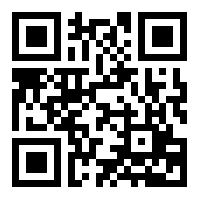
  • QR code for the Getting a Good Start article
    • Consider putting an unlabeled QR code (shown) in your syllabus or on your classroom wall.  Many students will scan the code and find the article simply out of curiosity.  Just like a snare trap!
  • Have a link to the article ready to give to students who contact you about being overwhelmed with the rigor of your course.
  • Consider suggesting to your students that they subscribe to The A&P Student newsletter (delivered by email, FB, LinkedIn or Twitter).
    • Consider subscribing yourself—a great way to keep up with various tips and strategies you can pass on to your students.
  • Even if your course has already started it's not too late to share these strategies with your students!


Want to know more?


Getting a Good Start in Your Anatomy & Physiology Course

  • Kevin Patton The A&P Student 26 August 2014
  • Outlines several practical strategies to begin the anatomy and/or physiology course on solid footing.  Link to this article from your syllabus and/or course web page.
  • my-ap.us/1onII8I

Subscription for The A&P Student

  • Choice of FREE delivery by email, Facebook, Twitter, or LinkedIn
  • my-ap.us/1oxkJIM

A&P is the Foundation

  • Kevin Patton Lion Den Slide Collection
  • FREE animated PowerPoint slide you can use in your introductory course presentation.  The link takes you to information on accessing the entire collection.  Find this one in v2, Study Tips, AP-is-foundation
  • lionden.com/slides-form.htm
Download free slides, including this one, to use in your A&P course
Free animated slide

Monday, July 28, 2014

Syllabus Resources for A&P


Fall is the traditional start of the academic year, so as we approach that mark it may be a good time to think about ways to tweak our course syllabus in ways that may promote student success.  There are some "teaching moments" in a syllabus that we don't want to miss!

I have few suggestions for you to consider.

Chunking

Experts call it excessive cognitive load and I say it's just plain rude to put all your policies, procedures, advice, and explanations in one or two big lumps, then expect students to actually read it and be familiar with the contents.

Go ahead and get it all down there—then chunk it by dividing it up into short sections, each with a short, descriptive heading.  Next, rearrange all your newly chunked sections into logical groupings with a short descriptive heading.  Now students will more likely read through it all, comprehend it better, and be more likely to refer to the syllabus before emailing you with their questions that can easily be answered by the syllabus.

Deadlines

We often blame it on which generation's pesonality they are ruled by—X, Y, millenial, baby-boomer—but I think it's just human nature to miss deadlines when you are unaware of the effects of doing that.

A syllabus is a good place to establish deadlines in a course, of course, but it's also a great place to briefly explain why deadlines are important.  You may want to get some ideas from this brief article—or simply link to the article from your syllabus:

Academic Integrity

The most effective deterrent against academic dishonesty—cheating—is to promote a culture of honesty in your course.  The syllabus is a great way to get that on the right footing at the outset.  Here's an example from one of my syllabi, in a chunked section titled Academic Integrity:
This course relies on the principle that all who participate will do so with the honesty befitting adult, professional studies.  Without integrity of all students, the integrity of the course, this school, and your own credentials all suffer. This means that all students are expected to submit only their own work, whether for assignments, papers, online tests or quizzes, in-class tests or quizzes, or any other component of this course.  Thus, students may not receive inappropriate help nor give inappropriate help to other students.
 SCC academic integrity policies outlined in the Student Handbook and other documents stipulate a variety of possible outcomes of violation of principles of basic academic integrity.  
In this course, receiving or giving inappropriate help in online tests, in-class exams, or assignments will ordinarily result in receiving "F" for the course.  Inappropriate help may include having someone do all or part of the work for you, providing or receiving copies of current in-class exam items or answers to in-class exam items, and copying someone else's work and submitting it as your own.  
Students who witness or have reason to suspect violations of academic integrity in this course and do not report it promptly, thus further enabling the dishonesty, will themselves also be subject to disciplinary action.
I strongly suggest that you read the brief article Why be honest?
Feel free to adapt this (perhaps shorten it a bit?) for your own syllabus.  Or use this link—  my-ap.us/zHHd7H —in your syllabus to simply send them directly to an article that explains it all.

Handcrafted Uniqueness

This is kind of silly—but that's the point.  I always include something like this in each and every syllabus:
Minor imperfections further enhance the  handcrafted uniqueness of this document.
It's a joke, right?  Well, sort of.  It's actually true, and so it is fair warning that there are bound to be mistakes in my syllabus. But it's also lighthearted enough to set the light, informal tone that improves student engagement and openness to a new instructor and a new course.

For more ideas like this, check out Professors are from Mars, Students are from Snickers: How to Write and Deliver Humor in the Classroom and in Professional Presentations by Ronald A. Berk (Stylus Publishing, 2003)


Terminology

Students in the anatomy and physiology course are likely to learn more new "foreign" words than they would in a beginning Spanish, French, or German course.  So it's important to set that fact out there early, so that students can get a handle on that aspect of A&P from the get-go.

Besides a brief statement about the need to learn a new language in the syllabus, I've found it helpful to link to (or embed) these resources:


Spelling is Important

Your peritoneum is not your perineum, right?  And in a medical chart, that could get through all the checks and alerts even in today's "smart" electronic environment.  I, for one, am not willing to put my life—or my perineum—in the hands of a medical spell-checker.  So it's important that A&P students learn that an incorrectly spelled term term is an incorrect term.

I suggest spelling that out (pardon the pun) in the course syllabus.  Because not all instructors "take off for spelling," it may unnecessarily shock your students when misspelled terms are not accepted at all in A&P. If they know ahead of time that correct spelling of scientific terms is part of the course, they'll be more accepting of the idea and—even better—prepared for it.

Consider adding a link to the article Is Spelling Important? to your syllabus:

Renting or Borrowing Books

You may have trouble buying this one, I realize, but I can't tell you how many of my former A&P students have sold back their A&P textbook, or returned their rented book, or lent it out on permanent loan to a friend or relative.  And then regretted it.  Why? Because they need it for their health professions courses—and even in their jobs.  A good A&P textbook is not just a learning tool for use in the A&P course, it's a valuable addition to their own professional reference library.

I usually add a phrase like this to the list of required books and manuals for my courses:
Don't rent your A&P text book!  Click here for the reasons.
And don't sell it back at the end of the course. Here's why.
Here are the URLs if you want to use a similar approach—and save some students a bit of heartache when they realize they've lost a valuable resource they'll need later:
Rental URL my-ap.us/1rJKmHg
Sell-back URL my-ap.us/mhYggB

You may not agree with this approach.  Or perhaps your school rents or lends textbooks to all students and you can't officially go against that in your syllabus.  But it's an idea worth considering if you have the latitude to advise your students in this manner—and the insight to see the value of such advice.

The A&P Student

Lastly, there are a lot of A&P-specific study tips, tools, and advice available FREE for your students at my blog for students called The A&P Student.
  • Use this URL to link to it from your syllabus or course site: theAPstudent.org 
  • If your learning management system allows for an RSS feed in your course, why not add this one? my-ap.us/1otlNx2
  • If you want some FREE bookmarks for your students with the URL for the resource, click here. 

Photo credit: Handcraft

Monday, September 16, 2013

Teaching bones & bone features

I've found that one of the things that stand in the way of student success in learning the anatomy of the skeleton is that they don't know the underlying language.

If they already knew that a foramen is a hole and a condyle is a bump, then they could make short work of identifying and learning a long list of bones and bone features. And they'd have a better understanding of the concepts, plus an easier time remembering each structure for the long term.

We can't do anything about the fact that they just don't teach Latin as a required subject  in grade schools and high schools anymore.  But that doesn't mean there's nothing we can do to give them a head start on learning the skull!

For a long time, I've started out my students learning the general types of bone features before starting on the specific skeletal structures.  I find that they have a much easier time identifying structures because they have a better understanding of what the bone names mean.  They know they're looking for a hole when they get to the foramen ovale.  That oblong dark spot in the skull diagram or photo could be a bump, for all they know.

I use the list of general types of bone features found in my textbooks, lab manuals, and other publications (see list below).  I've also provided you with a downloadable version of this list you can link to in your course or distribute as a handout (see links below).

I've just uploaded two videos to my YouTube channel that help students get started this way.  You can link to the videos in an email, syllabus, or LMS; embed them in your course website or LMS; or embed them in a PowerPoint slide.  Or you could use the slides I used in the video to make your own video or live presentationperhaps even customize it for your course.  This links to all of these resources are below.

I'll be posting these videos on my study-tip blog for students, The A&P Student, soon.  If your students are not yet using this blog, you can distribute my FREE bookmarks to get them started.  See below for details.


Want to know more?

Bone Names Have Meaning - Part 1 - Get Started (video)
  • by Kevin Patton, Kevin's YouTube Channel,  uploaded September 2013
  • Video briefly explains the importance of knowing the meaning of bone names and how to get started doing that.  Includes link to list of bone features.
  • Link URL: youtu.be/heBjZIZP328
  • Embed code is available once you link to the above URL and click "Share"
Bone Names Have Meaning - Part 2 - Types of Bone Markings (video)
  • by Kevin Patton, Kevin's YouTube Channel, uploaded September 2013
  • Brief video runs through each of the major bone feature types, showing one or more examples. Includes link to list of bone features.
  • Link URL: youtu.be/NRR-t93jyFw
  • Embed code is available once you link to the above URL and click "Share"
Bone-Names-1-2 (PowerPoint slides)
  • by Kevin Patton, Lion Den Slide Collection,  September 2013
  • Download these animated slides I used to make the videos and use them in your recorded or live presentation.  The slide notes include the narration, which you could customize (or ignore).  You can use some or all of the slides.
  • To get the download password, fill out the form at lionden.com/slides-form.htm
Bone Names (web page)
  • by Kevin Patton, Lion Den Study Tips & Tools
  • Web page for students briefly outlining how to get started learning bone structures. The videos above are embedded in the page, so you could link to this page in your course instead of linking to the individual videos.  Links to related, downloadable lists. Part of the Field Guide to the Body.
  • lionden.com/tips-lab-anatomy-bone-names.htm
List of Bone Markings
Lion Den Slide Collection
  • by Kevin Patton, Lion Den Slide Collection
  • Download all kinds of  animated slides you can use in your own course to supplement your own slides and those provided with your textbook or school. Most slides are animated.
  • To get access to the whole collection, fill out the form at lionden.com/slides-form.htm
Free Bookmarks
  • Get packs of 50 bookmarks to distribute to students.  The bookmarks tell students how to access The A&P Student blog, which has a collection of study tips for A&P.
  • theapprofessor.org/free-bookmarks.html