Showing posts with label case study. Show all posts

Monday, February 26, 2018

Give Your Course a Half Flip With a Full Twist | TAPP Radio 6


New blood test for concussion.
Why red pens are not ideal for grading and feedback.
Flipped learning isn't as hard as it sounds.

If you cannot see or activate the audio player click here.

(1:04) The FDA recently approved a new blood test for concussions. How is the test used and what does it tell us?
(11:10) It’s a small thing, for sure, but the color pen we use for grading student work can have an impact on the tone of communication in a class.
(13:50) Subscribing helps you and others stay up to date with the world of A&P teaching! And it helps other teachers find this podcast when they search for it.
(14:35) Kevin flipped his first A&P course in 2006, a year before the term flipped learning was first coined by Bergmann and Sams. In this segment, he discusses how his case study may help you decide how to flip (or half flip) your own A&P course.
If the hyperlinks above are not active, go to TAPPradio.org to find the episode page.


Click here to listen to this episode—or access the detailed notes and transcript.

Friday, February 16, 2018

Concept Maps Help Students Find Their Way| TAPP Radio 5


Use concept mapping for student learning and assessment.
Blood doping is a perennial news topic that helps apply central concepts of A&P.

If you cannot see the audio player click here.

(0:48) Blood doping stories related to the 2018 Winter Olympics (or in any context) are effective in helping student students apply and integrate diverse concepts in anatomy and physiology

(6:32) The featured topic is concept mapping and its uses in helps students learn and helping instructors assess learning and diagnose misconceptions and other learning concerns.
Sample concept map

Click here to listen to this episode—or access the detailed notes and transcript.

Monday, February 12, 2018

Cumulative Testing Makes Learning Last | TAPP Radio 4


Kevin shares his experience of using cumulative testing to strengthen long-term learning.
Use video walk-throughs to help students navigate your digital course platforms.
Sometimes other people's genes influence an individual's biological traits.

If you can't see the audio player, click here.

(0:50) Things will get a lot more interesting if listeners start calling in with questions, comments, teaching tips, programming suggestions, updates, ...or anything else on your mind!

(2:20) A recent article in Science explores the idea the genomes of parents and others can affect traits—not just the genes within the individual's genome. This concept of "genetic nurture" expands the notion of the measurable biological influences of genes.

(7:34) You can help your colleagues and others find episodes of this podcast by influencing the search algorithms that guide the process. How? By subscribing to The A&P Professor podcast in iTunes or your favorite podcast app. Even better, consider giving a rating and leaving a brief review. Unless you really hate my podcast, in which case, please click here. Fans, please click on one (or all of these):

(8:14) In this age of digital teaching and learning, we must be able to help our students navigate their digital platforms: learning  management systems, adaptive learning platforms, college/department/course websites, and more. Brief narrated video walkthroughs (screencasts) are simple and quick ways to provide clear guidance to individuals and whole classes.

(13:13) In the featured segment, Kevin shares his case story of using cumulative testing to strengthen long-term learning in his course. Using an easy method of adding a few questions from prior tests to each test and exam, Kevin was able to better prepare his students for the comprehensive final exam. And hopefully carry the essential concepts of A&P forward into future courses and careers.

More details at the episode page.
Transcript available at the script page.

taking an exam

Click here to listen to this episode—or access the detailed notes and transcript.

Tuesday, February 6, 2018

Pre-Testing for a Powerful Learning Boost | TAPP Radio 3

The newest episode of TAPP Radio is here!


Pre-testing is not just for assessment—it helps learning, too.
A weird sneeze injury.
The Anatomical Society's list of online resources.
How many proteins are there in a cell?

If you cannot see the audio player click here.

A recent analysis suggests that a reasonable average number of proteins in a cell is 42 million. How might we incorporate that bit of trivia in our A&P courses? (0:41)

The UK's Anatomical Society has put together a list of online resources under the auspices of their Education Committee (4:40)

Can the explosive power of a sneeze cause injury? You bet. Here's a recently reported case of a rupture of the pharynx. Yikes. (6:11)

Pre-Testing isn't just for measuring prior competence before new learning starts. By itself, regardless of its use in course assessment, it's a powerful learning tool. Listen to Kevin's experience with pre-testing in his A&P courses. (10:28)

More details at the episode page.

Transcript available at the script page.

If the hyperlinks above are not active, go to TAPPradio.org to find the episode page.

man doing online work on a park bench

Check out the detailed notes and transcript of this episode!

Saturday, November 18, 2017

Got High Blood Pressure Covered? The 2017 Hypertension Guidelines.

With the new guidelines for high blood pressure popping up all over the news recently, we may wonder what we need to know when this comes up in our A&P classrooms. And we know it will—students love, love, love to connect what they are learning in A&P with what they are experiencing in their lives. 

It turns out that although the new 2017 Guideline For the Prevention, Detection, Evaluation, and Management of High Blood Pressure in Adults is focused on how physicians should make diagnoses and manage patient care, the definitions of exactly what constitutes high blood pressure (hypertension or HTN) are important learning points in the undergrad A&P course.

I'll outline the main things for us A&P professors to know here, but do check out the resources I've linked below to deepen your understanding of current thinking regarding approaches to blood pressure (BP) health.

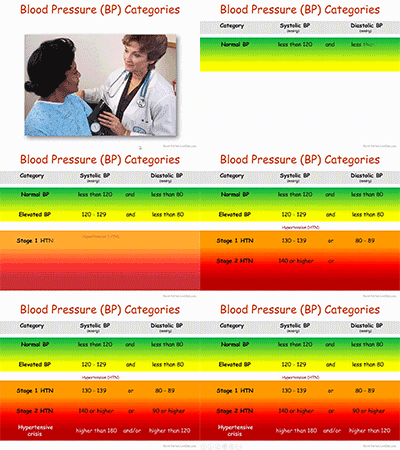
First, there are revised guidelines as to what constitutes high blood pressure or HTN:

  • Normal BP: Less than 120/80 mm Hg;
  • Elevated BP: Systolic between 120-129 and diastolic less than 80;
  • Stage 1 HTN: Systolic between 130-139 or diastolic between 80-89;
  • Stage 2 HTN: Systolic at least 140 or diastolic at least 90 mm Hg;
  • Hypertensive crisis: Systolic over 180 and/or diastolic over 120, with patients needing prompt changes in medication if there are no other indications of problems, or immediate hospitalization if there are signs of organ damage.


Regardless of the precise cutoffs listed above, in an interview discussing the new guidelines, the main author states that, "120/80 is normal, the same as we had before" the new guidelines. So I think we're safe in using 120/80 as an example of BP when discussing the normal science, even though technically it could be designated as "elevated." Not that we can't use an elevated variable measurement as an example when discussing the physiology of anything. The fact that even the main author of the guidelines uses 120/80 as the starting point of discussion makes me feel more confident in using it as the starting point of my course discussions, too.

The main thing to note in the categories above is that the cutoffs for HTN categories have been lowered. This puts many more people in an HTN category that were not there before. The main goal is for those folks to have conversations with their physicians to evaluate their risk for complications and develop a personalized prevention and care plan.

Note also that the category of prehypertension has been eliminated.

The new guidelines also recommend prescribing medication for Stage 1 HTN if the patient already had a cardiovascular event—or is at a high risk for such an event. They also recognize that many patients will need more than one medication to manage BP and that combining meds into one pill is likely to help folks take them consistently.

There are a lot of other recommendations, so reviewing the Executive Summary or similar resource (see below) may be a good idea.


What can we use from this in teaching undergraduate A&P?

  • If you discuss hypertension, or use case studies in teaching, you need to update the cutoff BPs you are using.
  • A BP of 120/80 is still considered the starting point for discussing blood pressure.
  • Consider discussing the impact of the changes in the new guidelines for ordinary people.
  • Discuss why such diagnosis, prevention, and treatment recommendations often change over time. Consider discussion other recent clinical updates.
  • Consider discussing specific changes suggested in the new guidelines.
  • Consider having students explore the Executive Summary and/or other documents and write their own summary or interpretation of key points. Perhaps they can create their own chart or concept map.


Need some free teaching materials?


SLIDE SET: High Blood Pressure
  • Kevin Patton. Lion Den Slide Collection. 18 Nov 2017
  • Small slide deck that includes an animated version of the BP Category chart pictured above. Part of the Lion Den Slide Collection (requires free registration to download). You can also download a static PNG image file of the chart in the slide collection set.
  • my-ap.us/2ivoql5


VIDEO: AHA 2017 | New High Blood Pressure Guidelines
  • America Heart Association. 13 Nov 2017.
  • Free video (viewable in the player above) features a chat with the main author of the new guidelines and summarizes the main points. Very practical and easy to understand.
  • youtu.be/rvYL-7ergDs


SLIDE SET: 2017 Guideline For the Prevention, Detection, Evaluation and Management of High Blood Pressure in Adults
  • American College of Cardiology. 13 Nov 2017
  • Free set of almost 100 PowerPoint slides to use in teaching. And it has a decided focus on clinical applications, rather than the basic science. These are way, way beyond the coverage desirable in an undergrad A&P course. But some slides may be useful to you.
  • my-ap.us/2itMBjY


Want to know more?


New blood pressure guidelines put half of U.S. adults in unhealthy range
  • A. Cunningham Science News. 13 Nov 2017 
  • Plain-English article summarizing the first major update since 2003 aims to spur heart-healthy lifestyle changes. Has a useful graph and links to other articles and resources.
  • my-ap.us/2itVnOR

New Multisociety Hypertension Guideline Is Released
  • Allan S. Brett, MD reviewing Whelton PK et al. J Am Coll Cardiol 2017 Nov 13. NEJM Journal Watch Nov 2017.
  • Brief review of the larger report (listed below), summarize key take-away points.
  • my-ap.us/2iumCc1

2017 ACC/AHA/AAPA/ABC/ACPM/AGS/APhA/ASH/ASPC/NMA/PCNA Guideline for the Prevention, Detection, Evaluation, and Management of High Blood Pressure in Adults: Executive Summary
A Report of the American College of Cardiology/American Heart Association Task Force on Clinical Practice Guidelines
  • PK Whelton et al. Hypertension, Dec 2017, Volume 70, Issue 6.  DOI: 10.1161/HYP.0000000000000066
  • Free PDF of the Executive Summary of the larger report. I recommend reading this first, then decide if you need to read the whole report.
  • my-ap.us/2iuzvCT

2017 ACC/AHA/AAPA/ABC/ACPM/AGS/APhA/ASH/ASPC/NMA/PCNA Guideline for the Prevention, Detection, Evaluation, and Management of High Blood Pressure in Adults
A Report of the American College of Cardiology/American Heart Association Task Force on Clinical Practice Guidelines
  • PK Whelton et al. Hypertension. Dec 2017, Volume 70, Issue 6.  DOI: 10.1161/HYP.0000000000000065
  • Free PDF of the entire report. It's huge, so make a whole pot of tea before starting it.
  • my-ap.us/2irTUZj

Potential U.S. Population Impact of the 2017 American College of Cardiology/American Heart Association High Blood Pressure Guideline
  • Paul Muntner et al. Journal of the American College of Cardiology. November 2017. DOI: 10.1016/j.jacc.2017.10.073
  • Free abstract briefly outlines the impact of the new HTN guidelines.
  • my-ap.us/2iu8BLi


Monday, October 5, 2015

Water Intoxication Case in Hiker

While emphasis is often placed on keeping athletes and outdoor enthusiasts properly hydrated, too much water can be just as dangerous. Exercise-associated hyponatremia (EAH), a form of water intoxication, results in an extreme, and potentially fatal, sodium imbalance.

In the latest issue of Wilderness & Environmental Medicine, investigators detail the case of a hiker who died as an illustration of the potential danger of endurance exercise and excessive water intake lowering serum sodium to a dangerous level. There have been several deaths from EAH associated with various sports. This is one of few reported fatalities due to EAH in a wilderness setting.

The study details the death of a 47-year-old female hiker who passed out after a 10 km hike on the South Kaibab Trail in Grand Canyon National Park in 2008. Over a five-hour period, the woman consumed a large amount of water but ate very little food. She collapsed approximately an hour after finishing the hike. Despite the efforts of emergency medical personnel, the patient was pronounced dead 19 hours later from cerebral edema brought on by water intoxication.

As outdoor endurance recreation grows in popularity, so does the risk of EAH. Early symptoms of EAH often mimic dehydration and include nausea, vomiting, malaise, and headache. If left untreated, the condition can lead to an altered mental status, seizures, and death. Unfortunately, many practitioners have difficulty recognizing the condition and treating it appropriately.

“EAH results from overhydration, and avoiding additional fluid overload is critically important in treatment,” explained co-investigator Martin D. Hoffman, MD. “Because dehydration is often a reflex diagnosis for a symptomatic exerciser in a hot environment, the usual treatment of oral or IV isotonic or hypotonic fluids needs to be resisted if there is a strong likelihood that the underlying condition is EAH.”

What can we use from this in teaching undergraduate A&P?


  • When discussing fluid/electrolyte balance, we can introduce the concepts of water intoxication and EAH

  • This particular case can be discussed as an example of water intoxication

  • This particular case could be adapted into a case-study activity in your course—or a case-study problem on a test.

  • The fact that early symptoms of EAH mimic dehydration, creates a clinical issue.  Class discussions regarding this—including suggested solutions from the research article—could be fruitful in increasing the understanding of basic principles of fluid/electrolyte balance in the body—as well as critical thinking skills.

  • This is a good example of practical applications of fluid/electrolyte balance, thus answering the common question, "why do we have to learn all this?!"

  • Everybody should know this, right?


Quick points about water intoxication (EAH)


EAH symptoms
  • Impaired exercise performance
  • Nausea and vomiting
  • Headache
  • Altered level of consciousness
  • Seizure (convulsion)
  • Muscle cell breakdown (rhabdomyolysis) with the development of acute kidney failure
NOT symptoms of neither EAH nor dehydration
  • Dizziness and fainting
  • Muscle cramping
  • Wheezy breathing
Risk factors of EAH
  • Overdrinking water, sports drinks, and other hypotonic beverages
  • Weight gain during exercise
  • Exercise duration of more than 4 hours
  • Event inexperience or inadequate training
  • Slow performance pace
  • High or low body mass index
  • Readily available fluids


Want to know more?


Hiker Fatality From Severe Hyponatremia in Grand Canyon National Park
  • Thomas M. Myers, MD, and Martin D. Hoffman, MD. Wilderness & Environmental Medicine, Volume 26, Issue 3 (September 2015) DOI: http://dx.doi.org/10.1016/j.wem.2015.03.001
  • Research article outlining the case, including causes, outcomes, and suggestions for successful diagnosis and treatment of EAH.
  • my-ap.us/1h7J3Qy

Seven clear symptoms of Exercise-Associated Hyponatremia
  • Timothy Noakes. Human Kinetics. Accessed 28 Sep 2015. 
  • Excerpt from the book Waterlogged: The Serious Problem of Overhydration in Endurance Sports (ISBN-13: 9781450424974) Source of the symptoms "quick points" listed above.
  • my-ap.us/1h7JeeJ

Guidelines Released for Exercise-Associated Hyponatremia
  • Diana Phillips. Medscape Medical News. July 03, 2015
  • Summary of recent guidelines published in a statement developed at this year's Third International Exercise-Associated Hyponatremia Consensus Development Conference. Source of the risk factors in the "quick points" listed above.
  • my-ap.us/1P41yTN


Some text adapted from an Elsevier press release
Top photo: Sanja Gjeero
Bottom photo: Sara Hammeraback

Monday, June 15, 2015

Virtual Cardiology Lab


Looking for a supplemental hands-on activity with cardiology in your course?

Try the FREE online interactive Cardiology Virtual Lab from the Howard Hughes Medical Institute.

It covers these concepts:
  • Symptoms of a selection of heart diseases, to serve as examples of what kinds of things can go wrong with the heart. 
    • How are symptoms detected and why?
  • Tools and techniques used for diagnosis. 
    • What can the different techniques detect and how do they work?
  • Principles of pedigree analysis.


What can we use from this in teaching undergraduate A&P?


  • Link to this virtual lab activity from your online syllabus, course web page, or LMS (or in an email  or tweet to students)
  • If you want to give course points for the lab, consider an online quiz or lab report submitted through your learning management system (LMS) or emailed to you.
  • Gives students a "real life" clinical lab application for the concepts they are learning in A&P.
  • Provides a cardiology lab option for online/hybrid courses or wet labs that don't have funding for cardiology experiments.
  • Helps integrate principles of genetics with cardiology, so it can be used in your genetics unit.


Want to know more?


Cardiology Virtual Lab

  • BioInteractive. Howard Hughes Medical Institute. Accessed 16 Sep 2014.
  • This virtual lab will familiarize you with heritable diseases of the heart. Learn about the diagnostic tools used to examine and diagnose patients.
  • my-ap.us/1qKWiK7

BioInteractive Virtual Labs

  • BioInteractive. Howard Hughes Medical Institute. Accessed 16 Sep 2014.
  • List of all the FREE virtual labs offered by HHMI's BioInteractive project.
  • my-ap.us/1wAX92q

Cardiovascular Topics

  • Kevin Patton. The A&P Professor. Various dates.
  • List of previous blog posts on cardiovascular topics
  • my-ap.us/1uEGngu

Monday, February 2, 2015

Virtual Immunology Lab


Looking for a supplemental hands-on activity with the immune system in your course?

Try the FREE online interactive Immunology Virtual Lab from the Howard Hughes Medical Institute.

It covers these concepts:

  • The basis of humoral immunity 
  • The foundation for ELISA (enzyme-linked immunosorbent assay)
  • Potential errors in conducting an ELISA
  • Sensitivity and specificity of a diagnostic test


What can we use from this in teaching undergraduate A&P?


  • Link to this virtual lab activity from your online syllabus, course web page, or LMS (or in an email  or tweet to students)
  • If you want to give course points for the lab, consider an online quiz or lab report submitted through your learning management system (LMS) or emailed to you.
  • Gives students a "real life" clinical lab application for the concepts they are learning in A&P.
  • Provides an immunology lab option for online/hybrid courses or wet labs that don't have funding for immunology experiments.


Want to know more?


Immunology Virtual Lab

  • BioInteractive. Howard Hughes Medical Institute. Accessed 16 Sep 2014.
  • This virtual lab teaches the procedures of performing an ELISA test to determine whether a particular antibody is present in a patient's blood sample.
  • my-ap.us/YPWv3f
ELISA
  • MedlinePlus. National Library of Medicine. Accessed 16 Sep 2014
  • Brief overview of what ELISA is.  You can link your students to this as a brief intro to the virtual lab.
  • my-ap.us/1o1dVjg

BioInteractive Virtual Labs

  • BioInteractive. Howard Hughes Medical Institute. Accessed 16 Sep 2014.
  • List of all the FREE virtual labs offered by HHMI's BioInteractive project.
  • my-ap.us/1wAX92q

Immunity Topics

  • Kevin Patton. The A&P Professor. Various dates.
  • List of previous blog posts on the topic of immunity.
  • my-ap.us/XdWVyO


Monday, September 8, 2014

Pre-A&P


A story broadcast recently on National Public Radio (NPR) highlighted the role of a Pre-A&P course in student success.

Listen to the story yourself (link below) and tell me you don't recognize the issues brought up there.  Students failing A&P because they just don't know how to read a science textbook, don't know how to study, and don't have higher-order thinking skills.

You may recall my bringing up some of these issues in a recent blog post Help Your Students Get Off to a Good Start.

The story mentions a course to help students through these difficulties at West Kentucky Community and Technical College.  But I know of a lot of colleges that are taking this approach to improving student success, including my own.

Some of you have already participated in one of my past seminars on how we did it.  It involves a two-phase approach:

  • Pre-A&P Foundations in Science
    • An elective, developmental-level one-credit course.
    • Completely online, self-paced course.
    • Ten modules reviewing basic concepts needed for success in A&P:
      • Science Basics
      • Introductory Chemistry
      • Biological Chemistry
      • Introduction to Cells
      • Cell Transport
      • Getting Energy
      • Making Proteins
      • Introductory Genetics
      • Tissues
      • The Human Body
    • Each module is comprehensive, reviewing all prior modules.
    • Mastery-based: students proceed to the next module only if they pass the current module by 85% or better. 
    • Passing the comprehensive final exam at mastery level earns a "Pass" grade.

  • A&P 1 Supplement
    • An elective, 200-level one-credit course.
    • Runs concurrently with A&P 1 lecture/lab sequence.
    • Addresses basic study skills, as applied to what students are studying in A&P
    • Specifically addresses "trouble spots" typically encountered
    • Provides coaching and support of students in real time


What can we use from this in teaching undergraduate A&P?


Look at what others have done and consider trying your own version of Pre-A&P and/or supplemental A&P study-skills courses! 

If you are interested in our take on this, then listen to my seminar (link below). But I've helped several other colleges get their own version of this strategy off the ground, and it's working. 


Want to know more?


The Toughest Class In Nursing School Is The First One

  • Zoe Chace. Planet Money (NPR). September 02, 2014
  • Radio story of one example of Pre-A&P helping students (and increasing A&P success rates).
  • my-ap.us/1AfRNXV

Helping Students Succeed: Using Supplemental Courses to Reinforce Concepts and Promote Learning Skills

  • Kevin Patton. The A&P Professor. Accessed 5 September 2014.
  • Narrated video seminar with handout outlining my two-phase approach to helping A&P students succeed.
  • my-ap.us/1rIhHCD

Pre-A&P Foundations in Science

  • Kevin Patton. Lion Den. Accessed 5 September 2014.
  • Peek at some course documents describing my course.  Includes a brief video "rationale" for such a course (used to recruit students).
  • my-ap.us/1hZrKBm

A&P 1 Supplement

  • Kevin Patton. Lion Den. Accessed 5 September 2014.
  • Peek at some course documents describing my course.
  • my-ap.us/1rQkc8b

Survival Guide for Anatomy & Physiology

  • Kevin Patton. Lion Den. Accessed 5 September 2014.
  • In case you haven't seen it yet, this is a short description of my handy student-success handbook.
  • my-ap.us/16aa5zg

Thanks Maureen Loomer at Wayne Community College for passing along the NPR story!


Monday, August 4, 2014

Forensic Anthropologist Clyde Snow Passes


I just learned that the renowned forensic anthropologist Clyde Snow passed away this past May at the age of 86.

Famous for identifying the remains of Nazi war criminal Josef Mengele and victims of mass murderer John Wayne Gacy, Snow was one of a generation of pioneers who sparked the current popular interest in forensic sciences.

What can we use from this in teaching undergraduate A&P?  Some of stories of his achievements (see links below) can help spark interest in studying the human skeleton and other systems.  And some of his familiar quotes are worth using in the lab or classroom:

  • "There are 206 bones and 32 teeth in the human body, and each has a story to tell."
  • "Bones can be puzzles, but they never lie, and they don't smell bad."
  • "The ground is like a beautiful woman—if you treat her gently, she'll tell you all her secrets."
  • "If you can make people feel they're not going to get away with it—that's all we're asking." (regarding using forensic science to solve crimes)

Want to know more?

Clyde Snow, forensic anthropologist who helped ID victims of John Wayne Gacy, dies at 86
  • M. Weil Washington Post May 18, 2014
  • Article summarizing Snow's work, including several stories that could be used in an A&P class discussion.
  • my-ap.us/1qDQMVV

Science Detectives: The Masters Case
  • Discovery Channel January 22, 1997
  • Reenactment of forensic fieldwork in a killing that occurred decades before the victim's bones were discovered.
  • my-ap.us/U7DKoO

Image credit: Toony

Friday, July 27, 2012

Doping. Again.

Most of us mention the concept of doping in our A&P courses because it's an ever present issue in our society and therefore a good way to help students apply their knowledge of human structure and function to practical scenarios.  As I've mentioned in previous posts, in Olympic years it becomes an even more potent way to draw students interest into the world of human A&P.

Once again, we're hearing doping stories in the news.  On the heels of continuing scandals in the sport of cycling, we are now hearing reports of doping in Olympic athletes.

As many longtime readers of this blog know, besides several blog articles, I have a resource page on doping for A&P teachers at my companion website The A&P Professor.

There is also a recent article in The Scientist outlining advances in detection of doping in athletes.  This article is not only informative for personal enjoyment of the current Olympic games--because we'll all be more knowledgeable--but it's a great resource to prepare for the student questions we'll be getting soon.  And in the near future.

Want to know more?
Anti-Doping Research Gets Creative: Scientists work hard to keep up with ever-evolving performance enhancement techniques that go undetected by existing tests.
Sabrina RichardsThe Scientist Online July 26, 2012
[Comprehensive, easy-to-follow article on the latest in anti-doping strategies. Might be good assigned reading for your course.]
my-ap.us/SXKHU0

Kevin's blog articles on doping
 . . . and how to use doping to illustrate A&P in your classroom
my-ap.us/aa3AjM

Resource page on doping at The A&P Professor website
my-ap.us/942vMZ

Saturday, January 7, 2012

Academic integrity in the A&P course

How do you prevent cheating in your A&P class?  Or do you even think about it?

One of my favorite "teaching" books is What the Best College Teachers Do.  After examining diverse "master teachers," the author (Ken Bain) lists some of the characteristics most often seen in such individuals.  One of them is that master teachers do not fret much about cheating in their courses.  Instead, they seem to focus more on developing a culture in each learning community that naturally discourages dishonesty by building trust and integrity.

That revelation changed the way I look at cheating in my courses.  Rather than working hard at developing complex anti-cheating strategies, I work hard at educating my students about the value of academic integrity. Although one can never be absolutely certain of the extent of cheating in one's courses, the tools I do have available tell me that cheating is not a significant problem in my courses.

Of course, I do pay attention to setting things up in ways that discourage cheating, but I don't go overboard . . . and I don't worry about it.

How, exactly, do I promote academic integrity?  And what are some of the specific methods that I use to discourage cheating?   Those answers and more can be found in the resources below:

Want to know more?
Why be honest?
Kevin Patton
The A&P Student 5 January 2012
[Brief article for students.  Explains why they should want to be honest. You can link to this in your syllabus or course website.]
my-ap.us/zHHd7H

Academic Integrity
Kevin Patton
The A&P Professor accessed 5 January 2012
[Extended version of this article.  It also gives specific tips and examples, as well as free resources such as handouts, syllabus example, and PowerPoint slides.]
my-ap.us/xSDoxP

Wednesday, June 8, 2011

That weird E. coli epidemic

Remember my previous post, in which I gave you a free slide show on the role of the appendix in keeping the gut microbiome happy?  Well, to sort of "prove the point" of the importance of a healthy gut microbiome, we've been hearing all about that weird Escherichia coli (E. coli) epidemic in Europe.

If you're like me, you'll want to take the opportunity to emphasize concepts learned in class by applying them to "real life" events reported in the news.  If you're like me, you may want to check out these journal articles:

Deadly bugs: Toxin-producing E. coli strain causes outbreak in Germany
Tina Hesman Saey
Science News web edition : Tuesday, June 7th, 2011

my-ap.us/lfMeYE
[Brief, highly readable introduction to the current outbreak in Europe.  Plus a cool photo!]

Bacterial infections: new and emerging enteric pathogens
Sherman, P et al.
Current Opinion in Gastroenterology:January 2010 - Volume 26 - Issue 1 - p 1-4
doi: 10.1097/MOG.0b013e328333d73b
my-ap.us/lJv8PC
[from the abstract: "The aim of this review is to highlight recent advances in knowledge of bacterial enteric infections. We focus on understanding of enterohemorrhagic Escherichia coli O157:H7 and Campylobacter jejuni infections, and to link these acute events with long-term consequences in a susceptible host, including irritable bowel syndrome and chronic inflammatory bowel diseases."]

Clinical Relevance of Shiga Toxin Concentrations in the Blood of Patients With Hemolytic Uremic Syndrome
Brigotti, Maurizio et al.
Pediatric Infectious Disease Journal: June 2011 - Volume 30 - Issue 6 - pp 486-490
doi: 10.1097/INF.0b013e3182074d22
my-ap.us/j72bUA

[from the abstract: "Intestinal infections with Shiga toxin-producing Escherichia coli (STEC) in children can lead to the hemolytic uremic syndrome (HUS). Shiga toxins (Stx) released in the gut by bacteria enter the blood stream and target the kidney causing endothelial injury. Free toxins have never been detected in the blood of HUS patients, but they have been found on the surface of polymorphonuclear leukocytes (PMN)."]

Infectious colitis
Navaneethan, Udayakumar and Giannella, Ralph A
Current Opinion in Gastroenterology: January 2011 - Volume 27 - Issue 1 - p 66–71
doi: 10.1097/MOG.0b013e3283400755

my-ap.us/mTOlpN
[from the abstract: "The incidence of gastrointestinal infections continues to increase and infectious colitis contributes to significant morbidity and mortality worldwide. The purpose of this review is to highlight the recent advances in knowledge of pathogens causing infectious colitis. We describe the various pathogens and specifically focus on enterohemorrhagic Escherichia coli (EHEC) O157:H7, Salmonella, Shigella, Campylobacter, and Entamoeba histolytica infections, and their impact on long-term effects, including postinfectious irritable bowel syndrome and inflammatory bowel disease."]

An inside job: subversion of the host secretory pathway by intestinal pathogens
Sharp, Tyler M and Estes, Mary K
Current Opinion in Infectious Diseases: October 2010 - Volume 23 - Issue 5 - p 464–469
doi: 10.1097/QCO.0b013e32833dcebd

my-ap.us/leb7Le
[from the abstract: "The cellular secretory pathway, composed of the endoplasmic reticulum, Golgi apparatus, and cellular vesicles, mediates the intracellular trafficking of proteins and lipids. Gastrointestinal pathogens frequently affect the functions of enterocytes, the differentiated cells involved in secretion and absorption of extracellular molecules. Microbial pathogenesis can be enhanced by altering the trafficking of key molecules such as brush border enzymes, soluble immune mediators such as cytokines and chemokines, and MHC Class I molecules, all of which rely on the secretory pathway for their appropriate cellular localization. This review focuses on our current understanding of the distinct mechanisms employed by enteric pathogens to antagonize the secretory pathway."]


Probiotics: progress toward novel therapies for intestinal diseases
Yan et al.
Current Opinion in Gastroenterology: March 2010 - Volume 26 - Issue 2 - p 95–101
doi: 10.1097/MOG.0b013e328335239a

my-ap.us/iH93qP
[from the abstract "As the beneficial effects of probiotics on health and disease prevention and treatment have been well recognized, the demand for probiotics in clinical applications and as functional foods has significantly increased in spite of limited understanding of the mechanisms. This review focuses on the most recent advances in probiotic research from genetics to biological consequences regulated by probiotics and probiotic-derived factors."]

For a really cool, copyright-free image to use in your course, go to my-ap.us/lVEg69

Sunday, February 14, 2010

Any dopes in Vancouver?


If you're like me, I mention the concept of blood doping when covering the life cycle of red blood cells (RBCs) and the homeostatic mechanisms that regulate the population numbers of RBCs.

In 2008 and 2009,  beginning around the time of the Beijing Olympics, I wrote a series of articles on doping in this blog and an extended version at The A&P Professor website.

I recently updated that extended doping article with a link to a recent news story from the Canadian Press service regarding the possibility of doping with the experimental anemia drug Hematide.

The doping issue is a great way to tie an unfortunately unending series of "real life" high-profile cases to the concepts of blood physiology.

Check out my Doping article, which includes several resources from major anti-doping agencies plus hints for incorporating doping issues in your A&P course.

You may also be interested in the PBS video Doping for Gold, which chronicles doping in a generation of European athletes. In the 1970s, female East German athletes came from nowhere to dominate international sport. Behind their success lay a secret, state-sponsored doping program that distributed untested steroids to athletes as young as 12. Many of these girls had no knowledge that they were being doped, and now, their damaged bodies and psyches deal with the cruelty of a government that pursued international glory at the expense of its most acclaimed citizens.

Saturday, February 6, 2010

FREE respiratory images


You already know that I'm slowly adding to the Free Image Library at The A&P Professor website.  I've recently added a few images related to the Respiratory System to the collection.

All the images are either copyright-free or provide a free license to re-use them with permission.  So you can use them to . . .
  • Add them to your PowerPoint slides.

  • Use them in handouts or outlines.

  • Use them in tests or worksheets. Many of them have numbered and/or unlabeled versions that make this easy for you.

  • Provide them to students to use for their reports, projects, or concept maps.

  • Use them as icons for your website or learning management system.

  • Illustrate case studies with medical images or clinical procedures.

  • Use pathology images to hammer home concepts of normal anatomy and physiology.

  • Make your own anatomy T-shirts using iron-on transfer paper to print the images.

  • Receive inspiration to become a scientific illustrator.  (Then call me, I can use your help!)
Why not just use the images provided by the publisher of your textbook?
  • No textbook contains all the variations of how to draw a structure or concept.  Use alternate images to help drive home a particular point.

  • Students aren't really learning their anatomy and physiology if they memorize a particular diagram.  Using alternate diagrams on worksheets and tests pushes them to learn where things really are in the body. . . not where they happen to be labeled in the book.

  • Textbooks must conserve space to remain a practical tool.  There are many images that would be great to show students . . . such as medical images, portraits of A&P heroes or sources of eponyms, or amazing micrographs . . . that are simply not appropriate for a beginning-level textbook.


This image of an iron lung is not appropriate for a textbook, perhaps, but it might help you explain the concept of how pressure affects the mechanics of breathing.

Please send me your ideas for images that you need (maybe I can find them for you).

I'll be updating you when I add more topics to the Free Image Library.

If you have any suggestions for additional subjects for images, let me know and I'll try to find them for you.

Sunday, November 8, 2009

H1N1 teaching moments


Although the typical A&P class is not focused primarily on pathology, we certainly do use pathology frequently as a tool to illustrate "normal" structure and function by looking at what goes wrong in injury and disease.  This works especially well when a disease or injury . . . or affected celebrity . . . is in the current news.  The current pandemic H1N1 outbreak gives us opportunities to teach some important concepts:
  • what do "public health" scientists do, and how do they do it?
  • what is a virus and how does it affect cell and body function?
  • how do vaccines protect the body?
  • why do some infections have a greater affect on some people than others?
  • how are viral infections spread?  how are they treated?
A recent news release posted at Science Daily summarizes a striking issue related to the flu vaccinations.  It highlights a paper recently published in The Lancet, which concludes that vaccination campaigns can be underminded by the public's tendency to link coincidental health events with vaccination campaigns.

Haven't we all see and heard of such associations?  They are even promoted by some otherwise trustworthy media outlets.  For example, many people are convinced of the strong relationship between certain vaccine preservatives and autism . . . even though thorough scientific investigation has shown no link.  An "outbreak" of Guillain–Barré Syndrome during the 1976-77 swine flu vaccination program turns out to be consistent with the number of people expected to contract this syndrome whether or not a vaccination program occurred.

In short, people get sick all the time and we should not automatically conclude that coincidental events are necessarily cause-and-effect scenarios . . . or even related at all.  And yet . . . we do.

This information is useful in teaching about how the scientific method can be used to answer questions.  In addition, the CDC's current surveillance methodology can be explored to illustrate how a scientific approach can be used in practical ways to watch for actual problems that could arise in a vaccination program.


In a somewhat related development, psychologists recently reported in Psychological Science that seeing and hearing a person sneeze can trigger fear or a "doom-and-gloom" attitude in healthy individuals.  I guess we should be cautious when exposed to sneezes, but the study showed that we tend to take such stimuli far more seriously than we realized.

Want to know more?
Pandemic Flu Vaccine Campaigns May Be Undermined By Coincidental Medical Events.
Cincinnati Children's Hospital Medical Center ScienceDaily. (2009, November 6)
[News release summarizing conclusions of a scientific study]

Importance of background rates of disease in assessment of vaccine safety during mass immunisation with pandemic H1N1 influenza vaccines
Black, S. et al.
The Lancet (early online publication) 31 October 2009
doi:10.1016/S0140-6736(09)61877-8
[Original peer-reviewed article]
Sneezes Provoke Fears Beyond Illness
Karen Hopkin
Sceintific American Online November 4, 2009
[Link to the podcast version or read the text summary]
[Here's an interesting clip to add to your PowerPoint or course web page . . . the first filmed sneeze ever recorded!  It was made with Thomas Edison's kinetoscope and was the first motion picture copyrighted in the United States.  Click here to see it http://bit.ly/j0Mzf ]

Monday, October 26, 2009

Revisiting the spleen


I'll never forget that snowy day all those years ago when my friend Keith slammed his sled into a laundry pole and ruptured his spleen.  Perhaps as an expression of our shock and concern for him as he lay in his hospital bed after his splenectomy, we spent an afternoon wondering to each other, "what IS a spleen . . . and how can you live without one?" 

As we all know, the spleen has a number of functions including acting as a blood reservoir and as a site of lymphocyte development and activity.  Research published a few months ago has now expanded our understanding of this odd organ.

According to the new research, another function of the spleen is to serve as a reservoir of monocytes that can be called upon during tissue injury in other locations of the body.  The splenic monocytes, which far outnumber the monocytes circulating in the bloodstream, form clusters in the cords of red pulp just under the capsule (wall of the organ).  From there, they move in a group out of the spleen and to the site of injury.  There they help remove and repair damaged tissue. 


This is a FREE image (click for source).
You can use it in your course.


Want to know more?
Identification of Splenic Reservoir Monocytes and Their Deployments to Inflammatory Sites
Swirski, F. K. et al.
Science 31 July 2009: Vol. 325, no. 5940, pp. 612-616
DOI: 10.1126/science.1175202
[The original research article.  A particularly clear abstract.]

Dispensible But Not Irrelevant
Jia T. et al.
Science 31 July 2009: Vol. 325. no. 5940, pp. 549 - 550
DOI: 10.1126/science.1178329

[Editor's summary of the implications of the original research.  Full text version includes a great diagram of this newly discovered role of the spleen.]

Finally, the Spleen Gets Some Respect
N. Angier
The New York Times 3 August 2009
[Article summarizing the new findings.]

While we're on the subject of the spleen, have you seen the images of a pelvic spleen published recently in the New England Journal of Medicine?  The piece in the NEJM briefly documents the case of a rare condition in which the spleen my drop into the pelvic cavity when there is problem with the suspensory ligaments of the spleen.

Pelvic Spleen: Images in Clinical Medicine
Tseng and Chou
New England Journal of Medicine 361 (13): 1291, Figure 1
[Images.  Includes link to FREE PowerPoint slide for subscribers]


 For a few FREE images of the spleen, go to the Lymphatic Image Library at The A&P Professor website

Monday, October 12, 2009

Virtual autopsies


Wow, this goes on my wish list for the holiday season. Take a look at the Virtual Autopsy system at visualiseringscenter.se

After scanning a body, users can manipulate the images on what my editor, Jeff Downing, calls "an iPhone on steroids." It's a big table-top, touch-screen monitor that shows high-resolution 3D images of the scanned body.

The creators tout their project as a potential solution to situations where traditional autopsies cannot be performed (for example, in areas where cultural taboos prohibit it). It can also be a complement to traditional autopsies because it can show things that may not be visible during the routine type of examination.

Besides the gee-whiz, ain't that cool factor you'll experience when you check it out, you may want to consider showing one of the FREE video clips to your students to show them what's happening out there on the cutting edge of anatomy applications. This might be a great bit to add to your "first lecture" dog-and-pony show to get your students engaged and excited about human A&P.

There are also some cool case study ideas included at the demo page.

If you get one of these things, let me know. I want to come and play with it!

Wednesday, August 12, 2009

Case Study Teaching Conference


This just in from the National Center for Case Study Teaching in Science . . .

Register today and take advantage of the early bird special rate for our case study teaching conference. We are excited to present three informative tracks at this year's conference, culminating in a final session delivered by Deborah Allen from the NSF: Writing More Effective Proposals for NSF's Course, Curriculum & Laboratory Improvement Program. Based on your feedback this year’s conference will focus (in addition to our beginner track) on the following areas:

ASSESSMENT - Diane Ebert-May, a national specialist on assessment, will be delivering a plenary on “Moving Beyond Assessment to Research” as well as a break-out session on “Teaching for Understanding in Science: Active Learning and Assessment.”

HIGH SCHOOL TEACHERS - A new “mini” track made up of three sessions on Saturday specifically designed for high school science teachers (though others, we think, will find it of interest too!). Our break-out session leaders are Richard Donham, Senior Policy Associate, Mathematics & Science Education Resource Center, University of Delaware, and James Serach, Aldo Leopold Chair for Distinguished Teaching of Environmental Science and Ethics, The Lawrenceville School.

CLICKER CASES - A new “mini” track on what we call “clicker cases.” We have been getting a lot of questions about how we are using personal response systems (aka clickers) with case studies to create rich and student-active learning environments in large introductory science courses (though the method works well in any size classroom!). There are three sessions in this track, which runs on Saturday.

FINAL SESSION FOR ALL: Many of you have requested information on writing your own grants related to case studies. We are pleased that Deborah Allen, Program Director, Division of Undergraduate Education, National Science Foundation, will be conducting a session for us this fall entitled, Writing More Effective Proposals for NSF's Course, Curriculum & Laboratory Improvement Program. A description of the session can be found at: http://ublib.buffalo.edu/libraries/projects/cases/conference/schedule.html

Our conference will be led by Dr. Clyde (Kipp) Herreid, SUNY Distinguished Teaching Professor and Director of the National Center for Case Study Teaching in Science. The conference is open to anyone interested in science education including high school teachers and international teachers. See below for a full listing of the conference sessions and other information. Our conference also includes a poster session and we would be pleased if you submitted a proposal.

Register now for this exciting 2-day Case Study Teaching in Science Conference, which takes place on September 25th and 26th, 2009. Early-Bird two-day registration until September 1, 2009 - $450.00. One-day Saturday-only registration is $350.

Wednesday, July 29, 2009

Metabolism Case Study


This just in from the National Center for Case Study Teaching in Science . . .

Our latest case study is “Why Is Patrick Paralyzed?” by Maureen Knabb, Department of Biology, West Chester University.

This clicker case introduces students to a rare genetic disease in which an enzyme is deficient in a critical metabolic pathway—the first step in aerobic respiration. This case challenges students to make connections between energy production, enzymes, and metabolic diseases.

Students are exposed to a real life story that serves as a basis for discussing the uses of energy-rich molecules and the importance of complex metabolic pathways catalyzed by protein enzymes.

Overall, students should appreciate the importance of each step in a metabolic pathway and the side effects as well as treatments that can emerge from discovering the underlying enzyme deficiency.

Case: http://www.sciencecases.org/patrick_paralyzed/prelude.asp

Teaching Notes: http://www.sciencecases.org/patrick_paralyzed/notes.asp

Case Collection: http://ublib.buffalo.edu/libraries/projects/cases/ubcase.htm
This module also includes a nice PowerPoint slide presentation.

If you use this case in your course, why not let us know how it works for you?