Showing posts with label blood. Show all posts

Monday, February 11, 2019

The Last Best Story in Teaching Anatomy & Physiology | Episode 37


01:17 | Feedback in Online Tests
08:17 | The Anatomical Compass
14:47 | Sponsored by AAA
15:12 | Reserve hematopoiesis
18:09 | Sponsored by HAPS
18:54 | Featured: Last Best Story in Adult Neurogenesis & ANS Pathways
If you cannot see or activate the audio player click here.

Questions & Feedback: 1-833-LION-DEN (1-833-546-6336)
Follow The A&P Professor on Twitter, Facebook, Blogger, Nuzzel, Tumblr, or Instagram!

Scientific theories are tested every time someone makes an observation or conducts an experiment, so it is misleading to think of science as an edifice, built on foundations. Rather, scientific knowledge is more like a web. The difference couldn’t be more crucial. A tall edifice can collapse – if the foundations upon which it was built turn out to be shaky. But a web can be torn in several parts without causing the collapse of the whole. The damaged threads can be patiently replaced and re-connected with the rest – and the whole web can become stronger, and more intricate. (Massimo Pigliucci)

1 | Feedback in Online tests

7 minutes
In Episode 36, Adam Rich called in regarding how we can provide feedback to students taking online tests. I responded that I encourage students to get the correct response from their study buddies—or from me. After the episode aired, Krista Rompolski pointed out that this could be a challenge in very large courses. What do y'all think? Tell us. Really.


2 | The Anatomical Compass

6.5 minutes
Although you and I are comfortable in orienting ourselves to anatomical directions when looking at diagrams, photographs, and specimens in anatomy, our beginning student often are not. The simple process of adding an "anatomical rosette" reflecting the anatomical directions in each encountered diagram can  help students develop the skill of understanding anatomical perspective.
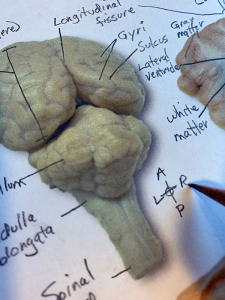
 anatomical rosette


3 | Sponsored by AAA

0.5 minutes
The searchable transcript for this episode, as well as the captioned audiogram of this episode, are sponsored by The American Association of Anatomists (AAA) at anatomy.org. Their big meeting is in April at the Experimental Biology (EB) meeting in Orlando FL. Check it out!
 American Association of Anatomists

4 | Reserve Hematopoiesis

3 minutes
Hematopoietic stem cells  (HSCs) may have a "back-up system" that helps out after damage to the working population. These "reserve" HSCs (rHSCs) may step up when the primed HSCs (pHSCs) cannot keep up with the demand for hematopoiesis.
  • Scientists have identified a bone marrow backup system (summary article) my-ap.us/2BmcoE0
  • N-Cadherin-Expressing Bone and Marrow Stromal Progenitor Cells Maintain Reserve Hematopoietic Stem Cells
    (report by Zhao, et al. in Cell Reports) my-ap.us/2Bk7vLN

 hematopoietic stem cell


5 | Sponsored by HAPS

0.5 minutes
The Human Anatomy & Physiology Society (HAPS) is a sponsor of this podcast. Did you know there's a one-day regional HAPS conference in March? Check it out. You can help appreciate their support by clicking the link below and checking out the many resources and benefits found there.

 HAPS logo

6 | Featured: Last Best Story in Adult Neurogenesis & ANS Pathways

12 minutes
The "last best story" is what I tell my students I'm providing to them. That approach emphasizes the evolving nature of scientific understanding. In this episode, I mention two stories that are evolving right now.
reading a book

If the hyperlinks here are not active, go to TAPPradio.org to find the episode page.

Amazon and TextExpander referrals help defray podcasting expenses.

Transcript and captions for this episode
are supported by theAmerican Association of Anatomists.anatomy.org


The Human Anatomy & Physiology Societyalso provides support for this podcast.
theAPprofessor.org/haps


(Clicking on sponsor links 
helps let them know you appreciatetheir support of this podcast!)

Click here to listen to this episode—or access the detailed notes and transcript.


Thursday, January 10, 2019

Episode 35 Intro | TAPP Radio Preview


Host Kevin Patton previews the content of the upcoming full episode, which focuses on the big ideas (essential concepts) of the A&P course.
 big idea

There's more... a few content updates... plus some word dissections, a toast to Elaine Marieb, and a recommendation from The A&P Professor Book Club.
If you cannot see or activate the audio player click here and scroll down to the Preview section.

Questions & Feedback: 1-833-LION-DEN (1-833-546-6336)
Follow The A&P Professor on Twitter, Facebook, Blogger, Nuzzel, Tumblr, or Instagram!

Topics
.5 minute
  • News about how smell relates to stress
  • News about how oxytocin works
  • Cholesterol testing for cardiac risk - are changes coming?
  • Big ideas - the essential concepts of A&P
  •  
Word Dissections
9.5 minutes
  • Dissection
    • Section
  • Concept
  • Gradient
  • Apolipoprotein B (ApoB)
Elaine Marieb
1.5 minute
Book Club
3.5 minutes
  • The Core Concepts of Physiology: A New Paradigm for Teaching Physiology
    • by Joel Michael , William Cliff, Jenny McFarland, Harold Modell, Ann Wright
  • Book details:
  • 15 core concepts of physiology
    • Explanations and applications of a concept-based approach to the physiology course
    • Concepts:
      • Evolution
      • Homeostasis
      • Causality
      • Energy
      • Structure/function
      • Cell theory
      • Levels of organization
      • Cell–cell communication
      • Cell membrane
      • Flow down gradients
      • Genes to proteins
      • Interdependence
      • Mass balance
      • Physics/chemistry
      • Scientific reasoning
If the hyperlinks here are not active, go to TAPPradio.org to find the episode page.
Amazon referrals help defray podcasting expenses.
Transcript and captions for this episode are supported by the 
also provides support for this podcast.theAPprofessor.org/haps

(Clicking on sponsor links 
helps let them know you appreciate their support of this podcast!)

Click here to listen to this episode—or access the detailed notes and transcript.

Monday, February 26, 2018

Give Your Course a Half Flip With a Full Twist | TAPP Radio 6


New blood test for concussion.
Why red pens are not ideal for grading and feedback.
Flipped learning isn't as hard as it sounds.

If you cannot see or activate the audio player click here.

(1:04) The FDA recently approved a new blood test for concussions. How is the test used and what does it tell us?
(11:10) It’s a small thing, for sure, but the color pen we use for grading student work can have an impact on the tone of communication in a class.
(13:50) Subscribing helps you and others stay up to date with the world of A&P teaching! And it helps other teachers find this podcast when they search for it.
(14:35) Kevin flipped his first A&P course in 2006, a year before the term flipped learning was first coined by Bergmann and Sams. In this segment, he discusses how his case study may help you decide how to flip (or half flip) your own A&P course.
If the hyperlinks above are not active, go to TAPPradio.org to find the episode page.


Click here to listen to this episode—or access the detailed notes and transcript.

Friday, February 16, 2018

Concept Maps Help Students Find Their Way| TAPP Radio 5


Use concept mapping for student learning and assessment.
Blood doping is a perennial news topic that helps apply central concepts of A&P.

If you cannot see the audio player click here.

(0:48) Blood doping stories related to the 2018 Winter Olympics (or in any context) are effective in helping student students apply and integrate diverse concepts in anatomy and physiology

(6:32) The featured topic is concept mapping and its uses in helps students learn and helping instructors assess learning and diagnose misconceptions and other learning concerns.
Sample concept map

Click here to listen to this episode—or access the detailed notes and transcript.

Wednesday, January 24, 2018

Why Spaced Retrieval Practice is Your Most Powerful Teaching and Learning Tool | TAPP Radio 1


Spaced retrieval practice may be the magic spell you are looking for.
An immune role for platelets.
Why a podcast?!

In this premier episode of The A&P Professor podcast (TAPP Radio), host Kevin Patton introduces himself and his reasons for launching this new series. (0:49)
An update regarding the role of platelets in innate immunity follows. (7:51)
Kevin then invites listeners to the Regional HAPS Conference in St. Louis. (13:04)
The featured topic is Spaced Retrieval Practice. (14:30)
More details at the episode page.
Transcript available at the script page.

If the hyperlinks above are not active, go to TAPPradio.org to find the episode page.

student taking a test

Check out the detailed notes and transcript of this episode!

Friday, January 5, 2018

Platelets vs. Bacteria

Platelets as potent scavengers of bacteria? Really?

Something like 750 billion tiny cell fragments called platelets circulate in the human blood stream. When an injury to a blood vessel occurs, they stick to the exposed collagen in groups—forming platelet plug. And trigger additional reactions that eventually result in a blood clot.

But did you know that they have other helpful jobs, too? Like rounding up bacteria and feeding them up to immune cells, which devour them to make us safe.

This innate immune function of platelets has recently been outlined by researchers, as the information below summarizes.

Read through the quick points below to get an overview of some immune functions of platelets. Then read the full articles if you want to know more about these discoveries—including some great diagrams, micrographs, and videos.

[A short item on this topic also appears in today's edition of my daily Nuzzel newsletter of curated headlines for A&P professors.]

Quick points about platelets as bacterial scavengers


  • At sites of vessel injury/inflammation, platelets that contact intact collagen stick together—but platelets that do not contact collagen are motile.

  • Motile platelets change shape from a "fried egg" to a polarized "half moon" to better navigate the shearing forces of blood flow.

    • They can even navigate "upstream" against the flow of blood.

  • Platelets can use mechanical force to pull particles—including bacteria—from surrounding substrates.

  • Platelets collect and bundle bacteria, which facilitates neutrophil activation and subsequent phagocytosis. 

Migration pattern of motile platelet (left). Platelets collecting bacteria into bundles.

What can we use from this in teaching undergraduate A&P?


  • Yeah, okay we don't have time to go into all the ins and outs of platelets in a typical A&P course, but we can mention that platelets are now known to have immune functions.

    • Consider circling back to this mention later, when (if) you cover innate immune mechanisms a bit later in the course.

  • Consider calling attention to the sensory functions needed for platelets to analyze their microenvironment within the bloodstream.

  • Consider pointing out the specialized structure and function of the platelet's plasma membrane.

    • Integrins (integral membrane proteins) have a role in detecting particles for adhesion, binding to them, and sorting them.

    • Invaginations of the plasma membrane facilitate bundling of bacteria.

  • The shape changes needed for migration and handling of bacteria require actin-myosin reactions to power them. As in muscle fibers, these contractions are triggered by influx of extracellular calcium. In case you want to circle back to that.

  • Perhaps we should make a stronger point in reminding students that although they are "cell fragments" without a nucleus, they're more than just bags of hemostatic chemicals.

  • All these opportunities to "circle back" to previously studied concepts helps students make connections in their developing conceptual framework. And help them form a better understanding of the "big picture."

Want to know more?


Platelets, On Your Marks, Get Set, Migrate!

  • Bambach S, Lämmermann T. Cell. 2017 vol: 171 (6) pp: 1256-1258
  • Introduction to the Gaertner, et. al., paper below—giving background and overview to enhance understanding of the new discoveries. Great diagram, too! Click "Supplemental information" in the article to access video clips. 
  • my-ap.us/2EbU6Eu


Migrating Platelets Are Mechano-scavengers that Collect and Bundle Bacteria.

  • Gaertner F et. al. Cell. 2017 vol: 171 (6) pp: 1368-1382.e23
  • Journal article describing the scavenger role of platelets. Includes a few very nice, simple diagrams—and some cool micrographs and data graphs. These can also be downloaded as PowerPoint slides. Click "Supplemental information" in the article to access video clips. 
  • my-ap.us/2F5iM2U


Platelets Mediate Host Defense against Staphylococcus aureus through Direct Bactericidal Activity and by Enhancing Macrophage Activities.

  • Ali R et. al. Journal of immunology. 2017 vol: 198 (1) pp: 344-351
  • Journal article that supports the concept that platelets can kill MRSA bacteria and enhance their phagocytosis by macrophages.
  • my-ap.us/2EaO5be


[NOTE: If you can't access the full text of any resource, ask your school's reference librarian for help. If they can't provide direct access, they'll probably know how to get a copy of the resource for you. Quickly.]


Photos: LMU

Wednesday, February 17, 2016

What About That Negative Blood?

Every once in a while, I get an A&P student who expresses the concept of a negative Rh blood type as "having negative blood"—along with the connotation that having this blood type has a negative health impact.

We do not ordinarily think about red blood cell types such as A, B, AB, O, Rh+/-, or others, as being "bad for you" or even "good for you" healthwise. We most often think of them simply as different "flavors" of RBCs present in the human population.

Oh yeah, there are specific situations in which have a particular blood type can have significant health consequences. If you need an organ or tissue transplant—especially a blood donation—having the same RBC type as the available donor supply is "good for you." The lack thereof, then, is "bad for you" to at least some degree. Just like being tall can be bad for you when going through a low doorway.

Likewise, we all know there are health risks associated with a Rh- mother carrying an Rh+ fetus—especially the situation is not identified or if precautions are not taken.  But it's not like the Rh- type itself has a direct health impact on the person with that type.

However, such a view may be a bit more complex than it first seems.  Research continues to confirm that having a particular RBC type may affect your risk for certain health conditions.

For example, a little over a year ago, research published in the journal Neurology found that adults with type AB blood were at an increased risk of cognitive impairment compared to type O.  Of course, much more work needs to be done to establish a potential mechanism for this phenomenon. But it does give some evidence that the idea of certain blood types having health consequences may be true.

Other studies have suggested these links:

  • Type O may be linked to depression, anxiety, low (female) fertility

  • Type O and/or A may be linked to attention-deficit disorder (ADD) in children

  • Type B may be linked to a lower risk of ADD in children

  • Type A may be linked to obsessive-compulsive disorder and stomach cancer

  • Type A, B, and AB may be linked to heart disease and abnormal blood clotting


What can we use from this in teaching undergraduate A&P?


  • Another interesting aside to throw into an exploration of blood types to "liven up" the conversation a bit to motivate students.

  • Consider using a diagram of the actual ABO markers to show what's involved at the cellular level—and their similarity to each other.

  • One may want to mention that blood types may become a factor health professionals may look at when assessing health risks in patients

  • A classroom discussion on possible mechanisms of a blood-type—health risk could be interesting and useful. This could lead to some great insights about methods of scientific discovery. For example, what's the difference between correlation and cause? How confident should we be in one study?

    • Consider leading the discussion toward exactly what you want your students to know about blood types and health (e.g., blood donors and recipients, erythroblastosis fetalis, etc.)

Want to know more?


Blood Type Matters for Brain Health

  • A. Anderson and V. Stern. Scientific American MIND January 1, 2015
  • Brief article explains discovery that people with AB blood type are at higher risk for age-related cognitive decline. Also lists some of the other blood-type links I mentioned above.
  • my-ap.us/1KohroF


ABO blood type, factor VIII, and incident cognitive impairment in the REGARDS cohort

  • K. S. Alexander, et al. Neurology September 30, 2014 vol. 83 no. 14 1271-1276 
  • doi:http://dx.doi.org/ 10.1212/WNL.0000000000000844
  • Original research article about the discovery about AB blood type and brain health.
  • my-ap.us/1Koiq8j


Type O blood may be a fertility barrier

  • New Scientist. 10:15 26 October 2010
  • Brief article in plain English.
  • my-ap.us/1KolWzn


Yes, your blood group DOES affect your health

  • J. Naish Daily Mail 22 February 2011
  • Brief article includes some interesting historical facts.
  • my-ap.us/1Kompl7


Your Blood Type May Boost Your Heart Risk, Study Finds

  • S. Reinberg HealthDay Aug. 14, 2012
  • Brief article on link between blood type and heart disease
  • my-ap.us/1KomIfW

Blood photo: M. Osuchowicz
Diagram: InvictaHOG

Wednesday, January 27, 2016

Where did Zika virus come from and why is it a problem in Brazil?

From October 2015 to January 2016, there were almost 4,000 cases of babies born with microcephaly in Brazil. Before then, there were just 150 cases per year.

The suspected culprit is a mosquito-borne virus called Zika. Officials in Colombia, Ecuador, El Salvador and Jamaica have suggested that women delay becoming pregnant. And the Centers for Disease Control and Prevention has advised pregnant women to postpone travel to countries where Zika is active.
Countries and territories with active Zika virus transmission.

The World Health Organization says it is likely that the virus will spread, as the mosquitoes that carry the virus are found in almost every country in the Americas.

Zika virus was discovered almost 70 years ago, but wasn’t associated with outbreaks until 2007. So how did this formerly obscure virus wind up causing so much trouble in Brazil and other nations in South America?

Where did Zika come from?

Zika virus was first detected in Zika Forest in Uganda in 1947 in a rhesus monkey, and again in 1948 in the mosquito Aedes africanus, which is the forest relative of Aedes aegypti. Aedes aegypti and Aedes albopictus can both spread Zika. Sexual transmission between people has also been reported.

Aedes aegypti. Emil August Goeldi (1859-1917).

Zika has a lot in common with dengue and chikungunya, another emergent virus. All three originated from West and central Africa and Southeast Asia, but have recently expanded their range to include much of the tropics and subtropics globally. And they are all spread by the same species of mosquitoes.

Until 2007 very few cases of Zika in humans were reported. Then an outbreak occurred on Yap Island of Micronesia, infecting approximately 75 percent of the population. Six years later, the virus appeared in French Polynesia, along with outbreaks of dengue and chikungunya viruses.

How did Zika get to the Americas?

Genetic analysis of the virus revealed that the strain in Brazil was most similar to one that had been circulating in the Pacific.

Brazil had been on alert for an introduction of a new virus following the 2014 FIFA World Cup, because the event concentrated people from all over the world. However, no Pacific island nation with Zika transmission had competed at this event, making it less likely to be the source.
There is another theory that Zika virus may have been introduced following an international canoe event held in Rio de Janeiro in August of 2014, which hosted competitors from various Pacific islands.

Another possible route of introduction was overland from Chile, since that country had detected a case of Zika disease in a returning traveler from Easter Island.

Most people with Zika don’t know they have it

According to research after the Yap Island outbreak, the vast majority of people (80 percent) infected with Zika virus will never know it – they do not develop any symptoms at all. A minority who do become ill tend to have fever, rash, joint pains, red eyes, headache and muscle pain lasting up to a week. And no deaths had been reported.

However, in the aftermath of the Polynesian outbreak it became evident that Zika was associated with Guillain-Barré syndrome, a life-threatening neurological paralyzing condition.

In early 2015, Brazilian public health officials sounded the alert that Zika virus had been detected in patients with fevers in northeast Brazil. Then there was a similar uptick in the number of cases of Guillain-Barré in Brazil and El Salvador. And in late 2015 in Brazil, cases of microcephaly started to emerge.

At present, the link between Zika virus infection and microcephaly isn’t confirmed, but the virus has been found in amniotic fluid and brain tissue of a handful of cases.

How Zika might affect the brain is unclear, but a study from the 1970s revealed that the virus could replicate in neurons of young mice, causing neuronal destruction. Recent genetic analyses suggest that strains of Zika virus may be undergoing mutations, possibly accounting for changes in virulence and its ability to infect mosquitoes or hosts.

The Swiss cheese model for system failure


The Swiss cheese model of accident causation.
Davidmack via Wikimedia Commons, CC BY-SA

One way to understand how Zika spread is to use something called the Swiss cheese model. Imagine a stack of Swiss cheese slices. The holes in each slice are a weakness, and throughout the stack, these holes aren’t the same size or the same shape. Problems arise when the holes align.

With any disease outbreak, multiple factors are at play, and each may be necessary but not sufficient on its own to cause it. Applying this model to our mosquito-borne mystery makes it easier to see how many different factors, or layers, coincided to create the current Zika outbreak.

A hole through the layers

The first layer is a fertile environment for mosquitoes. That’s something my colleagues and I have studied in the Amazon rain forest. We found that deforestation followed by agriculture and regrowth of low-lying vegetation provided a much more suitable environment for the malaria mosquito carrier than pristine forest.

Increasing urbanization and poverty create a fertile environment for the mosquitoes that spread dengue by creating ample breeding sites. In addition, climate change may raise the temperature and/or humidity in areas that previously have been below the threshold required for the mosquitoes to thrive.

The second layer is the introduction of the mosquito vector. Aedes aegypti and Aedes albopictus have expanded their geographic range in the past few decades. Urbanization, changing climate, air travel and transportation, and waxing and waning control efforts that are at the mercy of economic and political factors have led to these mosquitoes spreading to new areas and coming back in areas where they had previously been eradicated.

A woman walks away from her apartment as health workers fumigate the Altos del Cerro neighborhood as part of preventive measures against the Zika virus and other mosquito-borne diseases in Soyapango, El Salvador January 21, 2016.
Jose Cabezas/Reuters

For instance, in Latin America, continental mosquito eradication campaigns in the 1950s and 1960s led by the Pan American Health Organization conducted to battle yellow fever dramatically shrunk the range of Aedes aegypti. Following this success, however, interest in maintaining these mosquito control programs waned, and between 1980 and the 2000s the mosquito had made a full comeback.
The third layer, susceptible hosts, is critical as well. For instance, chikungunya virus has a tendency to infect very large portions of a population when it first invades an area. But once it blows through a small island, the virus may vanish because there are very few susceptible hosts remaining.

Since Zika is new to the Americas, there is a large population of susceptible hosts who haven’t previously been exposed. In a large country, Brazil for instance, the virus can continue circulating without running out of susceptible hosts for a long time.

The fourth layer is the introduction of the virus. It can be very difficult to pinpoint exactly when a virus is introduced in a particular setting. However, studies have associated increasing air travel with the spread of certain viruses such as dengue.

When these multiple factors are in alignment, it creates the conditions needed for an outbreak to start.

Putting the layers together

My colleagues and I are studying the role of these “layers” as they relate to the outbreak of yet another mosquito-borne virus, Madariaga virus (formerly known as Central/South American eastern equine encephalitis virus), which has caused numerous cases of encephalitis in the Darien jungle region of Panama.

There, we are examining the association between deforestation, mosquito vector factors, and the susceptibility of migrants compared to indigenous people in the affected area.
In our highly interconnected world which is being subjected to massive ecological change, we can expect ongoing outbreaks of viruses originating in far-flung regions with names we can barely pronounce – yet.


Today's guest blogger:
The Conversation
Amy Y. Vittor, Assistant Professor of Medicine, University of Florida
This article was originally published on The Conversation. Read the original article.


Monday, February 2, 2015

Virtual Immunology Lab


Looking for a supplemental hands-on activity with the immune system in your course?

Try the FREE online interactive Immunology Virtual Lab from the Howard Hughes Medical Institute.

It covers these concepts:

  • The basis of humoral immunity 
  • The foundation for ELISA (enzyme-linked immunosorbent assay)
  • Potential errors in conducting an ELISA
  • Sensitivity and specificity of a diagnostic test


What can we use from this in teaching undergraduate A&P?


  • Link to this virtual lab activity from your online syllabus, course web page, or LMS (or in an email  or tweet to students)
  • If you want to give course points for the lab, consider an online quiz or lab report submitted through your learning management system (LMS) or emailed to you.
  • Gives students a "real life" clinical lab application for the concepts they are learning in A&P.
  • Provides an immunology lab option for online/hybrid courses or wet labs that don't have funding for immunology experiments.


Want to know more?


Immunology Virtual Lab

  • BioInteractive. Howard Hughes Medical Institute. Accessed 16 Sep 2014.
  • This virtual lab teaches the procedures of performing an ELISA test to determine whether a particular antibody is present in a patient's blood sample.
  • my-ap.us/YPWv3f
ELISA
  • MedlinePlus. National Library of Medicine. Accessed 16 Sep 2014
  • Brief overview of what ELISA is.  You can link your students to this as a brief intro to the virtual lab.
  • my-ap.us/1o1dVjg

BioInteractive Virtual Labs

  • BioInteractive. Howard Hughes Medical Institute. Accessed 16 Sep 2014.
  • List of all the FREE virtual labs offered by HHMI's BioInteractive project.
  • my-ap.us/1wAX92q

Immunity Topics

  • Kevin Patton. The A&P Professor. Various dates.
  • List of previous blog posts on the topic of immunity.
  • my-ap.us/XdWVyO


Tuesday, November 11, 2014

Shepherd's Apps for Teaching Physiology


Here are some computer-based activities that help students learn specific concepts of physiology produced by veteran professor Pete Shepherd.  Dr. Shepherd has been developing over the course of many years based on his extensive teaching experience.

A while back, I told you about the Life Science Teaching Resource Community and its archive of free teaching and learning resources.  Here's an example of a collection of resources from that archive that your students can use to "play around with" physiological conditions to see what changes occur in the body as a result.  All of them can either be used in the classroom/lab setting or can be used individually by students for self-learning.

Included in the collection are these apps, most of which are available on multiple platforms:

Capillary Pressure, which illustrates the vascular control of capillary hydrostatic pressure.

Alveolar Gas, which lets you study some of the physiological factors that affect the composition of alveolar and expired gases. Such factors include dead space, tidal volume, the frequency of breathing, and the rates of oxygen consumption and carbon dioxide production. A worksheet is included.

Blood Oxygen, which enables the user to change variables like the PO2, hemoglobin concentration, and hemoglobin's affinity for oxygen and calculate the concentrations of oxygen in the form of oxyhemoglobin and dissolved oxygen. Simulations include anemia, polycythemia, comparing the effects of oxygen inhalation in a pulmonary "patient" with a normal person, carbon monoxide poisoning, hyperbaria, etc., as well as the concepts of the Fick Principle and the arteriovenous oxygen difference.

Pulse Pressure, which simulates the arterial pressure pulse. The user explores factors like heart rate, stroke volume, arterial compliance, and arterial resistance and see how they affect the arterial pulse pressure.

Sat Curves, which allows the user to demonstrate the effects of pH, PCO2, DPG, and temperature on the oxyhemoglobin dissociation curve. Two graphs are displayed so that one can serve as a control and compared with the other. Cursors on both graphs can be manipulated to obtain exact readings of oxyhemoglobin saturation as specified PO2s.


If you want to check out these amazing resources, please access them in the Life Science Teaching Resource Community at


Image credit: Shepherd

Monday, February 25, 2013

Blood viscosity

Blood viscosity is a concept that is important in understanding blood flow.  It is, after all, one of the factors that affects peripheral resistance to blood flow.

One major factor influencing blood viscosity is hematocrit.  You may be interested in using the analogy of ketchup outlined a few months ago in my article for students Blood viscosity and peripheral resistance at theAPstudent.org

Recently, researchers also looked at the viscosity of the blood plasma alone (without the formed elements).  They found that blood plasma has unique characteristics of flow found only in non-Newtonian fluids, becoming less viscous with increasing pressure.  Again, just like ketchup. Plasma, unlike plain water, exhibits both viscous and elastic behaviors.

Researchers found in recent experiments that this characteristic of plasma may promote swirling where blood vessels diameters change—both at the beginning and end of a narrowed segment.  Thus, this could have an effect on formation of clots at stenoses or where a stent has been placed.

So, as you may have suspected all along, blood is not only thicker than water—it's weirder than water.

Want to know more?

  • Blood viscosity and peripheral resistance
    • Kevin Patton
    • The A&P Student 12 September 2012
    • [Analogy of ketchup flow for students.  Includes video.]
    • my-ap.us/XuR596
  • Blood Is Thicker Than Water – And Blood Plasma Is, Too
    • Science Daily Feb. 18, 2013
    • [Brief, plain-language article outlining the recent research.]
    • my-ap.us/YpGhas
  • Rheology of human blood plasma: Viscoelastic versus Newtonian behavior.
    • M. Brust, et al.
    • Phys. Rev. Lett, 110, 078305 (2013) DOI: 10.1103/PhysRevLett.110.078305
    • [Original journal article.  See photos from the experiments below.]
    • my-ap.us/15HVkle


Recording from one of the "drop-experiments": If blood plasma is placed between two plates and then they pulled apart, high-speed cameras show in conjunction with high-resolution microscope objectives that strands and droplets form. This demonstrates that plasma is elastic and viscous and does not behave like water.
Photo: Christof Schaefer, Phys. Rev. Lett. 110, 2013, 078305th Copyright (2013) by the American Physical Society

Plasma turbulence affects the blood. In one experiment, the researchers had plasma flow through a microfluidic constriction as in vasoconstriction. They showed turbulence at the end of the contraction, but also - as seen here in the pictures - sticking to its beginning. This turbulence is caused by the viscoelastic properties of blood plasma.
Photo: Mathias chest, Phys. Rev. Lett. 110, 2013, 078305th Copyright (2013) by the American Physical Society


Friday, July 27, 2012

Doping. Again.

Most of us mention the concept of doping in our A&P courses because it's an ever present issue in our society and therefore a good way to help students apply their knowledge of human structure and function to practical scenarios.  As I've mentioned in previous posts, in Olympic years it becomes an even more potent way to draw students interest into the world of human A&P.

Once again, we're hearing doping stories in the news.  On the heels of continuing scandals in the sport of cycling, we are now hearing reports of doping in Olympic athletes.

As many longtime readers of this blog know, besides several blog articles, I have a resource page on doping for A&P teachers at my companion website The A&P Professor.

There is also a recent article in The Scientist outlining advances in detection of doping in athletes.  This article is not only informative for personal enjoyment of the current Olympic games--because we'll all be more knowledgeable--but it's a great resource to prepare for the student questions we'll be getting soon.  And in the near future.

Want to know more?
Anti-Doping Research Gets Creative: Scientists work hard to keep up with ever-evolving performance enhancement techniques that go undetected by existing tests.
Sabrina RichardsThe Scientist Online July 26, 2012
[Comprehensive, easy-to-follow article on the latest in anti-doping strategies. Might be good assigned reading for your course.]
my-ap.us/SXKHU0

Kevin's blog articles on doping
 . . . and how to use doping to illustrate A&P in your classroom
my-ap.us/aa3AjM

Resource page on doping at The A&P Professor website
my-ap.us/942vMZ

Saturday, February 11, 2012

Free book on heart function!

Besides free advice, The A&P Professor is also a big fan of free resources and references.  And here's a set of free resources that will help give you a new perspective on cardiovascular function, particularly the factors that affect cardiac output.

I was recently contacted by Doug Anderson, a relative of the late cardiac surgeon, educator, and inventor Robert M. Anderson.  Doug told me about their family's efforts to make Dr. Anderson's contributions to understanding cardiovascular function widely available to the educational community.

Besides a FREE downloadable textbook outlining an approach to understanding cardiovascular function that is different than what you might be used to, there is also a FREE video that summarizes Anderson's concepts.

The video features Anderson himself walking the viewer through the operation of an elegant pump that he designed and built for teaching purposes. For a deeper understanding of the fluid dynamics behind cardiac function, you should consider watching the video.

By the way, this textbook has a  Creative Commons license that allows you to use all or part of it FREE in your course!

Anderson with his circulation model 
If you are looking for a FREE "medical school lesson" on the factors that influence blood flow, then check out these resources:

Want to know more?


Free textbook
Gross Physiology of the Cardiovascular System
Robert M. Anderson
PDF (printable) my-ap.us/zGtqOa 
Kindle and ePub formats coming soon!

Free video
The Determinants of Cardiac Output
University of Arizona Health Sciences Center with Robert M. Anderson et. al.
Video my-ap.us/xT5dx9
Illustrated transcript my-ap.us/ywWcgL

Free website
Gross Physiology of the Cardiovascular System
Includes additional resources
cardiac-output.info
Anderson's approach is a bit different than what many of us are used to.  Tell me what you think!

Monday, October 3, 2011

Dendritic cell pioneers win Nobel Prize

The Nobel Assembly at Karolinska Institutet has today decided that

The Nobel Prize in Physiology or Medicine 2011
shall be divided, with one half jointly to
Bruce A. Beutler and Jules A. Hoffmann
for their discoveries concerning the activation of innate immunity
and the other half to
Ralph M. Steinman
for his discovery of the dendritic cell and its role in adaptive immunity


Summary

This year's Nobel Laureates have revolutionized our understanding of the immune system by discovering key principles for its activation.
Scientists have long been searching for the gatekeepers of the immune response by which man and other animals defend themselves against attack by bacteria and other microorganisms. Bruce Beutler and Jules Hoffmann discovered receptor proteins that can recognize such microorganisms and activate innate immunity, the first step in the body's immune response. Ralph Steinman discovered the dendritic cells of the immune system and their unique capacity to activate and regulate adaptive immunity, the later stage of the immune response during which microorganisms are cleared from the body.
The discoveries of the three Nobel Laureates have revealed how the innate and adaptive phases of the immune response are activated and thereby provided novel insights into disease mechanisms. Their work has opened up new avenues for the development of prevention and therapy against infections, cancer, and inflammatory diseases.

Two lines of defense in the immune system

We live in a dangerous world. Pathogenic microorganisms (bacteria, virus, fungi, and parasites) threaten us continuously but we are equipped with powerful defense mechanisms (please see image below). The first line of defense, innate immunity, can destroy invading microorganisms and trigger inflammation that contributes to blocking their assault. If microorganisms break through this defense line, adaptive immunity is called into action. With its T and B cells, it produces antibodies and killer cells that destroy infected cells. After successfully combating the infectious assault, our adaptive immune system maintains an immunologic memory that allows a more rapid and powerful mobilization of defense forces next time the same microorganism attacks. These two defense lines of the immune system provide good protection against infections but they also pose a risk. If the activation threshold is too low, or if endogenous molecules can activate the system, inflammatory disease may follow.
The components of the immune system have been identified step by step during the 20th century. Thanks to a series of discoveries awarded the Nobel Prize, we know, for instance, how antibodies are constructed and how T cells recognize foreign substances. However, until the work of Beutler, Hoffmann and Steinman, the mechanisms triggering the activation of innate immunity and mediating the communication between innate and adaptive immunity remained enigmatic.

Discovering the sensors of innate immunity

Jules Hoffmann made his pioneering discovery in 1996, when he and his co-workers investigated how fruit flies combat infections. They had access to flies with mutations in several different genes including Toll, a gene previously found to be involved in embryonal development by Christiane Nüsslein-Volhard (Nobel Prize 1995). When Hoffmann infected his fruit flies with bacteria or fungi, he discovered that Toll mutants died because they could not mount an effective defense. He was also able to conclude that the product of the Toll gene was involved in sensing pathogenic microorganisms and Toll activation was needed for successful defense against them.
Bruce Beutler was searching for a receptor that could bind the bacterial product, lipopolysaccharide (LPS), which can cause septic shock, a life threatening condition that involves overstimulation of the immune system. In 1998, Beutler and his colleagues discovered that mice resistant to LPS had a mutation in a gene that was quite similar to the Toll gene of the fruit fly. This Toll-like receptor (TLR) turned out to be the elusive LPS receptor. When it binds LPS, signals are activated that cause inflammation and, when LPS doses are excessive, septic shock. These findings showed that mammals and fruit flies use similar molecules to activate innate immunity when encountering pathogenic microorganisms. The sensors of innate immunity had finally been discovered.
The discoveries of Hoffmann and Beutler triggered an explosion of research in innate immunity. Around a dozen different TLRs have now been identified in humans and mice. Each one of them recognizes certain types of molecules common in microorganisms. Individuals with certain mutations in these receptors carry an increased risk of infections while other genetic variants of TLR are associated with an increased risk for chronic inflammatory diseases.

A new cell type that controls adaptive immunity

Ralph Steinman discovered, in 1973, a new cell type that he called the dendritic cell. He speculated that it could be important in the immune system and went on to test whether dendritic cells could activate T cells, a cell type that has a key role in adaptive immunity and develops an immunologic memory against many different substances. In cell culture experiments, he showed that the presence of dendritic cells resulted in vivid responses of T cells to such substances. These findings were initially met with skepticism but subsequent work by Steinman demonstrated that dendritic cells have a unique capacity to activate T cells.
Further studies by Steinman and other scientists went on to address the question of how the adaptive immune system decides whether or not it should be activated when encountering various substances. Signals arising from the innate immune response and sensed by dendritic cells were shown to control T cell activation. This makes it possible for the immune system to react towards pathogenic microorganisms while avoiding an attack on the body's own endogenous molecules.

From fundamental research to medical use

The discoveries that are awarded the 2011 Nobel Prize have provided novel insights into the activation and regulation of our immune system. They have made possible the development of new methods for preventing and treating disease, for instance with improved vaccines against infections and in attempts to stimulate the immune system to attack tumors. These discoveries also help us understand why the immune system can attack our own tissues, thus providing clues for novel treatment of inflammatory diseases.


Bruce A. Beutler was born in 1957 in Chicago, USA. He received his MD from the University of Chicago in 1981 and worked as a scientist at Rockefeller University in New York and the University of Texas in Dallas, where he discovered the LPS receptor. Since 2000 he has been professor of genetics and immunology at The Scripps Research Institute, La Jolla, USA.
Jules A. Hoffmann was born in Echternach, Luxembourg in 1941. He studied at the University of Strasbourg in France, where he obtained his PhD in 1969. After postdoctoral training at the University of Marburg, Germany, he returned to Strasbourg, where he headed a research laboratory from 1974 to 2009. He has also served as director of the Institute for Molecular Cell Biology in Strasbourg and during 2007-2008 as President of the French National Academy of Sciences.
Ralph M. Steinman was born in 1943 in Montreal, Canada, where he studied biology and chemistry at McGill University. After studying medicine at Harvard Medical School in Boston, MA, USA, he received his MD in 1968. He has been affiliated with Rockefeller University in New York since 1970, has been professor of immunology at this institution since 1988, and is also director of its Center for Immunology and Immune Diseases.


Key publications:

Poltorak A, He X, Smirnova I, Liu MY, Van Huffel C, Du X, Birdwell D, Alejos E, Silva M, Galanos C, Freudenberg M, Ricciardi-Castagnoli P, Layton B, Beutler B. Defective LPS signaling in C3H/HeJ and C57BL/10ScCr mice: Mutations in Tlr4 gene. Science 1998;282:2085-2088.
Lemaitre B, Nicolas E, Michaut L, Reichhart JM, Hoffmann JA. The dorsoventral regulatory gene cassette spätzle/Toll/cactus controls the potent antifungal response in drosophila adults. Cell 1996;86:973-983.
Steinman RM, Cohn ZA. Identification of a novel cell type in peripheral lymphoid organs of mice. J Exp Med 1973;137:1142-1162.
Steinman RM, Witmer MD. Lymphoid dendritic cells are potent stimulators of the primary mixed leukocyte reaction in mice. Proc Natl Acad Sci USA 1978;75:5132-5136.
Schuler G, Steinman RM. Murine epidermal Langerhans cells mature into potent immunostimulatory dendritic cells in vitro. J Exp Med 1985;161:526-546.

illustration High resolution image (pdf 3,6 Mb) 

The Nobel Assembly, consisting of 50 professors at Karolinska Institutet, awards the Nobel Prize in Physiology or Medicine. Its Nobel Committee evaluates the nominations. Since 1901 the Nobel Prize has been awarded to scientists who have made the most important discoveries for the benefit of mankind.

Nobel Prize® is the registered trademark of the Nobel Foundation 

The information above is taken directly from 
The 2011 Nobel Prize in Physiology or Medicine - Press Release
Nobelprize.org. 3 Oct 2011 my-ap.us/pE7zzC

Want to know more?
Immune Responses
[An animated activity from the Nobel Prize folks.] 

Find a brief explanation of dendritic cells in these textbooks:
Find FREE images and videos you can use in your course
Dendritic cells
http://my-ap.us/pkQycM

Watch a brief video on dendritic cells.

Monday, May 2, 2011

Video: Neutrophils to the Rescue

Have you seen this video from Science Videolab that shows fluorescent-stained neutrophils rushing toward the site of a tissue injury?

The clip actually strings together several videos showing bright green neutrophils rushing toward damaged cells in liver tissue (seen as bright red areas).  The narrator explains in simple terms what is going on and what it means in understanding what happens when tissue damage occurs.

This is a great FREE video to show your class when discussing any or all of these topics:
  • WBCs in general
  • Neutrophils
  • Immune response
  • Inflammation
  • Chemotaxis
Check out the video!
http://my-ap.us/fh1Exm
Want to know more?
Intravascular Danger Signals Guide Neutrophils to Sites of Sterile Inflammation
Braedon McDonald et al.

Science
15 October 2010: Vol. 330 no. 6002 pp. 362-366 DOI: 10.1126/science.1195491

[Research article that summarizes the discovery about how neutrophils use a multistep process to navigate toward noninfectious sites of tissue injury. ]

http://my-ap.us/f5Fua6
EDITORS' CHOICE: Immunology Inflammation Response in Living Color
Kristen L. Mueller
Sci. Signal., 19 October 2010 Vol. 3, Issue 144, p. ec324 DOI: 10.1126/scisignal.3144ec324
[Editor's summary of the processes described above]
http://my-ap.us/fFfwOq