Host Kevin Patton previews the content of the upcoming full episode, which focuses on the big ideas (essential concepts) of the A&P course.
There's more... a few content updates... plus some word dissections, a toast to Elaine Marieb, and a recommendation from The A&P Professor Book Club.
If you cannot see or activate the audio player click here and scroll down to the Preview section. Questions & Feedback: 1-833-LION-DEN (1-833-546-6336) Follow The A&P Professor on Twitter, Facebook, Blogger, Nuzzel, Tumblr, or Instagram!
Topics
.5 minute
News about how smell relates to stress
News about how oxytocin works
Cholesterol testing for cardiac risk - are changes coming?
also provides support for this podcast.theAPprofessor.org/haps (Clicking on sponsor links helps let them know you appreciate their support of this podcast!)
Medical mitochondria (4 min) Syllabuses: I need your help (1 min) Review of first two parts of this series (3 min) Featured: EVEN MORE Tricks for Retention & Success in Online Courses(18.5 min)
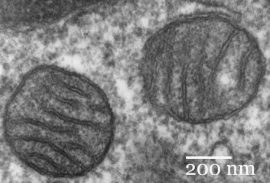
(0:42) New research proposes using mitochondria isolated from healthy tissue in a patient's body to treat ischemic heart muscle and perhaps other dysfunctional tissues or organs.
(4:44) Syllabuses, syllabi. Whatever. It's almost time to think about tweaking our course documents for the fall semester. I'll cover that in an upcoming episode, so I need you to send your contributions now!
Please share your syllabus ideas, questions, or comments at:
1-833-LION-DEN or 1-833-546-6336
podcast@theAPprofessor.org
(5:55) It's too long for one episode, so it's a series of three episodes: 21, 22 (previous episodes), and 23 (this episode).
If you're not teaching online now, you will be someday! Most of these tips apply to face-to-face courses, anyway.
In the previous two episodes, Kevin suggested:
It's all about connections.
Cultivate a friendly, informal, and supportive "online teaching persona"
Express empathy, don't just have empathy.
Use customer-service skills when communicating with students
Use our own pain points and frustrations to tap into how our students might feel
How we can literally make our online course a face to face course
How to use faces, voices, and scheduled course announcements to enhance the connections necessary to retain students and promote student success.
(8:47) Online courses are notorious for high dropout rates and high failure rates, compared to traditional face-to-face classes. Kevin continues to share even more strategies he has found to work in creating and nurturing the kinds of connections that help retain students and support their success in the course.
This episode focuses on:
Why reaching out to individual students who may be at risk is important--and how to do that.
Why feedback to students is important in nurturing connections.
Some final thoughts.
If you experience a repeated section starting about about timestamp 21:36, it's not your imagination. Probably. A pre-release version had such a hiccup and it may have been downloaded into your app. If so, you can simply re-download in the app. Or enjoy twice the fun by leaving the repeat in there!
If the hyperlinks here are not active, go to TAPPradio.org to find the episode page.
(13:50) Subscribing helps you and others stay up to date with the world of A&P teaching! And it helps other teachers find this podcast when they search for it.
(14:35) Kevin flipped his first A&P course in 2006, a year before the term flipped learning was first coined by Bergmann and Sams. In this segment, he discusses how his case study may help you decide how to flip (or half flip) your own A&P course.
Online Lecture Previews (Kevin’s online seminar on how he flipped his course, including a brief walk-through of the mechanics of producing an online lecture )
(0:48) Blood doping stories related to the 2018 Winter Olympics (or in any context) are effective in helping student students apply and integrate diverse concepts in anatomy and physiology
(6:32) The featured topic is concept mapping and its uses in helps students learn and helping instructors assess learning and diagnose misconceptions and other learning concerns.
Pre-testing is not just for assessment—it helps learning, too. A weird sneeze injury. The Anatomical Society's list of online resources. How many proteins are there in a cell?
A recent analysis suggests that a reasonable average number of proteins in a cell is 42 million. How might we incorporate that bit of trivia in our A&P courses? (0:41)
Pre-Testing isn't just for measuring prior competence before new learning starts. By itself, regardless of its use in course assessment, it's a powerful learning tool. Listen to Kevin's experience with pre-testing in his A&P courses. (10:28)
So why, exactly, is it that we should consume a lot of fiber in our diet to remain healthy? Are refined fiber supplements just as good as, say, an "apple a day?"
Recently, an article in the journal Cell answer seems to verify some of the answers for us.
As the paper cited below indicates, research seems to confirm that dietary fiber provides nutrients for the inhabitants of our intestinal microbiome. When dietary fiber is missing, then the microbes undergo a shift in populations and start consuming our GI mucus as an alternate source of nutrition. That, as you might guess, reduces the thickness of the protective mucus—hus increasing the likelihood that pathogens can more easily attack the intestinal lining. Ouch.
Apparently, refined prebiotic fibers don't fix the problem.
Here are some highlights of the research article (quoted from their online preview):
Characterized synthetic bacterial communities enable functional insights in vivo
Low-fiber diet promotes expansion and activity of colonic mucus-degrading bacteria
Purified prebiotic fibers do not alleviate degradation of the mucus layer
Fiber-deprived gut microbiota promotes aggressive colitis by an enteric pathogen
What can we use from this in teaching undergraduate A&P?
When asked by students about dietary fiber, you have more information from which to draw an answer.
When discussing any of these topics, you'll now have a bit more to add to your story:
nutrition
function of mucus
the human microbial system (or specifically, the GI microbiome)
how pathogens cause disease (or specifically, GI disorders)
Want to know more?
Veggies and Intact Grains a Day Keep the Pathogens Away
Francesca S. Gazzaniga. Dennis L. Kasper. Cell. Available online 17 November 2016
Brief preview of the M. Desai article cited below.
We are only very slowly recognizing the many biological and medical differences between males and females (and masculine/feminine)—besides the obvious ones related to reproduction. There are divergent patterns in the anatomy and physiology of perhaps every body system. However, in medical research male and female subjects are often grouped together in a way that obscures those divergent patterns.
Two "viewpoint" articles in the Journal of the American Medical Association (JAMA) today focus a light on this issue and point the way to improved—more clinically useful—medical research. Links to both articles are listed below.
As one of the articles points out, women have been included in medical trials for only the past few decades. So there is still a lot of work to be done to shore up the database of male-female differences. But also a lot of work to be done in sorting out male-female patterns of health and disease. Then even more work in making this new knowledge part of the everyday practice medicine.
Both articles are brief and relatively nontechnical, but when read together, they provide an important message for those of us teaching pre-clinical health professionals in A&P. That message is that we should consider introducing—then reinforcing—the notion of body-wide sex and gender differences.
Both articles give examples of such differences, but many more are to be found elsewhere, as well. Not that we should teach every possible example in the undergraduate A&P course. However, the general concept of functional variation between males and females may be an important one to emphasize as a sub-theme in our story of the human body.
What can we use from this in teaching undergraduate A&P?
Consider making sex differences a sub-theme in your A&P course.
Occasionally point out examples of structural, functional, and clinical patterns of variation that differ between males and females.
Compare and contrast sex differences with other types of pattern variations.
Discuss "patterns of variability" in contrast to a strictly "binary" view.
Consider bringing up sex-difference research that is not yet fully supported.
Discuss whether more attention to sex differences across topics in scientific research might help advance this area of knowledge.
Discuss the opposing view that there are no clinically significant biological differences between males and females other than those related to reproduction.
Look for such examples in your textbook and other teaching/learning resources and point them out to your students.
Consider having a classroom or online discussion of this topic.
Ask students to post links to articles that discuss male-female patterns of variation
Post to course discussion or course social media channel
Bring to class or email to instructor to share with class
Post on bulletin board
Bring up this issue when discussing how science is done.
Consider asking students what effects on public health a more thorough consideration of sex differences may produce.
Ask students to look at a study and ask whether sex differences were thoroughly accounted for in the methodology. Could this affect how the study is interpreted and applied in the clinic?
Want to know more?
Consideration of Sex Differences in Medicine to Improve Health Care and Patient Outcomes
Marianne J. Legato, MD; Paula A. Johnson, MD, MPH; JoAnn E. Manson, MD, DrPH.
JAMA. Published online October 31, 2016. doi:10.1001/jama.2016.13995
Circulation: Cardiovascular Quality and Outcomes. 2016; 9: S100-S101 doi: 10.1161/CIRCOUTCOMES.116.002660
Brief article that addresses the issue of terminology, specifically distinguishing between terms that address sex (male, female) and gender (masculine, feminine). Includes a solid list of references.
The World Health Organization says it is likely that the virus will spread, as the mosquitoes that carry the virus are found in almost every country in the Americas.
Zika virus was discovered almost 70 years ago, but wasn’t associated with outbreaks until 2007. So how did this formerly obscure virus wind up causing so much trouble in Brazil and other nations in South America?
Where did Zika come from?
Zika virus was first detected in Zika Forest in Uganda in 1947 in a rhesus monkey, and again in 1948 in the mosquito Aedes africanus, which is the forest relative of Aedes aegypti. Aedes aegypti and Aedes albopictus can both spread Zika. Sexual transmission between people has also been reported.
Zika has a lot in common with dengue and chikungunya, another emergent virus. All three originated from West and central Africa and Southeast Asia, but have recently expanded their range to include much of the tropics and subtropics globally. And they are all spread by the same species of mosquitoes.
Until 2007 very few cases of Zika in humans were reported. Then an outbreak occurred on Yap Island of Micronesia, infecting approximately 75 percent of the population. Six years later, the virus appeared in French Polynesia, along with outbreaks of dengue and chikungunya viruses.
How did Zika get to the Americas?
Genetic analysis of the virus revealed that the strain in Brazil was most similar to one that had been circulating in the Pacific.
Brazil had been on alert for an introduction of a new virus following the 2014 FIFA World Cup, because the event concentrated people from all over the world. However, no Pacific island nation with Zika transmission had competed at this event, making it less likely to be the source.
There is another theory that Zika virus may have been introduced following an international canoe event held in Rio de Janeiro in August of 2014, which hosted competitors from various Pacific islands.
Another possible route of introduction was overland from Chile, since that country had detected a case of Zika disease in a returning traveler from Easter Island.
Most people with Zika don’t know they have it
According to research after the Yap Island outbreak, the vast majority of people (80 percent) infected with Zika virus will never know it – they do not develop any symptoms at all. A minority who do become ill tend to have fever, rash, joint pains, red eyes, headache and muscle pain lasting up to a week. And no deaths had been reported.
In early 2015, Brazilian public health officials sounded the alert that Zika virus had been detected in patients with fevers in northeast Brazil. Then there was a similar uptick in the number of cases of Guillain-Barré in Brazil and El Salvador. And in late 2015 in Brazil, cases of microcephaly started to emerge.
At present, the link between Zika virus infection and microcephaly isn’t confirmed, but the virus has been found in amniotic fluid and brain tissue of a handful of cases.
How Zika might affect the brain is unclear, but a study from the 1970s revealed that the virus could replicate in neurons of young mice, causing neuronal destruction. Recent genetic analyses suggest that strains of Zika virus may be undergoing mutations, possibly accounting for changes in virulence and its ability to infect mosquitoes or hosts.
The Swiss cheese model for system failure
The Swiss cheese model of accident causation. Davidmack via Wikimedia Commons, CC BY-SA
One way to understand how Zika spread is to use something called the Swiss cheese model. Imagine a stack of Swiss cheese slices. The holes in each slice are a weakness, and throughout the stack, these holes aren’t the same size or the same shape. Problems arise when the holes align.
With any disease outbreak, multiple factors are at play, and each may be necessary but not sufficient on its own to cause it. Applying this model to our mosquito-borne mystery makes it easier to see how many different factors, or layers, coincided to create the current Zika outbreak.
A hole through the layers
The first layer is a fertile environment for mosquitoes. That’s something my colleagues and I have studied in the Amazon rain forest. We found that deforestation followed by agriculture and regrowth of low-lying vegetation provided a much more suitable environment for the malaria mosquito carrier than pristine forest.
Increasing urbanization and poverty create a fertile environment for the mosquitoes that spread dengue by creating ample breeding sites. In addition, climate change may raise the temperature and/or humidity in areas that previously have been below the threshold required for the mosquitoes to thrive.
The second layer is the introduction of the mosquito vector. Aedes aegypti and Aedes albopictus have expanded their geographic range in the past few decades. Urbanization, changing climate, air travel and transportation, and waxing and waning control efforts that are at the mercy of economic and political factors have led to these mosquitoes spreading to new areas and coming back in areas where they had previously been eradicated.
A woman walks away from her apartment as health workers fumigate the Altos del Cerro neighborhood as part of preventive measures against the Zika virus and other mosquito-borne diseases in Soyapango, El Salvador January 21, 2016.
Jose Cabezas/Reuters
For instance, in Latin America, continental mosquito eradication campaigns in the 1950s and 1960s led by the Pan American Health Organization conducted to battle yellow fever dramatically shrunk the range of Aedes aegypti. Following this success, however, interest in maintaining these mosquito control programs waned, and between 1980 and the 2000s the mosquito had made a full comeback.
The third layer, susceptible hosts, is critical as well. For instance, chikungunya virus has a tendency to infect very large portions of a population when it first invades an area. But once it blows through a small island, the virus may vanish because there are very few susceptible hosts remaining.
Since Zika is new to the Americas, there is a large population of susceptible hosts who haven’t previously been exposed. In a large country, Brazil for instance, the virus can continue circulating without running out of susceptible hosts for a long time.
The fourth layer is the introduction of the virus. It can be very difficult to pinpoint exactly when a virus is introduced in a particular setting. However, studies have associated increasing air travel with the spread of certain viruses such as dengue.
When these multiple factors are in alignment, it creates the conditions needed for an outbreak to start.
Putting the layers together
My colleagues and I are studying the role of these “layers” as they relate to the outbreak of yet another mosquito-borne virus, Madariaga virus (formerly known as Central/South American eastern equine encephalitis virus), which has caused numerous cases of encephalitis in the Darien jungle region of Panama.
There, we are examining the association between deforestation, mosquito vector factors, and the susceptibility of migrants compared to indigenous people in the affected area.
In our highly interconnected world which is being subjected to massive ecological change, we can expect ongoing outbreaks of viruses originating in far-flung regions with names we can barely pronounce – yet.
Looking for a supplemental hands-on activity with cardiology in your course?
Try the FREE online interactive Cardiology Virtual Lab from the Howard Hughes Medical Institute.
It covers these concepts:
Symptoms of a selection of heart diseases, to serve as examples of what kinds of things can go wrong with the heart.
How are symptoms detected and why?
Tools and techniques used for diagnosis.
What can the different techniques detect and how do they work?
Principles of pedigree analysis.
What can we use from this in teaching undergraduate A&P?
Link to this virtual lab activity from your online syllabus, course web page, or LMS (or in an email or tweet to students)
If you want to give course points for the lab, consider an online quiz or lab report submitted through your learning management system (LMS) or emailed to you.
Gives students a "real life" clinical lab application for the concepts they are learning in A&P.
Provides a cardiology lab option for online/hybrid courses or wet labs that don't have funding for cardiology experiments.
Helps integrate principles of genetics with cardiology, so it can be used in your genetics unit.
Want to know more?
Cardiology Virtual Lab
BioInteractive. Howard Hughes Medical Institute. Accessed 16 Sep 2014.
This virtual lab will familiarize you with heritable diseases of the heart. Learn about the diagnostic tools used to examine and diagnose patients.
Existing dogma in neuroscience states that the brain does not possess the classical lymphatic drainage system found in other parts of body. However, a recent letter in the journal Nature reports the discovery of lymphatic vessels lining the dural sinuses in mice. These were shown to drain immune cells and cerebrospinal fluid (CSF) into the deep cervical lymph nodes.
Although more work is yet to be done in humans, this discovery will cause neuroscientists to revisit a number of concepts related to CSF and lymphatic drainage, as well as immune functions in the brain.
For example, do these new data truly challenge the notion of immune privilege in the nervous tissue of the central nervous system—or do they apply to the brain as an organ and allow for lymphatic drainage of tissues outside the nervous tissue of the brain?
What can we use from this in teaching undergraduate A&P?
When discussing CSF drainage, consider mentioning the possibility that filtration of CSF directly into dural sinuses may be augmented by the newly discovered lymphatic drainage.
If you discuss the dogma of the "immune privilege" of the brain, consider mentioning this possible challenge to the concept. This may trigger a great discussion of whether these newly discovered lymphatic vessels are truly "in the brain."
If you discuss disorders involving altered immunity, such as multiple sclerosis, consider mentioning this discovery.
Bringing up this new information may be useful in discussions related to the process of science—how existing concepts are sometimes challenged by new information, for example. Perhaps a discussion of the need for more investigation would stimulate students to think about what future steps can be taken to map out a possible lymphatic network in or around the brain.
Looking for a supplemental hands-on activity with the immune system in your course?
Try the FREE online interactive Immunology Virtual Lab from the Howard Hughes Medical Institute.
It covers these concepts:
The basis of humoral immunity
The foundation for ELISA (enzyme-linked immunosorbent assay)
Potential errors in conducting an ELISA
Sensitivity and specificity of a diagnostic test
What can we use from this in teaching undergraduate A&P?
Link to this virtual lab activity from your online syllabus, course web page, or LMS (or in an email or tweet to students)
If you want to give course points for the lab, consider an online quiz or lab report submitted through your learning management system (LMS) or emailed to you.
Gives students a "real life" clinical lab application for the concepts they are learning in A&P.
Provides an immunology lab option for online/hybrid courses or wet labs that don't have funding for immunology experiments.
Want to know more?
Immunology Virtual Lab
BioInteractive. Howard Hughes Medical Institute. Accessed 16 Sep 2014.
This virtual lab teaches the procedures of performing an ELISA test to determine whether a particular antibody is present in a patient's blood sample.
It's that time of year, eh? Cold and flu season. And this week we have news from researchers giving us a bit more insight into the rhinoviruses that cause the common cold.
The unsurprising new discovery is that rhinoviruses replicate more efficiently—and therefore cause colds more effectively—in the nasal cavity than in the lungs because of a temperature difference. In mice, the animals used in the recent study, the immune mechanisms that fight off rhinoviruses work better in the warmer environment of the lung than in the cooler environment of the nasal cavity.
This phenomenon may be why a cold generally doesn't wreak the same havoc in lungs as do other respiratory viruses like influenza viruses. Rhinoviruses, as their name implies, generally remain limited to the nose.
What can we use from this in teaching undergraduate A&P?
When discussing the nasal cavity's vascularity and air-warming functions, we may want to point out that understanding the temperature gradient between the nose and lower respiratory tract has practical clinical applications. Such as why some pathogens are limited to the nose. And why cold weather may contribute to rhinvirus infection.
When discussing immunology, we may want to mention that body temperature—and sometimes organ temperature—can have an impact on how efficiently our immune mechanisms fight infection.
One could consider steering a conversation about "there is still no cure for the common cold" to a conversation about the fact that scientists are still working on understanding rhinoviruses—"and, oh, did you hear the latest .....?"
Want to know more?
Where Rhinovirus Replicates Best
Tracy Vence, The Scientist. Online. January 6, 2015.
Scientists reported today that adipocytes in mouse and human skin produce an antimicrobial peptide (AMP) called cathelicidin is response to Staph aureus infections, including MRSA. Experimental animals that were deficient in the AMP were more susceptible to skin infections.
Adipocytes may recognize S. aureus by detecting bacterial peptides with toll-like receptors (TLRs), but more work is needed to fully understand the mechanisms.
This finding adds more to our understanding of human skin as a vital part of our body's defenses against infection. It also opens the door to understanding how diabetes, metabolic syndrome, and other conditions can reduce resistance to skin infections by altering the availability of AMPs in the fat associated with skin.
All of this may eventually lead to additional—perhaps more effective—strategies in preventing or curing serious skin infections such as MRSA.
I realize that we generally think of fat cells as belonging to the hypodermis, not the dermis, as described in the research. However, recent evidence shows the presence of adipocytes in the dermis that are distinct from those in the hypodermis. These adipocytes derive from a common precursor cell that produces both dermal fibroblasts and intradermal adipocytes. These dermal adipocytes have been shown to have a role in wound healing and the regeneration of hair follicles. And the research summarized here suggests that they also have a role in immunity.
What can we use from this in teaching undergraduate A&P?
Mention this discovery when discussing the roles of adipose tissue and adipocytes in your coverage of tissues of the body.
Consider clarifying that dermal adipocytes are distinct from fat cells in the hypdermis. And perhaps mention that it's a detail often left out of introductory discussions of skin.
This is a good point to mention when discussing the protective functions of the skin when covering the integumentary system.
When discussing the immune system, this concept helps illustrate several important principles:
The role of the skin as the first line of defense against infection
The variety of mechanisms available in the skin to act defensively
The role of TLRs and pattern recognition in immunity
The fact that immunity is a role for many tissues—not just lymphocytes and other WBCs
Take a moment NOW to add this to your course notes!
Want to know more?
Killer Fat
J. Alcorn and J. Kolls. Science 2 January 2015: Science Vol. 347 no. 6217 pp. 26-27 DOI: 10.1126/science.aaa4567
Editorial summary of the research in plain English. Includes a really nice, simple illustration of the concept (includes FREE teaching slide)
Dermal adipocytes protect against invasive Staphylococcus aureus skin infection
L. Zhang1, et al. Science 2 January 2015: Vol. 347 no. 6217 pp. 67-71 DOI: 10.1126/science.126097
Original research article. Additional images available here, including some nice micrographs showing increase in adipocytes in response to S. aureus infection
Huntingtin, the abnormal protein that produces clumps characteristic of Huntington disease (HD), can spread from one neuron to another. That's what a recent study has uncovered. Because such protein clumping is observed in other neurodegenerative disorders such as Alzheimer disease (AD) and Parkinson disease (PD), some scientists hope that understanding this newly discovered mechanism of transmission within brain tissue may lead to possible treatments or preventive strategies.
If you want to read more about it, check out the resources I've provided below.
What can we use from this in teaching undergraduate A&P?
This information can help us answer those pesky "why do we need to know all this if I'm going to be a [insert health profession here]?" challenges when covering the details of protein structure. The sequence of amino acids and the complex folded structure of proteins really does have real-world clinical implications. And is already becoming necessary to understand disease mechanisms and treatment strategies. In real life!
Discussing the basic idea of this discovery provides a starting platform from which we can jump into discussions of
Degeneration of tissues in general and neurodegeneration in particular
Why neurodegeneration in specific brain locations produces specific neural deficits
Prions and their possible roles in various disorders
The possible roles of genetic mechanisms in neurodegenerative disorders
The need to know details about protein structure (see item above)
Current directions in medical research—that proteins are hot!
Want to know more?
Neurodegeneration’s Spread
Ashley P. Taylor. The Scientist. August 4, 2014
Plain-English article describing the new research showing that pathogenic protein aggregates that accumulate within neurons and are a hallmark of Huntington’s disease can propagate from cell to cell.
Five years ago, I extolled the virtues of teaching a little bit about RNA interference (RNAi) in undergraduate A&P courses. But for a while it looked like the promise of RNAi in basic and clinical research might be sputtering. However, a recent article by Eric Bender called The Second Coming of RNAi shows that RNAi "the gene-silencing technique [now] begins to fulfill some of its promises."
I recommend reading the entire article at my-ap.us/1BbxvB9 Before you read it, allow me to reprise my reasons of five years ago supporting my proposal to include RNAi in your course.
What can we use from this in teaching undergraduate A&P?
RNAi plays a role in defending our cells against viruses by stopping viral genetic code from being translated in host cells
RNAi likely plays a role in regulating gene activity in a cell by preventing translation of the gene product(s)
RNAi is increasingly used as method for "knocking out" a particular gene's effects in research animals in order to study the gene's functions
RNAi is being used to treat genetic disease. . . an application that will likely expand greatly over the next few decades
I'll add two more items to my previous list:
RNA interference is a mechanism of human disease, as has been demonstrated in some cases of inherited progressive hearing loss (for example).
Learning about RNAi helps clarify a general understanding of the many roles played by RNA in our lives—some perhaps still undiscovered.
I'm not sure that it's useful to expect beginning undergraduate students to learn the nitty-gritty details of RNAi mechanisms. But I do think it's valuable to be exposed to the general concept of RNA interference and gene silencing.A&P students are going to run up against these eventually as they learn about and then administer RNAi-based therapies, after all. And perhaps we should prepare them.
Want to know more?
The Second Coming of RNAi
Eric Bender. The Scientist. September 1, 2014
Article mentioned above. In plain English, it shows that clinical progress in RNAi therapy against liver diseases, the gene-silencing technique begins to fulfill some of its promises. Includes useful illustrations and links to other resources.
I'll never forget when Ira Fritz, my doctoral committee chair, practically slapped a packet of artificial sweetener out of my hand as I was about to put it into my iced tea. "That stuff will kill you!" he said as he extracted from me an oath to swear off the stuff. I'm not sure I quite believed him, but to this day I still drink my iced tea unsweetened.
As usual, Ira was right. Recently another brick has been added to the foundation of his concern about sugar substitutes. Researchers have found that sweeteners such as saccharine, sucralose, aspartame can alter the microbial ecosystem of our gut in a way that promotes the development of glucose intolerance. Glucose intolerance is part of metabolic syndrome, one of the most significant epidemics of our (or any) era.
At least as interesting as this microbial mediation between our diet and our metabolic function is the fact that only those human subjects who were responders exhibited the changes observed. This underscores our emerging view about the individualized nature of human nutrition and metabolism.
What can we use from this in teaching undergraduate A&P?
We have yet another example to share regarding why and how the human microbial system plays such a vital role in our body.
This may be an interesting story to bring up when discussing immunity in our A&P course, perhaps giving a preview of later topics on the gut microbiome and nutrition/metabolism.
Nutrition and metabolism are not the same for everyone. So the basic principles learned in an A&P course are likely to be generally true for humans, but not necessarily entirely true for every individual.
Yet another example of the principle "you are what you eat."
And here's another case of continued scientific research refining the story of what we know about human structure and function. Consider mentioning it when you are explaining scientific methodology and it's relevance to A&P at the start of your course. An interesting discussion may ensue after asking, "does this mean we should stop using sugar substitutes?"
Want to know more?
Artificial Sweeteners Linked to Glucose Intolerance
Beth Skwarecki.Medscape Medical News. September 17, 2014
Sugar Substitutes, Gut Bacteria, and Glucose Intolerance
Anna Azvolinsky. TheScientist. September 17, 2014
Another plain-English article covering how the consumption of artificial sweeteners results in glucose intolerance is mediated by changes in the gut microbiota in both mice and humans.
Consumption of artificially and sugar-sweetened beverages and incident type 2 diabetes in the Etude Epidémiologique auprès des femmes de la Mutuelle Générale de l'Education Nationale–European Prospective Investigation into Cancer and Nutrition cohort
Guy Fagherazzi, et al. American Journal of Clinical Nutrition. January 30, 2013.
Original research article about the diet soda-diabetes link.
A recent article in The Scientist once again reminds us of the ongoing explosion in the scientific understanding of the human microbial system. In a few short years, this area of exploration has moved to the forefront of medical and basic science research in human biology.
I think it's becoming clear that the most useful way to think of human body function is to recognize that an "organism" is really a sort of "habitat." And like any habitat, it functions best when all the inhabitants are within a limited range of balanced relationships.
Who are the inhabitants? Besides our own cells? Well, one could think of mitochondria and cilia and other organelles as symbiotic internal inhabitants of our cells. They're not that literally, of course, but I think its a useful metaphor for understanding the human body. Then there are the many microbes and animals that cover our internal and external surfaces, burrow into some of our pores and glands, and inhabit our body fluids.
I call the balanced functional relationship among the various microbomes of the body and our own tissues the human microbial system. And I am certain that it won't be long before we will be discussing this system alongside the major organ systems of the body. That is if we truly want to understand how the body really works.
The article in The Scientist I mention is a great summary of some of the major roles that the human microbial system plays in the human body—and a good survey of some of the areas of the body where the human-microbial functional relationships play out. See the link to the article below.
What can we use from this in teaching undergraduate A&P?
Why not introduce the concept of the human microbial system at the beginning of our A&P course, when we set the stage by explain how scientists understand the body and its functions as an integrated system of different parts?
We can mention the different microbiomes of the body when we explore each organ system where they play an important role—which is pretty much all of them!
Consider discussing what happens to normal human function when microbiomes get out of balance. For example, in the gut a microbial imbalance can lead to ulcers, diarrhea, and other dysfunctions. On the skin a pathogenic microbe may become dominant and cause a rash.
Promote a discussion of what kinds of wellness strategies might be employed to prevent microbial imbalances.
Our students can leave our A&P course with an up-to-date understanding of human biology that will help them understand new clinical concepts and treatment strategies.
Want to Know More?
The Body’s Ecosystem
By The Scientist Staff. The Scientist. August 1, 2014
Plain-English article (cited above) on how research on the human microbiome is booming, and scientists have moved from simply taking stock of gut flora to understanding the influence of microbes throughout the body.
Radio stories from National Public Radio on human microbiomes and their role in health and disease. The growing number of these stories tells us something as A&P teachers: maybe we better be covering this!
Researchers recently induced ordinary cardiac muscle fibers into becoming functioning pacemaker cells by injecting a therapeutic gene.
Working with pigs, a common model for human cardiovascular research, researchers first destroyed the natural pacemaker cells in each subject's heart and installed an electronic pacemaker. They then inserted a gene for transcription factor TBX18 into cardiac muscle tissue using an adenovirus. Using adenovirous vectors for inserting genes is a common strategy in gene therapy.
Within a couple of days, ordinary myocardial fibers had developed the structure and function of pacemaker cells. In about 5 days, the electronic pacemakers were no longer needed.
However, this biological pacemaking peaked at about 8 days, then eventually disappeared. This may occur because the virus-infected cells are probably destroyed by the body's immune defenses. So researchers are thinking that perhaps, at the very least, this could eventually lead to a temporary treatment for certain arrythmias in humans.
What can we use from this in teaching undergraduate A&P?
This is an interesting bit of news that helps illustrate the frontiers of human biomedical sciences.
This story provides a good case to provoke a discussion of the nature of gene therapy.
Why did the effect last only 8 or so day?
What does this tell us about transcription factor TBX18?
What benefit might this treatment have if developed for humans?
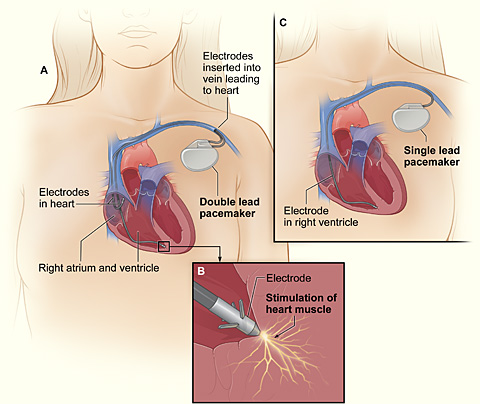
This may add interest to an discussion of the function of the electrical system of the heart in general, and artificial pacemakers in particular.
The case also provides a scenario in which the body attacks and destroys virus-infected cells.