Showing posts with label homeostasis. Show all posts

Friday, February 16, 2018

Concept Maps Help Students Find Their Way| TAPP Radio 5


Use concept mapping for student learning and assessment.
Blood doping is a perennial news topic that helps apply central concepts of A&P.

If you cannot see the audio player click here.

(0:48) Blood doping stories related to the 2018 Winter Olympics (or in any context) are effective in helping student students apply and integrate diverse concepts in anatomy and physiology

(6:32) The featured topic is concept mapping and its uses in helps students learn and helping instructors assess learning and diagnose misconceptions and other learning concerns.
Sample concept map

Click here to listen to this episode—or access the detailed notes and transcript.

Monday, August 18, 2014

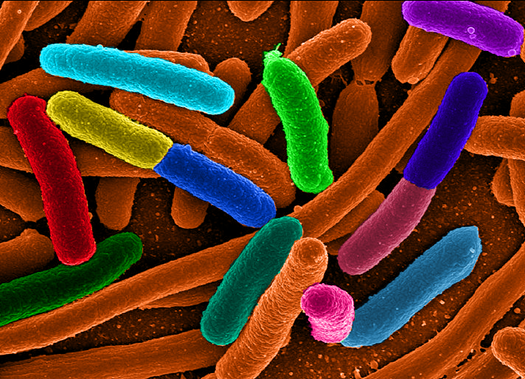
Human Microbial System


A recent article in The Scientist once again reminds us of the ongoing explosion in the scientific understanding of the human microbial system.  In a few short years, this area of exploration has moved to the forefront of medical and basic science research in human biology.

I think it's becoming clear that the most useful way to think of human body function is to recognize that an "organism" is really a sort of "habitat."  And like any habitat, it functions best when all the inhabitants are within a limited range of balanced relationships.

Who are the inhabitants?  Besides our own cells?  Well, one could think of mitochondria and cilia and other organelles as symbiotic internal inhabitants of our cells.  They're not that literally, of course, but I think its a useful metaphor for understanding the human body.  Then there are the many microbes and animals that cover our internal and external surfaces, burrow into some of our pores and glands, and inhabit our body fluids.

I call the balanced functional relationship among the various microbomes of the body and our own tissues the human microbial system.  And I am certain that it won't be long before we will be discussing this system alongside the major organ systems of the body.  That is if we truly want to understand how the body really works.

The article in The Scientist I mention is a great summary of some of the major roles that the human microbial system plays in the human body—and a good survey of some of the areas of the body where the human-microbial functional relationships play out.  See the link to the article below.


What can we use from this in teaching undergraduate A&P?


  • Why not introduce the concept of the human microbial system at the beginning of our A&P course, when we set the stage by explain how scientists understand the body and its functions as an integrated system of different parts?
  • We can mention the different microbiomes of the body when we explore each organ system where they play an important role—which is pretty much all of them!
  • Consider discussing what happens to normal human function when microbiomes get out of balance.  For example, in the gut a microbial imbalance can lead to ulcers, diarrhea, and other dysfunctions.  On the skin a pathogenic microbe may become dominant and cause a rash.
  • Promote a discussion of what kinds of wellness strategies might be employed to prevent microbial imbalances.
  • Our students can leave our A&P course with an up-to-date understanding of human biology that will help them understand new clinical concepts and treatment strategies.

Want to Know More?

The Body’s Ecosystem

  • By The Scientist Staff.  The Scientist. August 1, 2014
  • Plain-English article (cited above) on how research on the human microbiome is booming, and scientists have moved from simply taking stock of gut flora to understanding the influence of microbes throughout the body.
  • my-ap.us/1vgOu5y

Articles from The A&P Professor


Moving pictures of the human microbiome

  • J Gregory Caporaso et al. Genome Biology 2011, 12:R50  doi:10.1186/gb-2011-12-5-r50
  • Open-access journal article that includes FREE videos that show how dynamic the human microbial system is
  • my-ap.us/V7St3Q

Human Microbiome Project


The Microbiome and Disease

  • List of diseases associated with microbiome imbalances from Genetic Science Learning Center
  • my-ap.us/1nDpxr1

Audio

  • Radio stories from National Public Radio on human microbiomes and their role in health and disease.  The growing number of these stories tells us something as A&P teachers: maybe we better be covering this!
  • my-ap.us/1uA7Qyg

Sunday, November 8, 2009

Why cells cooperate


Here's a nice little "animated clay" video that zeroes in on the "society of cells" concept that lies at the heart of homeostasis.   Because it goes on to emphasize the role of reproductive cells in a multicellular organism, it may be useful to help our A&P students connect reproduction to the concept of overall body homeostasis.

I saw this video on public radio's Science Friday website, where they have a weekly video recommendation.

The video comes from a collection of videos at creaturecast.org that are truly amazing.  Not very many directly relate to human anatomy and physiology . . . but, wow, they are fascinating.  For example, a recent posting discusses how mitochondria and other erstwhile endosymbionts can play a variety of roles such as acting as lenses for simple animals. I teach the serial endosymbiosis theory (SET)  in my A&P course . . . so this little factoid may help spice up that discussion.

So watch the FREE video about cell cooperation in a multicellular organism and let me know what you think!


Tuesday, February 10, 2009

Homeostasis mini lesson


Because I want my students to have a thorough understanding of homeostasis before moving into their study of human physiology in our A&P course, I spend a LOT of time on this topic during the first week of class.

Because the concept of homeostasis is usually new to my students . . . and because I use three different analogies in an attempt to "get at" what homeostatic control really means . . . I provide them with some "extra" material on homeostasis online. I call this module a "mini lesson" and it's intended as a supplement to what they already get in the textbook and the lecture/discussion session.

My "homeostasis mini lesson" includes three analogies of how homeostasis maintains balance in the body:

1. The fishbowl model compares the human body to an aquarium. Health of the system requires stability of the fluid environments inside the tank. Various devices (like organs) operate to maintain that stability (of temperature, oxygen level, etc.).

2. The engineered control system model uses a engineered thermostat to show students how automatic control sytems that maintain stability in a system are designed. This also helps introduce students to the essential terminology of homeostasis, which is borrowed from engineering.

3. The Wallenda model uses the famous family of circus wire-walkers to illustrate some additional concepts of balance in the body, such as how negative feedback helps keep us close to the set point.

Check out my Homeostasis Mini Lesson at my Lion Den website.

[NOTE: You are welcome to use the information in your own course by linking to my Mini Lesson. You may also use my material in your handouts (not for general publication) if you agree to cite the source as "Copyright Kevin Patton, lionden.com"]

Go to the Homeostasis models page of The A&P Professor blog for an expanded version of this article that also includes:
  • Specific teaching tips for each model
  • FREE slide sets that you can use in your course
  • FREE video clips that you can use in your course

Tuesday, February 3, 2009

Engineer's view of biological systems


A recent article in PLoS Biology takes a brief look at "an engineer's view of biology."

In this essay, the authors clearly summarize what they see as the advantages of looking at biological systems through the lens of engineered systems, in order to better understand biology. They further contend that simple "cartoon" conceptions of biological systems can be as useful as more complicated mathematical modeling (that is, both have their places).

Of course, this idea of "an engineered system" as an analogy is usually one of the first principles that we introduce to our students in an A&P course: feedback control systems that maintain homeostatic balance.

We introduce terms like variable, disturbance, sensor, set point, integrator, effector, and so on as biological terms . . . further explaining that the terms (as well as the concepts) are borrowed directly from engineering.

Take a look at this recent article to deepen your understanding of what that really means:

Biological Systems from an Engineer's Point of View
Reeves GT, Fraser SE
PLoS Biology
Vol. 7, No. 1, e21
doi:10.1371/journal.pbio.1000021

For more FREE journals like PLoS Biology, see my growing listing at The A&P Professor website.