Showing posts with label meetings. Show all posts

Wednesday, January 24, 2018

Why Spaced Retrieval Practice is Your Most Powerful Teaching and Learning Tool | TAPP Radio 1


Spaced retrieval practice may be the magic spell you are looking for.
An immune role for platelets.
Why a podcast?!

In this premier episode of The A&P Professor podcast (TAPP Radio), host Kevin Patton introduces himself and his reasons for launching this new series. (0:49)
An update regarding the role of platelets in innate immunity follows. (7:51)
Kevin then invites listeners to the Regional HAPS Conference in St. Louis. (13:04)
The featured topic is Spaced Retrieval Practice. (14:30)
More details at the episode page.
Transcript available at the script page.

If the hyperlinks above are not active, go to TAPPradio.org to find the episode page.

student taking a test

Check out the detailed notes and transcript of this episode!

Tuesday, January 5, 2016

Engaging Students on the First Day of Class

When I was an undergraduate—back in the olden days—the first day of every class was always the same. The professor would come in a few minutes after the published start time, hand out a stack of syllabi still fresh with the fumes of the spirit duplicator solvent, and tell us about all the course policies and procedures (anticipating that we would not really read the syllabus). Perhaps there would be a few questions answered. Possibly, we'd get a content-based lecture that first day, but more often we'd just get an early release from class.

http://my-ap.us/1FDKa5Y
When I started teaching college, I did the same thing. I thought that this was how it was supposed to be done. And, despite having had some courses in how to teach effectively, I just fell into the ritual with which I'd grown up.

It didn't even occur to me how boring or pointless this activity was until I was at a HAPS meeting decades ago and went to a workshop entitled something like Engaging Students on the First Day of Class. Although the title was mildly intriguing, the main reason I went was to support my friends Richard Faircloth and Michael Glasgow from Anne Arundel Community College, who presented the workshop. Those of you who've given workshops know that it helps to have a few folks in the crowd who can be counted on to smile back at you even when you're sweating!

It turned out to be one of those many how-did-I-survive-without-knowing-about-this-before-now moments that one experiences at a HAPS Conference. I learned that I could make that first day into something much, much better than the traditional "here's what I expect" sermon.

Richard and Michael had us form small groups and showed us how we could make "syllabus day" a fun, active learning experience for students. An experience that could be far more effective in getting the essential messages across than what I had been doing. It must have worked because I can still see and hear some of what happened nearly two decades ago in my small group—and I took their message home and implemented it.

Their method boils down to this:
  1. Get your students into small groups. Right away—before you've handed out the syllabi or other materials.

  2. Give them a brief handout outlining what they are to do. Or you can project the directions on the screen. For example:

    1. Have them introduce themselves and briefly explain why they are taking A&P.

    2. Have them discuss and write down what pressing questions they have about the course.

    3. Tell them to send someone up to the professor to grab enough syllabi for everyone in the group.

    4. Ask them to use the syllabus and try to find the answers to the questions the group had written down.

  3. It's important NOT to answer their questions as you stroll around to chat and listen in on the groups—they have to find the answers in the syllabus.

  4. Have them re-assemble into a large group and ask them what questions they had that were not answered by their search or that need additional clarification.

By doing this, the students get to know a few other students right away—even the introverts. They get to be active, instead of passively sitting there "absorbing" from an active professor. Students are forced to think about what's important for them to know as they begin a new, perhaps scary-sounding, course. They learn how the syllabus is constructed as they explore it collaboratively looking for critical information. So they know how to find answers to questions they have later in the course. How many times have we wondered if they even looked as the syllabus once?

This method allows the professor to focus their efforts that day on the information that students really want to hear from them at that moment. And it tells you where your syllabus needs to be corrected or clarified!

I was very happy with the way my first experiment with this approach worked. Perhaps more importantly, my students were very happy with it. Ever since that first time, I've regularly had students tell me, "that was fun, I wish all my profs did their first day this way." It even shows up on the end-of-semester course evaluations—so it must have made an impression!

Over the years (nearly twenty), I've tweaked the process and adapted it to my particular course quirks. Because I always get certain questions, I often follow up with a demonstration of how to login to their course in the LMS, how to access the publisher website, and how to register their clickers. I also introduce them to the idea of human science—anatomy and physiology in particular. Ask them to think about why are here—and we discuss those goals and how they can be acheived. I sometimes even give them my secret methods for finding a parking space quickly.

If you'd like a starting point for creating your own first-day experiment, download these example handouts:

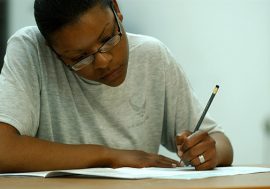
Photo (top): Griszka Niewiadomski
Photo (bottom): Gokhan Okur
Updated 6 January 2016

Sunday, May 26, 2013

Student success strategies at HAPS 2013

If you happen to be here in Las Vegas at the 2013 Human Anatomy and Physiology Society (HAPS) Conference, then you may want to check out my workshop on Tuesday morning:

105

Helping A&P Students Succeed: 
Using Supplemental Courses and Workshops to Reinforce Concepts and Promote Learning Skills

LAS 221
Kevin Patton and Suzanne Hembrough
St. Charles Community College, Cottleville, MO 

Do your A&P students struggle with the whole process of learning? Do they seem ill prepared in their study skills and their knowledge of basic principles of biology? Explore case studies in which optional student workshops and short supplemental courses provide underprepared and unskilled students with knowledge and skills that make them better able to succeed in the A&P course and beyond. You will also receive free resources to help your own students succeed.

Tuesday, December 14, 2010

See you in Sarasota?

I plan on attending the Human Anatomy and Physiology Society (HAPS) Southeast Regional Conference on January 22, 2011, in the Sarasota FL area. 

Will I see you there?

These regional HAPS meetings are wonderful.  Not only do you get to meet and chat with folks doing what you do from all kinds of institutions, you'll hear loads of ideas on how to better help your students succeed in A&P.

And what better time of year to head off for coastal Florida, eh?

Want some details?

Go to the official meeting website my-ap.us/f7HO2K for more information on invited speakers, available workshops, travel info, etc.. . . and a handy online registration form.

And I'll be presenting a workshop there:

Helping A&P Students Succeed:
Using Supplemental Courses to
Reinforce Concepts and Promote Learning Skills
 
Do your A&P students struggle with the whole process of learning?
Do they seem ill prepared in their study skills and their knowledge of basic principles of biology?
Explore a case study in which short supplemental courses provide underprepared and unskilled students
with knowledge and skills that make them better able to succeed in the A&P course and beyond.
You will also receive free resources to help your own students succeed.

I hope I see you there!  I'd love to chat with you.

Tuesday, November 18, 2008

At the Clicker Conference!


Remember that Clicker Conference I recommended?

I didn't see any of you there! What's with that?!

Oh well, I guess you knew that anything wonderful I learned would eventually get back to you, right? Of course . . .

I can't give it all to you in one dose, so here's the first little bit . . .

The folks at i>clicker hosted a reception the night before the conference. Kevin's Rule #1 of professional conferences is "always go to the cocktail parties." Even if you don't drink cocktails (or anything at all), there's usually some goodies to be had there. I don't mean stuff to eat. Well, OK, I do mean that. But also . . . it's a great opportunity to meet people and learn things and expand your professional network.

Of course, Kevin's Rule #1 worked like a charm this time, too.

One of the many wonderful folks I met was Derek Bruff, who has written a book about the best practices in using clickers in your classroom. The book is about to come out and, after hearing Derrek's stories about all he learned when interviewing all kinds of master teachers who use clickers, I can't wait to read it!

You can learn more about Derrek and his book at his blog Teaching with Classroom Response Systems. While you're there you can learn some things about the conference and about teaching with clickers.

Coming soon . . . specific lessons I learned at the conference . . . and why you really should consider using clickers in your classroom!


Don't forget about my online clicker seminar!

Tuesday, September 16, 2008

HAPS Regional Conference Oct 4

Here's a great one-day conference specifically designed for A&P professors!

Howard Community College

Oct. 4, 2008

I've been to a lot of these regional conferences hosted by the Human Anatomy and Physiology Society (HAPS) and they are wonderful! It's a full day of general sessions and workshops, and often other highlights as well. This one seems to have a fine lineup of expert speakers and workshop presenters.

And the big bonus is the opportunity to chat with others who are doing the same thing I am . . . teaching A&P. My network always grows in meaningful ways at the HAPS conferences.

Click here for the brochure/application for this highly recommended event.