Showing posts with label continuing education. Show all posts

Saturday, July 13, 2019

Virtual Open House for Master of Science in Human Anatomy & Physiology Instruction

You know that online graduate degree in Human Anatomy & Physiology Instruction—the HAPI degree—that I'm always talking about? I just found out that they're offering a virtual Open House this coming Monday, July 15, at 8 pm ET. 

This event is completely online, like the MS-HAPI degree itself. And it'll give you a better idea of what it's all about. And you can ask all those questions that have been occurring to you.

Whether it's because you realize the benefit of additional training for yourself in "how to teach A&P" or you want to know more so you can pass it along to colleagues or prospective hires in your department, it'll be worth the small investment of time.

Just go to theAPprofessor.org/2019hapi to sign up for the virtual Open House:

Monday, July 15, at 8 pm ET

Yeah, I know. It's late notice. I just found out about it recently, myself. If you miss the Open House, that's okay—you can go to nycc.edu/hapi anytime to find out more about the program.

Note: I'm a founding faculty member in HAPI and the program currently sponsors the free distribution of my podcast The A&P Professor.


Please forward this notice to all those who you think might be interested!


Monday, December 31, 2018

Power Tips for Dissection Activities | TAPP Episode 34


0:43 | Summer neuroscience workshop
3:45 | Ganglion cells
10:52 | Sponsored by HAPS
11:13 | Featured topic 1: Dissection lists
30:49 | Sponsored by AAA
31:02 | Featured topic 2: Pre-dissection practice

If you cannot see or activate the audio player click here.

Questions & Feedback: 1-833-LION-DEN (1-833-546-6336)
Follow The A&P Professor on Twitter, Facebook, Blogger, Nuzzel, Tumblr, or Instagram!

Students don't often realize that they are their own best teacher. (Sr. Virginia Brinks)

1 | Summer neuroscience workshop

3 minutes
Thirteenth Annual Summer Workshop: Hardware and Software Experiments to Teach Neuroscience. Kevin participated in an earlier version of this workshop and got a lot out of it.
  • During 2019, partial costs associated with the Workshop (lodging in MU dorms + meals) will be provided by a grant.
  • See Neuro Workshop Flyer Summer 2019
  • 1-week Summer Course
    • July 14 to July 20, 2019
    • Starts at 7 p.m. on Sunday, July 14, and ends at 5 p.m. on Saturday, July 20 (travel days of Sunday 14 July and Sunday 21 July)
    • Limited to 10 participants
    • Deadline of February 15, 2019
      • Review of applications may begin earlier


2 | Ganglion cells

7 minutes
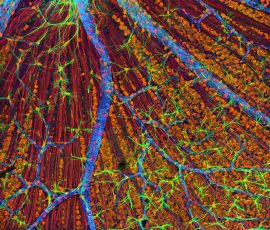
Light-sensitive ganglion cells contain the visual pigment melanopsin that is involved a non-imaging kind of vision that helps us detect sunlight levels in our environment. This information helps us sync our biological clocks to our environment—and may affect our mood.
  • Scientists Find A Brain Circuit That Could Explain Seasonal Depression (brief article and audio story)
  • Luxotonic signals in human frontal-polar cortex: A possible substrate for effects of light on mood (abstract of a presentation at Neuroscience 2018)
  • Light Affects Mood and Learning through Distinct Retina-Brain Pathways (research article)
  • Ganglion cell (overview of the ganglion cell of the retina)

 retina


3 | Sponsored by HAPS

0.5 minutes
The Human Anatomy & Physiology Society (HAPS) is a sponsor of this podcast. Did you know there's a one-day regional HAPS conference in March? Check it out. You can help appreciate their support by clicking the link below and checking out the many resources and benefits found there.
Anatomy & Physiology Society 
theAPprofessor.org/haps
 HAPS logo

4 | Dissections lists

19.5 minutes
Dissection lists are a type of "lab list" in which each structure required for discovery, familiarization, and/or mastery is listed in a clearly organized handout. This handout can be used by students for organizing learning and clarifying their learning objectives—and by teachers to help monitor student progress for effective coaching.
 checklist


5 | Sponsored by AAA

0.5 minute
The searchable transcript for this episode, as well as the captioned audiogram of this episode, are sponsored by The American Association of Anatomists (AAA) at anatomy.org

 American Association of Anatomists


6 | Pre-dissection practice activity

7 minutes
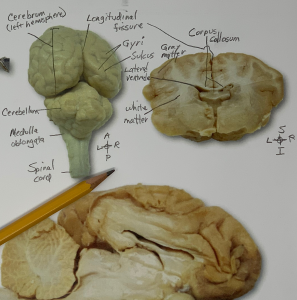
A simple handout with photographs of dissection specimens can be used by students to walk through their dissection activity before they arrive in the lab. This gives them a stronger preparation that a "cold start" in lab, which often gets chaotic of students aren't practiced in finding structures.
pre-dissection

If the hyperlinks here are not active, go to TAPPradio.org to find the episode page.
Amazon referrals help defray podcasting expenses.
Transcript and captions for this episode are supported by the
American Association of Anatomists.anatomy.org
The Human Anatomy & Physiology Societyalso provides support for this podcast.theAPprofessor.org/haps
(Clicking on sponsor links 
helps let them know you appreciatetheir support of this podcast!)

Click here to listen to this episode—or access the detailed notes and transcript.

Monday, April 25, 2011

Supplementary courses help A&P students succeed

A few years ago, we brainstormed about what else we could do as A&P professors to help our students succeed.  We realized that the two most common things holding our students back from reaching their full potential were:
  1. Lack of adequate preparation to begin A&P on a solid footing
  2. Lack of basic learning and study skills 
With the typical A&P course involving an unrelenting flood of facts, concepts, and applications, a lack of preparation and study skills can be catastrophic.

To address the lack of preparation, we have a prerequisite of "C or better in high school biology or its equivalent within the last five years."  That's the best we could manage given the constraints of our institution and its programs.  But even with the most stringent prerequisites, it's rare that students really walk into an A&P class ready with a comfortable foundation in biological chemistry and cell biology.

So I developed a refresher course that incoming A&P students could take just before entering their A&P 1 course.  Foundations in Science for Health Careers is a developmental level, one-hour course that is offered in a completely online self-paced format.  We offer it only during the short mini-mesters and half-semesters.

The Foundations course covers the basic chemistry and biology concepts students need as they begin A&P.

To address the lack of study skills, I developed a one-credit course for our A&P 1 students to take along with A&P 1.  Having been given the idea of a supplemental course by my friend Mari Hopper at Southern Indiana University, we began offering A&P 1 Supplement at our institution.

This course parallels the A&P 1 course, giving students how-to tips on specific study skills useful in A&P.  Students also have the opportunity to bring their sticking points to the class to get help in getting them unstuck.

The Foundations course is the refresher course and the Supplement course is the shortcut course.

Want to know more? 

Check out my video . . .

Viewing this content requires Silverlight. You can download Silverlight from http://www.silverlight.net/getstarted/silverlight3.


Then check out the handout and helpful links at The A&P Professor website:


SEMINAR: Helping Students Succeed

Do these courses work?  We're still working on the statistics, but as the above presentations tell you, student feedback from anonymous surveys show that students are happy with what they are getting from these courses.  When we get some statistical analysis done, I'll let you know!
 
[NOTE: If your students would like to take our online pre-A&P refresher course (BIO 095 Foundations in Science for Health Careers) prior to taking your A&P course, they can enroll at St. Charles Community College during either of two 5-wk summer sessions or during either of two 1-wk pre-fall sessions . . . or beyond.]

Wednesday, January 27, 2010

FREE Neuroscience Workshop at Univ of Missouri


Those of you with easy access to the heart of America (Missouri) may be interested in the

Fourth Annual Summer Workshop on ‘Experiments and Models for Teaching Undergraduate Neuroscience’, 4-6 Aug 2010

I attended this workshop the summer before last a had a great time . . . and I learned a lot.  Besides some interesting perspectives and a really cool earthworm-based lab experiment I was able to expand my network of other colleagues interested in learning better ways to teach.  Besides the actual hands-on learning and demonstrations, you'll get a rare chance to observe the recordings of action potentials in a state of the art neuroscience laboratory.


The University of Missouri—Columbia (MU) Colleges of Engineering and Biological Sciences are sponsoring this two-day workshop focused on novel curriculum development in neuroscience that will be held Wednesday, Thursday, and Friday, August 4, 5 & 6, 2010, on the Columbia campus. The Workshop is targeted to undergraduate faculty from biological sciences, psychology, physics and engineering with an interest in teaching and learning more about neuroscience.

The workshop was initiated by a National Science Foundation grant to MU to develop undergraduate curriculum in the area of computational neuroscience. This is the fourth time we are offering this annual workshop, incorporating input from past years.

For more information, go to
http://engineering.missouri.edu/neuro/outreach-programs/neuro-workshop.php

If you are interested in applying to the workshop, send an email stating your interest to my new friend Satish Nair at MU: NairS@missouri.edu

Sunday, January 24, 2010

More graduate biology courses at the HAPS Conference


OK, so you missed out on that cool cadaver class presented by HAPS Institute (HAPS-I) in San Diego this winter . . . because it filled up faster than I could tell you about it!  But now's your second chance for some great graduate biology courses especially for teachers of human anatomy and physiology courses:

1. Advances in Anatomy and Physiology 2010  (Ellen Arnestad and Kevin Patton)

2. Advanced Cardiovascular Physiology: The Heart at Work and at Rest (Robert Carroll)

3. Concepts in Human Embryology (Valerie O'Loughlin)

4. Molecular and Cellular Basis of Disease (Kelly McDonald)
These are great courses that feature both useful content about human A&P and experience with best practices in teaching these subjects.  These are courses that are MEANINGFUL to what you do every day in your own teaching.  And you'll be there with folks just like you . . . who teach secondary, college, and university A&P.

Each course earns you 2 graduate credits from the Biology Department of the University of Washington (Seattle). 

These courses begin with online work on April 13, involve seminars and/or workshops during the Denver HAPS Conference (May 29 - June 3), and continue with online work through August 19.  Each syllabus has additional details.  Conference registration (plus lodging, meals, and transportation, if needed) is required (in addition to HAPS-I course fees). 

Want to know more? 

Remember . . . THESE COURSES FILL EARLY.  So you want to get on this ASAP.  I mean it this time!

In fact, some spots have already been taken by past HAPS-I Scholars and by members of the HAPS-I Update email list, who all received notice of these course openings a few days ago.  (If you want prior notice of HAPS-I courses, go to http://www.hapsweb.org/displaycommon.cfm?an=1&subarticlenbr=234 to subscribe to either the HAPS-I Scholars Google Group or the HAPS-I Update Google Group.)

Registration is now open at http://www.hapsweb.org/displayconvention.cfm?conventionnbr=7898

For more information on the HAPS Annual Conference in Denver, go to http://www.hapsweb.org/displayconvention.cfm?conventionnbr=7450

EARLY BIRD CONFERENCE RATES APPLY UNTIL 2/1/2010!

Wednesday, December 9, 2009

Too late for cadaver class!


I had hoped to tell you all about a great new course offered by HAPS Institute . . . Anatomy of the Abdomen and Thorax . . . but it filled up in less than half a day!

Lucky for us (and the dozen or so folks on the waitlist), this is the first in a series of several courses that center around a weekend workshop in a cadaver lab with expert dissectors.

The Anatomy of the Abdomen and Thorax course held in February in San Diego is just the first in a series of courses that will be held at various locations in North America in the coming months and years.

These courses carry three graduate credits from the University of Washington (Seattle) biology department. All HAPS-I courses are meant for folks who already teach anatomy and physiology (high-school through graduate levels) fill in their background in various topics within human biology . . . or simply to brush up on the lastest concepts.  Even if you already have a graduate degree and "don't need the credit" you'll find these courses to be both fun and useful.

All HAPS-I courses also involve emerging methods of active learning and thus showcase methods of teaching and learning that participants can adapt into their own courses.

Want to know more about HAPS-I and its courses? Click here for more information.

However, when new HAPS-I courses open up . . . ACT QUICKLY because they DO fill quickly!

Wednesday, August 12, 2009

Case Study Teaching Conference


This just in from the National Center for Case Study Teaching in Science . . .

Register today and take advantage of the early bird special rate for our case study teaching conference. We are excited to present three informative tracks at this year's conference, culminating in a final session delivered by Deborah Allen from the NSF: Writing More Effective Proposals for NSF's Course, Curriculum & Laboratory Improvement Program. Based on your feedback this year’s conference will focus (in addition to our beginner track) on the following areas:

ASSESSMENT - Diane Ebert-May, a national specialist on assessment, will be delivering a plenary on “Moving Beyond Assessment to Research” as well as a break-out session on “Teaching for Understanding in Science: Active Learning and Assessment.”

HIGH SCHOOL TEACHERS - A new “mini” track made up of three sessions on Saturday specifically designed for high school science teachers (though others, we think, will find it of interest too!). Our break-out session leaders are Richard Donham, Senior Policy Associate, Mathematics & Science Education Resource Center, University of Delaware, and James Serach, Aldo Leopold Chair for Distinguished Teaching of Environmental Science and Ethics, The Lawrenceville School.

CLICKER CASES - A new “mini” track on what we call “clicker cases.” We have been getting a lot of questions about how we are using personal response systems (aka clickers) with case studies to create rich and student-active learning environments in large introductory science courses (though the method works well in any size classroom!). There are three sessions in this track, which runs on Saturday.

FINAL SESSION FOR ALL: Many of you have requested information on writing your own grants related to case studies. We are pleased that Deborah Allen, Program Director, Division of Undergraduate Education, National Science Foundation, will be conducting a session for us this fall entitled, Writing More Effective Proposals for NSF's Course, Curriculum & Laboratory Improvement Program. A description of the session can be found at: http://ublib.buffalo.edu/libraries/projects/cases/conference/schedule.html

Our conference will be led by Dr. Clyde (Kipp) Herreid, SUNY Distinguished Teaching Professor and Director of the National Center for Case Study Teaching in Science. The conference is open to anyone interested in science education including high school teachers and international teachers. See below for a full listing of the conference sessions and other information. Our conference also includes a poster session and we would be pleased if you submitted a proposal.

Register now for this exciting 2-day Case Study Teaching in Science Conference, which takes place on September 25th and 26th, 2009. Early-Bird two-day registration until September 1, 2009 - $450.00. One-day Saturday-only registration is $350.

Wednesday, July 29, 2009

Top 10 Celebrity Professors


Since many of us are taking a deep breath and preparing ourselves to begin a new academic year, I thought it would be a good time for little inspiration.

Amber Johnson over at Masters Degrees Online just alerted me to their new post Top 10 Celebrity Professors. This brief list runs down some of the more famous . . . and most inspirational college teachers. Check it out!


While you're at it, you may want to check out my favorite book about college teaching

Tuesday, March 24, 2009

It's almost too late!


A while back I mentioned all the benefits of participating in HAPS Institute (HAPS-I), the Human Anatomy and Physiology Society's professional continuing education program for A&P professors that offers short, flexible graduate biology courses.

We have four courses that begin soon . . . April 15. These courses involve both online work and sessions at the upcoming 2009 Annual HAPS Conference in Baltimore MD at the end of May.

Two of those courses still have some room in them . . .

Advances in Anatomy & Physiology 2009 (2 graduate credits)
  • A great "first experience" in HAPS Institute
  • Begins online April 15, 2009
  • Learners engage the material presented in the conference Update Seminars more fully than just "walking in cold"
  • Learners have a chance to discuss the seminar presentations together to find those gems that we can "take back to our classroom."
  • Faculty: Ellen Arnestad and Kevin Patton
Advanced Respiratory Biology (2 graduate credits)
  • A reprise of last year's wildly popular course
  • Explore the "in and outs" of the respiratory system for a fully understanding
  • Begins online April 15, 2009
  • Features master teacher Mary Pat Wenderoth of University of Washington
The program also offers a completely online course . . . but there are only a couple of spots left!

Best Practices in Hybrid & Online Teaching of A&P (2 credits)
  • No conference attendance required
  • Begins online May 1, 2009
  • Taught by online A&P experts Tom Lancraft and Janice Yoder Smith
  • Great credential to have in your portfolio!
Want more information? Follow these links . . .

Here's the outside of the HAPS-I brochure

(use the frame buttons to ZOOM, then scroll or print)


Here's the inside of the HAPS-I brochure

(use the frame buttons to ZOOM, then scroll or print)


[The video players and other features may not be visible in a feed or newsletter item. Go to The A&P Professor blog to view these features.]

Tuesday, January 27, 2009

HAPS 2009 in Baltimore

Heads up! The "early bird special" for the 2009 Annual Conference in Baltimore MD is about to expire. After January 31, you'll have to pay a premium to attend the event of the year for A&P professors.

Go to the home page for HAPS (Human Anatomy and Physiology Society) to find the link to register for this great conference. If you've never been to one of these, you have no idea how great they are. Really. I guarantee that no matter what type of A&P course you teach, you'll find this meeting to wildly exceed any expectations you have.


While you're there, you can amplify your experience by also participating in one of several short graduate biology courses offered by HAPS Institute (HAPS-I). For more information on the HAPS-I program and the "conference courses" offered in conjunction with the Baltimore meeting, go to the HAPS-I start page.

Fair warning! The HAPS-I courses were opened about a week ago, and they are already nearly half full! These are great courses, so they fill up fast. Don't dilly-dally, my friends!

Tuesday, November 18, 2008

At the Clicker Conference!


Remember that Clicker Conference I recommended?

I didn't see any of you there! What's with that?!

Oh well, I guess you knew that anything wonderful I learned would eventually get back to you, right? Of course . . .

I can't give it all to you in one dose, so here's the first little bit . . .

The folks at i>clicker hosted a reception the night before the conference. Kevin's Rule #1 of professional conferences is "always go to the cocktail parties." Even if you don't drink cocktails (or anything at all), there's usually some goodies to be had there. I don't mean stuff to eat. Well, OK, I do mean that. But also . . . it's a great opportunity to meet people and learn things and expand your professional network.

Of course, Kevin's Rule #1 worked like a charm this time, too.

One of the many wonderful folks I met was Derek Bruff, who has written a book about the best practices in using clickers in your classroom. The book is about to come out and, after hearing Derrek's stories about all he learned when interviewing all kinds of master teachers who use clickers, I can't wait to read it!

You can learn more about Derrek and his book at his blog Teaching with Classroom Response Systems. While you're there you can learn some things about the conference and about teaching with clickers.

Coming soon . . . specific lessons I learned at the conference . . . and why you really should consider using clickers in your classroom!


Don't forget about my online clicker seminar!

Tuesday, September 16, 2008

HAPS Regional Conference Oct 4

Here's a great one-day conference specifically designed for A&P professors!

Howard Community College

Oct. 4, 2008

I've been to a lot of these regional conferences hosted by the Human Anatomy and Physiology Society (HAPS) and they are wonderful! It's a full day of general sessions and workshops, and often other highlights as well. This one seems to have a fine lineup of expert speakers and workshop presenters.

And the big bonus is the opportunity to chat with others who are doing the same thing I am . . . teaching A&P. My network always grows in meaningful ways at the HAPS conferences.

Click here for the brochure/application for this highly recommended event.

Tuesday, August 26, 2008

Clicker Conference

Do you click? I do.

I never thought I would use student response systems (clickers). When I first experienced them in workshops promoting them, they were difficult to use. And frankly, nothing convinced me that they would benefit the learning process in my course.

That all changed when I read some information on i>clicker (a brand of response system) and how some science professors at the University of Illinois developed a system based on ideas generated by a study at Harvard that showed how they can be used to improve the level of engagement of students in a large lecture class.

So I tried it, and I'm hooked. I'm SO glad I did it!

I have a lot more to share on using clickers in A&P classes . . . and even some free resources for you to use (of course). That's coming up in a later post.

[NOTE: For those of you that use my texbooks, ask your sale rep about resources (clicker questions) and package deals for using i

But for now, let me pass on an opportunity to learn about clickers from the real experts. It's a whole day of best practices in using a clicker system!

It's all about continuing professional education here at The A&P Professor!

The announcement of the "clicker conference" is copied below:

Save the Date! Sign up Now!
"Classroom Response Systems: Innovations and Best Practices"


Hosted by the University of Louisville on November 15th, 2008

Are you using clickers right now and interested in learning about new ways to use them? If not, have you thought about using clickers but don’t quite know where to start? Join your peers at the University of Louisville’s "Classroom Response Systems: Innovations and Best Practices" Conference. This will be the first—and only--conference dedicated to the emerging role of classroom response systems in higher education.

As you may know, clickers have exploded in the higher education community as a tool to foster formative assessment, student engagement, accountability, and critical thinking. What makes clickers exciting is not the technology—it is the set of teaching practices and innovations surrounding their use. And this new, research-based conference is the perfect forum for examining existing best practices, as well as developing new ideas and models for the use of audience response systems in the classroom.

The Conference will feature numerous individual sessions (see http://delphi.louisville.edu/faculty/clicker_conf/schedule.html ) and two keynote speakers:

Dr. Timothy Stelzer, Assistant Research Professor, Physics, University of Illinois. Professor Stelzer has been heavily involved with the Physics Education Group at Illinois. He has led the development and implementation of tools for assessing the effectiveness of educational innovations in the physics introductory courses and expanding the use of web technology in physics pedagogy. He was instrumental in the development of the i>clicker classroom response system and is a regular on the University's "Incomplete List of Teachers Ranked as Excellent by Their Students." Dr. Stelzer will discuss his experience with and addiction to clickers, their best pedagogical application, and a look forward to the role they will play in transforming the classroom of the 21st century.

Dr. Doug Duncan, Professor of Astrophysical and Planetary Sciences of the University of Colorado and Director of Fiske Planetarium, is a national leader in presenting the excitement of scientific discoveries to the general public; he has appeared on BBC television and on the National Public Radio Program All Things Considered, and has lectured at the Smithsonian Institution. He is also the author of one of the first books about teaching with clickers. His book, "Clickers in the Astronomy Classroom" (published by Addison Wesley) is publishing in a second edition in late 2008 and shows evidence of its impact on student learning and attitudes. Dr. Duncan is a frequent speaker on the power of classroom response systems as a teaching tool.

For conference information, go to http://delphi.louisville.edu/faculty/clicker_conf.

Please promote this opportunity to others in your department and/or institution by forwarding this e-mail. Thank you!

Friday, August 22, 2008

Just in Case (Study)

I've found that sprinkling my course with case studies has greatly improved the learning in my A&P course! I think they do a great job in pushing my students upward with Bloom's taxonomy!

And in our courses for A&P teachers at HAPS Institute we frequently use case studies!

I just received the following announcement about a Case Study Teaching conference coming up in September. I've never been to one of these, but I work with colleagues who have . . . and it has transformed their teaching! And their student's learning!

I'll be busy with the Using Cadavers course that weekend . . . but if you go, drop me a line and let me know all about your experience there!

(Note: I'll be sharing more on using case studies in A&P in later posts!)

Announcement:

Interested in Case Study Teaching…Learn from the best! Dr. Clyde (Kipp) Herreid, SUNY Distinguished Teaching Professor and Director of the National Center for Case Study Teaching in Science, is our conference leader.

Register now for our upcoming 2-day fall Case Study Teaching conference September 26th and 27th, 2008. The conference is open to anyone interested in science education including high school teachers and international teachers. See below for a full listing of the conference sessions which includes beginner and experienced tracks. In addition, we will be holding a poster session and would be pleased if you submitted a proposal.

Please pass this announcement along to colleagues of yours who are not on our listserv.

Early-Bird Registration Deadline Extended to September 6, 2008!

My regards, Nancy Schiller

Co-Director, National Center for Case Study Teaching in Science

University at Buffalo, State University of New York

***************************************************************************

9th ANNUAL CONFERENCE ON CASE STUDY TEACHING IN SCIENCE

Presented by the National Center for Case Study Teaching in Science, State

University of New York at Buffalo

DATES: September 26 & 27, 2008

VENUE: Ramada Inn & Conference Center, Amherst, NY

DEADLINES:

-to submit a poster session proposal: August 29, 2008

-to reserve a hotel room at the special conference rate: September 10, 2008

-to get the early bird discounted rate: September 6, 2008

URL:

http://ublib.buffalo.edu/libraries/projects/cases/conference/conference.html

The aim of our annual fall conference is to bring together people who are interested in teaching science using case studies. The conference features plenary speakers (Teaching Without A Net: A Few Lessons About Discussion Teaching That I Have Learned from My Students Rita Silverman, Professor of Education, Pace University, and Learning About the Nature of Science with Case Studies Kathy Gallucci, Assistant Professor, Biology Department, Elon University), a poster session, and a number of mini-workshops organized in two tracks - one for the beginner and the other for the more experienced

case teacher. It is your choice which sessions you attend (mix and match).

Beginner Track Sessions:

What Is a Case? / Different Types of Cases Kipp Herreid

The Discussion Case Method Kipp Herreid

The Interrupted Case Method Kipp Herreid

Team Learning Using Cases Kipp Herreid

How to Write a Case Kipp Herreid,

Experienced Teacher Track Sessions:

Active Learning Strategies in the Science Classroom Christa Colyer

Using Cases to Help Science Teachers Align Curriculum to State and National Standards Rita Silverman

Assessing Critical Thinking in the Science Classroom Paula Lemons

The Mini Research Project Christa Colyer

Committed to Cases: Integrating the Case Concept into your Course Eric Ribbens

The conference also includes breakout sessions on:

Case Studies in the Life Sciences Moderators: Eric Ribbens, Paula Lemons, Kathy Gallucci

- OR -

Case Studies in the Physical Sciences Moderators: Christa Colyer, Frank Dinan

Early bird registration (before or on September 6, 2008) is $425. Regular registration (after September 6, 2008) is $475. We are also offering a special student registration rate of $225. Registration includes buffet lunch, and morning/afternoon coffee breaks on both Friday and Saturday, as well as the Friday evening reception & banquet. A full buffet breakfast is available to those staying at the Ramada Inn & Conference Center, compliments of the hotel.

Please note: A limited block of hotel rooms is being held at the Ramada for our group at the special conference rate until September 10, 2008, so plan on making your hotel reservations early.

For more information, including how to submit your poster proposal, see the conference website at:

http://ublib.buffalo.edu/libraries/projects/cases/conference/conference.html

Questions about the conference can be directed to our Conference Coordinator, Carolyn Wright, at nccsts@buffalo.edu or (716)645-2363 x111, fax (716)645-2975.

Monday, August 4, 2008

Cadaver scholarship

Remember that course in USING HUMAN CADAVERS TO TEACH A&P that I told you about?

Some of you were asking about funding and scholarships!

Yes! It's true . . . we now have scholarships available for HAPS Institute courses, thanks to Morton Publishing.

For information on the scholarships, go to http://www.hapsweb.org/displaycommon.cfm?an=1&subarticlenbr=236 and click the link to the Grants and Scholarship page (FYI, it's in the members-only section).

What better way to use it than for that Using Cadavers to Teach A&P course I told you about yesterday?

You can use this scholarship for other HAPS Institute courses instead.

We're still arranging the schedule of our other courses. Make sure that you subscribe to the The A&P Professor Newsletter to stay informed about the HAPS-I schedule! Or subscribe to the HAPS-I Update Google Group.

Sunday, August 3, 2008

Cadavers, anyone?

People are DYING to get into this course!

Some of you already know that I'm the Director of HAPS Institute (HAPS-I), the professional continuing education program of the Human Anatomy and Physiology Society (HAPS). This program offers graduate biology courses in flexible formats to A&P professors just like you!

I'll explain more about HAPS-I in later posts, but right now I have urgent news:

We're offering a repeat of one of our most popular courses SOON!

USING CADAVERS IN A&P
(3 credits, Univ of Washington)

This is for anyone who is using cadavers, wants to use cadavers, or is just curious about using cadavers in their undergraduate program. You'll go back with a lot of great photos of organs, etc, that you can use in your own courses plus plenty of great tips on how to implement cadaver use at your institution. I sat in on last spring's course and it was GREAT. I picked up a lot just by OSMOSIS. Think how much more you'll get by actually PARTICIPATING!

The course begins September 8 with online readings and discussions.

The workshop will be at the cadaver lab at Grand Rapids Community College (downtown Grand Rapids MI) on Sep 26-27-28. We'll have a session Friday evening in the hotel following an optional pay- your-own welcome dinner. Then all day Saturday on campus in various sessions in and out of the lab. Saturday optional pay-your-own dinner in Grand Rapids. Then a Sunday morning wrap-up session on campus until 11am.

Then you'll discuss things and work on your learning object through the end of November.

Accommodations at $89 per night are available at the nearby Days Inn Hotel (a few easy blocks from campus). Call (616) 235-7611 and ask for the HAPS Institute rate.

The enrollment form, syllabus, faculty, course details, and so on, are posted at
at http://www.hapsweb.org/displaycommon.cfm?an=1&subarticlenbr=204

THIS COURSE FILLED FAST last time and HAD A LONG WAIT LIST so if you are interested, you have to ENROLL NOW to ensure a spot. Last time there was crying and wailing when we had to shut the door . . . don't let that happen to you. Those on the waiting list from last year are mostly already in the course (we're almost half full already!).

Thursday, July 24, 2008

HAPS

If you're a teacher of human anatomy and/or physiology and you're not a member of HAPS--the Human Anatomy and Physiology Society--then you should be!

HAPS is an organization dedicated solely to supporting folks like you and me. Folks from all levels of education from secondary, to community college, to four-year schools and universities, to medical education are welcomed into a collegial, supportive atmosphere.

The annual conference is an informal but power-packed week of update seminars by experts in most fields of human biology, workshops in which A&P professors share their tips, tricks, successes, and failures, and a lot of opportunities for networking with folks from all over North America.

Besides the annual conference and the occasional regional conference, there are resources such as a model curriculum, animal use resources, safety resources, cadaver use resources, standardized student testing, and so much more!

One of my favorite HAPS resources is the HAPS EDucator (HAPS ED), the official journal of the society. It's packed with organization news and updates, teaching tips, content updates, and more.

Another favorite is HAPS Institute . . . a rather biased opinion considering that I'm the Director of HAPS Institute (HAPS-I) and a member of the faculty. HAPS-I is the professional continuing education program of HAPS. The program offers several graduate biology courses each year in flexible formats geared to the academic life. Graduate biology credit from the University of Washington is granted in the courses, which focus on both content and teaching applications in areas often perceived as being hard to understand, hard to learn, and hard to teach. I'll be sharing more about HAPS-I in another message soon!