Host Kevin Patton previews the content of the upcoming full episode, which focuses on the big ideas (essential concepts) of the A&P course.
There's more... a few content updates... plus some word dissections, a toast to Elaine Marieb, and a recommendation from The A&P Professor Book Club.
If you cannot see or activate the audio player click here and scroll down to the Preview section. Questions & Feedback: 1-833-LION-DEN (1-833-546-6336) Follow The A&P Professor on Twitter, Facebook, Blogger, Nuzzel, Tumblr, or Instagram!
Topics
.5 minute
News about how smell relates to stress
News about how oxytocin works
Cholesterol testing for cardiac risk - are changes coming?
also provides support for this podcast.theAPprofessor.org/haps (Clicking on sponsor links helps let them know you appreciate their support of this podcast!)
(13:50) Subscribing helps you and others stay up to date with the world of A&P teaching! And it helps other teachers find this podcast when they search for it.
(14:35) Kevin flipped his first A&P course in 2006, a year before the term flipped learning was first coined by Bergmann and Sams. In this segment, he discusses how his case study may help you decide how to flip (or half flip) your own A&P course.
Online Lecture Previews (Kevin’s online seminar on how he flipped his course, including a brief walk-through of the mechanics of producing an online lecture )
(0:48) Blood doping stories related to the 2018 Winter Olympics (or in any context) are effective in helping student students apply and integrate diverse concepts in anatomy and physiology
(6:32) The featured topic is concept mapping and its uses in helps students learn and helping instructors assess learning and diagnose misconceptions and other learning concerns.
Pre-testing is not just for assessment—it helps learning, too. A weird sneeze injury. The Anatomical Society's list of online resources. How many proteins are there in a cell?
A recent analysis suggests that a reasonable average number of proteins in a cell is 42 million. How might we incorporate that bit of trivia in our A&P courses? (0:41)
Pre-Testing isn't just for measuring prior competence before new learning starts. By itself, regardless of its use in course assessment, it's a powerful learning tool. Listen to Kevin's experience with pre-testing in his A&P courses. (10:28)
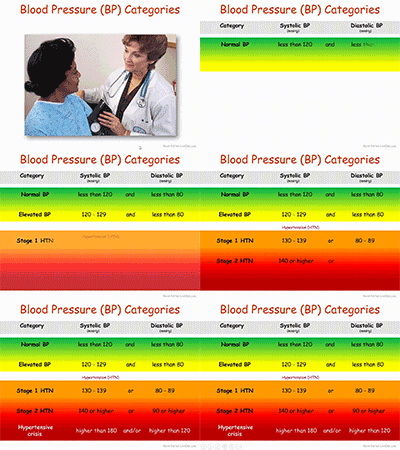
With the new guidelines for high blood pressure popping up all over the news recently, we may wonder what we need to know when this comes up in our A&P classrooms. And we know it will—students love, love, love to connect what they are learning in A&P with what they are experiencing in their lives.
It turns out that although the new 2017 Guideline For the Prevention, Detection, Evaluation, and Management of High Blood Pressure in Adults is focused on how physicians should make diagnoses and manage patient care, the definitions of exactly what constitutes high blood pressure (hypertension or HTN) are important learning points in the undergrad A&P course.
I'll outline the main things for us A&P professors to know here, but do check out the resources I've linked below to deepen your understanding of current thinking regarding approaches to blood pressure (BP) health.
First, there are revised guidelines as to what constitutes high blood pressure or HTN:
Normal BP: Less than 120/80 mm Hg;
Elevated BP: Systolic between 120-129 and diastolic less than 80;
Stage 1 HTN: Systolic between 130-139 or diastolic between 80-89;
Stage 2 HTN: Systolic at least 140 or diastolic at least 90 mm Hg;
Hypertensive crisis: Systolic over 180 and/or diastolic over 120, with patients needing prompt changes in medication if there are no other indications of problems, or immediate hospitalization if there are signs of organ damage.
Regardless of the precise cutoffs listed above, in an interview discussing the new guidelines, the main author states that, "120/80 is normal, the same as we had before" the new guidelines. So I think we're safe in using 120/80 as an example of BP when discussing the normal science, even though technically it could be designated as "elevated." Not that we can't use an elevated variable measurement as an example when discussing the physiology of anything. The fact that even the main author of the guidelines uses 120/80 as the starting point of discussion makes me feel more confident in using it as the starting point of my course discussions, too.
The main thing to note in the categories above is that the cutoffs for HTN categories have been lowered. This puts many more people in an HTN category that were not there before. The main goal is for those folks to have conversations with their physicians to evaluate their risk for complications and develop a personalized prevention and care plan.
Note also that the category of prehypertension has been eliminated.
The new guidelines also recommend prescribing medication for Stage 1 HTN if the patient already had a cardiovascular event—or is at a high risk for such an event. They also recognize that many patients will need more than one medication to manage BP and that combining meds into one pill is likely to help folks take them consistently.
There are a lot of other recommendations, so reviewing the Executive Summary or similar resource (see below) may be a good idea.
What can we use from this in teaching undergraduate A&P?
If you discuss hypertension, or use case studies in teaching, you need to update the cutoff BPs you are using.
A BP of 120/80 is still considered the starting point for discussing blood pressure.
Consider discussing the impact of the changes in the new guidelines for ordinary people.
Discuss why such diagnosis, prevention, and treatment recommendations often change over time. Consider discussion other recent clinical updates.
Consider discussing specific changes suggested in the new guidelines.
Consider having students explore the Executive Summary and/or other documents and write their own summary or interpretation of key points. Perhaps they can create their own chart or concept map.
Need some free teaching materials?
SLIDE SET: High Blood Pressure
Kevin Patton. Lion Den Slide Collection. 18 Nov 2017
Small slide deck that includes an animated version of the BP Category chart pictured above. Part of the Lion Den Slide Collection (requires free registration to download). You can also download a static PNG image file of the chart in the slide collection set.
VIDEO: AHA 2017 | New High Blood Pressure Guidelines
America Heart Association. 13 Nov 2017.
Free video (viewable in the player above) features a chat with the main author of the new guidelines and summarizes the main points. Very practical and easy to understand.
SLIDE SET: 2017 Guideline For the Prevention, Detection, Evaluation and Management of High Blood Pressure in Adults
American College of Cardiology. 13 Nov 2017
Free set of almost 100 PowerPoint slides to use in teaching. And it has a decided focus on clinical applications, rather than the basic science. These are way, way beyond the coverage desirable in an undergrad A&P course. But some slides may be useful to you.
New blood pressure guidelines put half of U.S. adults in unhealthy range
A. Cunningham Science News. 13 Nov 2017
Plain-English article summarizing the first major update since 2003 aims to spur heart-healthy lifestyle changes. Has a useful graph and links to other articles and resources.
2017 ACC/AHA/AAPA/ABC/ACPM/AGS/APhA/ASH/ASPC/NMA/PCNA Guideline for the Prevention, Detection, Evaluation, and Management of High Blood Pressure in Adults: Executive Summary A Report of the American College of Cardiology/American Heart Association Task Force on Clinical Practice Guidelines
PK Whelton et al. Hypertension, Dec 2017, Volume 70, Issue 6. DOI: 10.1161/HYP.0000000000000066
Free PDF of the Executive Summary of the larger report. I recommend reading this first, then decide if you need to read the whole report.
2017 ACC/AHA/AAPA/ABC/ACPM/AGS/APhA/ASH/ASPC/NMA/PCNA Guideline for the Prevention, Detection, Evaluation, and Management of High Blood Pressure in Adults A Report of the American College of Cardiology/American Heart Association Task Force on Clinical Practice Guidelines
PK Whelton et al. Hypertension. Dec 2017, Volume 70, Issue 6. DOI: 10.1161/HYP.0000000000000065
Free PDF of the entire report. It's huge, so make a whole pot of tea before starting it.
So why, exactly, is it that we should consume a lot of fiber in our diet to remain healthy? Are refined fiber supplements just as good as, say, an "apple a day?"
Recently, an article in the journal Cell answer seems to verify some of the answers for us.
As the paper cited below indicates, research seems to confirm that dietary fiber provides nutrients for the inhabitants of our intestinal microbiome. When dietary fiber is missing, then the microbes undergo a shift in populations and start consuming our GI mucus as an alternate source of nutrition. That, as you might guess, reduces the thickness of the protective mucus—hus increasing the likelihood that pathogens can more easily attack the intestinal lining. Ouch.
Apparently, refined prebiotic fibers don't fix the problem.
Here are some highlights of the research article (quoted from their online preview):
Characterized synthetic bacterial communities enable functional insights in vivo
Low-fiber diet promotes expansion and activity of colonic mucus-degrading bacteria
Purified prebiotic fibers do not alleviate degradation of the mucus layer
Fiber-deprived gut microbiota promotes aggressive colitis by an enteric pathogen
What can we use from this in teaching undergraduate A&P?
When asked by students about dietary fiber, you have more information from which to draw an answer.
When discussing any of these topics, you'll now have a bit more to add to your story:
nutrition
function of mucus
the human microbial system (or specifically, the GI microbiome)
how pathogens cause disease (or specifically, GI disorders)
Want to know more?
Veggies and Intact Grains a Day Keep the Pathogens Away
Francesca S. Gazzaniga. Dennis L. Kasper. Cell. Available online 17 November 2016
Brief preview of the M. Desai article cited below.
We are only very slowly recognizing the many biological and medical differences between males and females (and masculine/feminine)—besides the obvious ones related to reproduction. There are divergent patterns in the anatomy and physiology of perhaps every body system. However, in medical research male and female subjects are often grouped together in a way that obscures those divergent patterns.
Two "viewpoint" articles in the Journal of the American Medical Association (JAMA) today focus a light on this issue and point the way to improved—more clinically useful—medical research. Links to both articles are listed below.
As one of the articles points out, women have been included in medical trials for only the past few decades. So there is still a lot of work to be done to shore up the database of male-female differences. But also a lot of work to be done in sorting out male-female patterns of health and disease. Then even more work in making this new knowledge part of the everyday practice medicine.
Both articles are brief and relatively nontechnical, but when read together, they provide an important message for those of us teaching pre-clinical health professionals in A&P. That message is that we should consider introducing—then reinforcing—the notion of body-wide sex and gender differences.
Both articles give examples of such differences, but many more are to be found elsewhere, as well. Not that we should teach every possible example in the undergraduate A&P course. However, the general concept of functional variation between males and females may be an important one to emphasize as a sub-theme in our story of the human body.
What can we use from this in teaching undergraduate A&P?
Consider making sex differences a sub-theme in your A&P course.
Occasionally point out examples of structural, functional, and clinical patterns of variation that differ between males and females.
Compare and contrast sex differences with other types of pattern variations.
Discuss "patterns of variability" in contrast to a strictly "binary" view.
Consider bringing up sex-difference research that is not yet fully supported.
Discuss whether more attention to sex differences across topics in scientific research might help advance this area of knowledge.
Discuss the opposing view that there are no clinically significant biological differences between males and females other than those related to reproduction.
Look for such examples in your textbook and other teaching/learning resources and point them out to your students.
Consider having a classroom or online discussion of this topic.
Ask students to post links to articles that discuss male-female patterns of variation
Post to course discussion or course social media channel
Bring to class or email to instructor to share with class
Post on bulletin board
Bring up this issue when discussing how science is done.
Consider asking students what effects on public health a more thorough consideration of sex differences may produce.
Ask students to look at a study and ask whether sex differences were thoroughly accounted for in the methodology. Could this affect how the study is interpreted and applied in the clinic?
Want to know more?
Consideration of Sex Differences in Medicine to Improve Health Care and Patient Outcomes
Marianne J. Legato, MD; Paula A. Johnson, MD, MPH; JoAnn E. Manson, MD, DrPH.
JAMA. Published online October 31, 2016. doi:10.1001/jama.2016.13995
Circulation: Cardiovascular Quality and Outcomes. 2016; 9: S100-S101 doi: 10.1161/CIRCOUTCOMES.116.002660
Brief article that addresses the issue of terminology, specifically distinguishing between terms that address sex (male, female) and gender (masculine, feminine). Includes a solid list of references.
The Nobel Assembly at Karolinska Institutet has today decided to award the 2016 Nobel Prize in Physiology or Medicine to Yoshinori Ohsumi for his discoveries of mechanisms for autophagy.
Overview
This year's Nobel Laureate discovered and elucidated mechanisms underlying autophagy, a fundamental process for degrading and recycling cellular components.
The word autophagy (aw-toh-FAY-jee) originates from the Greek words auto-, meaning "self", and phagein, meaning "to eat". Thus, autophagy denotes "self eating".
This concept emerged during the 1960's, when researchers first observed that the cell could destroy its own contents by enclosing it in membranes, forming sack-like vesicles that were transported to a recycling compartment, called the lysosome, for degradation.
Difficulties in studying the phenomenon meant that little was known until, in a series of brilliant experiments in the early 1990's, Yoshinori Ohsumi used baker's yeast to identify genes essential for autophagy. He then went on to elucidate the underlying mechanisms for autophagy in yeast and showed that similar sophisticated machinery is used in our cells.
Ohsumi's discoveries led to a new paradigm in our understanding of how the cell recycles its content. His discoveries opened the path to understanding the fundamental importance of autophagy in many physiological processes, such as in the adaptation to starvation or response to infection. Mutations in autophagy genes can cause disease, and the autophagic process is involved in several conditions including cancer and neurological disease.
Degradation – a central function in all living cells
In the mid 1950's scientists observed a new specialized cellular compartment, called an organelle, containing enzymes that digest proteins, carbohydrates and lipids. This specialized compartment is referred to as a "lysosome" and functions as a workstation for degradation of cellular constituents. The Belgian scientist Christian de Duve was awarded the Nobel Prize in Physiology or Medicine in 1974 for the discovery of the lysosome.
New observations during the 1960's showed that large amounts of cellular content, and even whole organelles, could sometimes be found inside lysosomes. The cell therefore appeared to have a strategy for delivering large cargo to the lysosome. Further biochemical and microscopic analysis revealed a new type of vesicle transporting cellular cargo to the lysosome for degradation (Figure 1).
Christian de Duve, the scientist behind the discovery of the lysosome, coined the term autophagy, "self-eating", to describe this process. The new vesicles were named autophagosomes.
Figure 1: Autophagosome. Our cells have different specialized compartments. Lysosomes constitute one such compartment and contain enzymes for digestion of cellular contents. A new type of vesicle called autophagosome was observed within the cell. As the autophagosome forms, it engulfs cellular contents, such as damaged proteins and organelles. Finally, it fuses with the lysosome, where the contents are degraded into smaller constituents. This process provides the cell with nutrients and building blocks for renewal.
During the 1970's and 1980's researchers focused on elucidating another system used to degrade proteins, namely the "proteasome". Within this research field Aaron Ciechanover, Avram Hershko and Irwin Rose were awarded the 2004 Nobel Prize in Chemistry for "the discovery of ubiquitin-mediated protein degradation". The proteasome efficiently degrades proteins one-by-one, but this mechanism did not explain how the cell got rid of larger protein complexes and worn-out organelles. Could the process of autophagy be the answer and, if so, what were the mechanisms?
A groundbreaking experiment
Yoshinori Ohsumi had been active in various research areas, but upon starting his own lab in 1988, he focused his efforts on protein degradation in the vacuole, an organelle that corresponds to the lysosome in human cells.
Yeast cells are relatively easy to study and consequently they are often used as a model for human cells. They are particularly useful for the identification of genes that are important in complex cellular pathways. But Ohsumi faced a major challenge; yeast cells are small and their inner structures are not easily distinguished under the microscope and thus he was uncertain whether autophagy even existed in this organism.
Ohsumi reasoned that if he could disrupt the degradation process in the vacuole while the process of autophagy was active, then autophagosomes should accumulate within the vacuole and become visible under the microscope. He therefore cultured mutated yeast lacking vacuolar degradation enzymes and simultaneously stimulated autophagy by starving the cells.
The results were striking! Within hours, the vacuoles were filled with small vesicles that had not been degraded (Figure 2). The vesicles were autophagosomes and Ohsumi's experiment proved that authophagy exists in yeast cells. But even more importantly, he now had a method to identify and characterize key genes involved this process. This was a major break-through and Ohsumi published the results in 1992.
Figure 2: Yeast. In yeast (left panel) a large compartment called the vacuole corresponds to the lysosome in mammalian cells. Ohsumi generated yeast lacking vacuolar degradation enzymes. When these yeast cells were starved, autophagosomes rapidly accumulated in the vacuole (middle panel). His experiment demonstrated that autophagy exists in yeast. As a next step, Ohsumi studied thousands of yeast mutants (right panel) and identified 15 genes that are essential for autophagy.
Autophagy genes are discovered
Ohsumi now took advantage of his engineered yeast strains in which autophagosomes accumulated during starvation. This accumulation should not occur if genes important for autophagy were inactivated. Ohsumi exposed the yeast cells to a chemical that randomly introduced mutations in many genes, and then he induced autophagy.
His strategy worked! Within a year of his discovery of autophagy in yeast, Ohsumi had identified the first genes essential for autophagy. In his subsequent series of elegant studies, the proteins encoded by these genes were functionally characterized. The results showed that autophagy is controlled by a cascade of proteins and protein complexes, each regulating a distinct stage of autophagosome initiation and formation (Figure 3).
Figure 3: Stages of autophagosome formation. Ohsumi studied the function of the proteins encoded by key autophagy genes. He delineated how stress signals initiate autophagy and the mechanism by which proteins and protein complexes promote distinct stages of autophagosome formation.
Autophagy – an essential mechanism in our cells
After the identification of the machinery for autophagy in yeast, a key question remained. Was there a corresponding mechanism to control this process in other organisms? Soon it became clear that virtually identical mechanisms operate in our own cells. The research tools required to investigate the importance of autophagy in humans were now available.
Thanks to Ohsumi and others following in his footsteps, we now know that autophagy controls important physiological functions where cellular components need to be degraded and recycled.
Autophagy can rapidly provide fuel for energy and building blocks for renewal of cellular components, and is therefore essential for the cellular response to starvation and other types of stress.
After infection, autophagy can eliminate invading intracellular bacteria and viruses. Autophagy contributes to embryo development and cell differentiation. Cells also use autophagy to eliminate damaged proteins and organelles, a quality control mechanism that is critical for counteracting the negative consequences of aging.
Disrupted autophagy has been linked to Parkinson's disease, type 2 diabetes and other disorders that appear in the elderly. Mutations in autophagy genes can cause genetic disease. Disturbances in the autophagic machinery have also been linked to cancer. Intense research is now ongoing to develop drugs that can target autophagy in various diseases.
Autophagy has been known for over 50 years but its fundamental importance in physiology and medicine was only recognized after Yoshinori Ohsumi's paradigm-shifting research in the 1990's. For
Yoshinori Ohsumi was born 1945 in Fukuoka, Japan. He received a Ph.D. from University of Tokyo in 1974. After spending three years at Rockefeller University, New York, USA, he returned to the University of Tokyo where he established his research group in 1988. He is since 2009 a professor at the Tokyo Institute of Technology.
More background on the winner and the prize
Yoshinori Ohsumi was born in Fukuoka, Japan, in 1945. He is affiliated with the Tokyo Institute of Technology in Tokyo, Japan. His monetary award will be nearly one million dollars.
The Nobel Assembly, consisting of 50 professors at Karolinska Institutet, awards the Nobel Prize in Physiology or Medicine. Its Nobel Committee evaluates the nominations. Since 1901 the Nobel Prize has been awarded to scientists who have made the most important discoveries for the benefit of mankind.his discoveries, he is awarded this year's Nobel Prize in physiology or medicine.
Nobel Prize® is the registered trademark of the Nobel Foundation
What can we use from this in teaching undergraduate A&P?
Consider using the Nobel Prizes as a discussion-starter in your class about
How science influences society
How society influences science
How science progresses
Rewarding of science discoveries
What makes a discovery "important"
Relate this discovery to prior (or upcoming) discussions of
Cell function
Organelle specialization
How cells handle protein
How autophagosomes work with lysosomes
Compare/contrast with phagocytosis
Compare/contrast with proteasome function and protein "quality control
Relate this discovery to the general idea of cellular mechanisms of disease
Consider taking this opportunity to emphasize "why we need to know all this" detail about cellular structure and function.
Want to know more?
Scientific Background Discoveries of Mechanisms for Autophagy
Larsson, N-G, Msucci, M. G. Nobelprize.org accessed 8 October 2016
A more advanced summary of the prizewinning discovery, including a handy glossary of terms.
A ubiquitin-like system mediates protein lipidation.
Ichimura, Y., Kirisako T., Takao, T., Satomi, Y., Shimonishi, Y., Ishihara, N., Mizushima, N., Tanida, I., Kominami, E., Ohsumi, M., Noda, T. and Ohsumi, Y. (2000). Nature, 408, 488-492
Honoring the 2016 Nobel laureates with free access to selections of their research
Elisa Nelissen Elsevier Connect. October 3, 2016
This blog post provides links to download the most cited papers the laureates published with Elsevier, a major publisher of scientific journals and references.
Every once in a while, I get an A&P student who expresses the concept of a negative Rh blood type as "having negative blood"—along with the connotation that having this blood type has a negative health impact.
We do not ordinarily think about red blood cell types such as A, B, AB, O, Rh+/-, or others, as being "bad for you" or even "good for you" healthwise. We most often think of them simply as different "flavors" of RBCs present in the human population.
Oh yeah, there are specific situations in which have a particular blood type can have significant health consequences. If you need an organ or tissue transplant—especially a blood donation—having the same RBC type as the available donor supply is "good for you." The lack thereof, then, is "bad for you" to at least some degree. Just like being tall can be bad for you when going through a low doorway.
Likewise, we all know there are health risks associated with a Rh- mother carrying an Rh+ fetus—especially the situation is not identified or if precautions are not taken. But it's not like the Rh- type itself has a direct health impact on the person with that type.
However, such a view may be a bit more complex than it first seems. Research continues to confirm that having a particular RBC type may affect your risk for certain health conditions.
For example, a little over a year ago, research published in the journal Neurology found that adults with type AB blood were at an increased risk of cognitive impairment compared to type O. Of course, much more work needs to be done to establish a potential mechanism for this phenomenon. But it does give some evidence that the idea of certain blood types having health consequences may be true.
Other studies have suggested these links:
Type O may be linked to depression, anxiety, low (female) fertility
Type O and/or A may be linked to attention-deficit disorder (ADD) in children
Type B may be linked to a lower risk of ADD in children
Type A may be linked to obsessive-compulsive disorder and stomach cancer
Type A, B, and AB may be linked to heart disease and abnormal blood clotting
What can we use from this in teaching undergraduate A&P?
Another interesting aside to throw into an exploration of blood types to "liven up" the conversation a bit to motivate students.
Consider using a diagram of the actual ABO markers to show what's involved at the cellular level—and their similarity to each other.
One may want to mention that blood types may become a factor health professionals may look at when assessing health risks in patients
A classroom discussion on possible mechanisms of a blood-type—health risk could be interesting and useful. This could lead to some great insights about methods of scientific discovery. For example, what's the difference between correlation and cause? How confident should we be in one study?
Consider leading the discussion toward exactly what you want your students to know about blood types and health (e.g., blood donors and recipients, erythroblastosis fetalis, etc.)
Want to know more?
Blood Type Matters for Brain Health
A. Anderson and V. Stern. Scientific American MIND January 1, 2015
Brief article explains discovery that people with AB blood type are at higher risk for age-related cognitive decline. Also lists some of the other blood-type links I mentioned above.
The World Health Organization says it is likely that the virus will spread, as the mosquitoes that carry the virus are found in almost every country in the Americas.
Zika virus was discovered almost 70 years ago, but wasn’t associated with outbreaks until 2007. So how did this formerly obscure virus wind up causing so much trouble in Brazil and other nations in South America?
Where did Zika come from?
Zika virus was first detected in Zika Forest in Uganda in 1947 in a rhesus monkey, and again in 1948 in the mosquito Aedes africanus, which is the forest relative of Aedes aegypti. Aedes aegypti and Aedes albopictus can both spread Zika. Sexual transmission between people has also been reported.
Zika has a lot in common with dengue and chikungunya, another emergent virus. All three originated from West and central Africa and Southeast Asia, but have recently expanded their range to include much of the tropics and subtropics globally. And they are all spread by the same species of mosquitoes.
Until 2007 very few cases of Zika in humans were reported. Then an outbreak occurred on Yap Island of Micronesia, infecting approximately 75 percent of the population. Six years later, the virus appeared in French Polynesia, along with outbreaks of dengue and chikungunya viruses.
How did Zika get to the Americas?
Genetic analysis of the virus revealed that the strain in Brazil was most similar to one that had been circulating in the Pacific.
Brazil had been on alert for an introduction of a new virus following the 2014 FIFA World Cup, because the event concentrated people from all over the world. However, no Pacific island nation with Zika transmission had competed at this event, making it less likely to be the source.
There is another theory that Zika virus may have been introduced following an international canoe event held in Rio de Janeiro in August of 2014, which hosted competitors from various Pacific islands.
Another possible route of introduction was overland from Chile, since that country had detected a case of Zika disease in a returning traveler from Easter Island.
Most people with Zika don’t know they have it
According to research after the Yap Island outbreak, the vast majority of people (80 percent) infected with Zika virus will never know it – they do not develop any symptoms at all. A minority who do become ill tend to have fever, rash, joint pains, red eyes, headache and muscle pain lasting up to a week. And no deaths had been reported.
In early 2015, Brazilian public health officials sounded the alert that Zika virus had been detected in patients with fevers in northeast Brazil. Then there was a similar uptick in the number of cases of Guillain-Barré in Brazil and El Salvador. And in late 2015 in Brazil, cases of microcephaly started to emerge.
At present, the link between Zika virus infection and microcephaly isn’t confirmed, but the virus has been found in amniotic fluid and brain tissue of a handful of cases.
How Zika might affect the brain is unclear, but a study from the 1970s revealed that the virus could replicate in neurons of young mice, causing neuronal destruction. Recent genetic analyses suggest that strains of Zika virus may be undergoing mutations, possibly accounting for changes in virulence and its ability to infect mosquitoes or hosts.
The Swiss cheese model for system failure
The Swiss cheese model of accident causation. Davidmack via Wikimedia Commons, CC BY-SA
One way to understand how Zika spread is to use something called the Swiss cheese model. Imagine a stack of Swiss cheese slices. The holes in each slice are a weakness, and throughout the stack, these holes aren’t the same size or the same shape. Problems arise when the holes align.
With any disease outbreak, multiple factors are at play, and each may be necessary but not sufficient on its own to cause it. Applying this model to our mosquito-borne mystery makes it easier to see how many different factors, or layers, coincided to create the current Zika outbreak.
A hole through the layers
The first layer is a fertile environment for mosquitoes. That’s something my colleagues and I have studied in the Amazon rain forest. We found that deforestation followed by agriculture and regrowth of low-lying vegetation provided a much more suitable environment for the malaria mosquito carrier than pristine forest.
Increasing urbanization and poverty create a fertile environment for the mosquitoes that spread dengue by creating ample breeding sites. In addition, climate change may raise the temperature and/or humidity in areas that previously have been below the threshold required for the mosquitoes to thrive.
The second layer is the introduction of the mosquito vector. Aedes aegypti and Aedes albopictus have expanded their geographic range in the past few decades. Urbanization, changing climate, air travel and transportation, and waxing and waning control efforts that are at the mercy of economic and political factors have led to these mosquitoes spreading to new areas and coming back in areas where they had previously been eradicated.
A woman walks away from her apartment as health workers fumigate the Altos del Cerro neighborhood as part of preventive measures against the Zika virus and other mosquito-borne diseases in Soyapango, El Salvador January 21, 2016.
Jose Cabezas/Reuters
For instance, in Latin America, continental mosquito eradication campaigns in the 1950s and 1960s led by the Pan American Health Organization conducted to battle yellow fever dramatically shrunk the range of Aedes aegypti. Following this success, however, interest in maintaining these mosquito control programs waned, and between 1980 and the 2000s the mosquito had made a full comeback.
The third layer, susceptible hosts, is critical as well. For instance, chikungunya virus has a tendency to infect very large portions of a population when it first invades an area. But once it blows through a small island, the virus may vanish because there are very few susceptible hosts remaining.
Since Zika is new to the Americas, there is a large population of susceptible hosts who haven’t previously been exposed. In a large country, Brazil for instance, the virus can continue circulating without running out of susceptible hosts for a long time.
The fourth layer is the introduction of the virus. It can be very difficult to pinpoint exactly when a virus is introduced in a particular setting. However, studies have associated increasing air travel with the spread of certain viruses such as dengue.
When these multiple factors are in alignment, it creates the conditions needed for an outbreak to start.
Putting the layers together
My colleagues and I are studying the role of these “layers” as they relate to the outbreak of yet another mosquito-borne virus, Madariaga virus (formerly known as Central/South American eastern equine encephalitis virus), which has caused numerous cases of encephalitis in the Darien jungle region of Panama.
There, we are examining the association between deforestation, mosquito vector factors, and the susceptibility of migrants compared to indigenous people in the affected area.
In our highly interconnected world which is being subjected to massive ecological change, we can expect ongoing outbreaks of viruses originating in far-flung regions with names we can barely pronounce – yet.
While emphasis is often placed on keeping athletes and outdoor enthusiasts properly hydrated, too much water can be just as dangerous. Exercise-associated hyponatremia (EAH), a form of water intoxication, results in an extreme, and potentially fatal, sodium imbalance.
In the latest issue of Wilderness & Environmental Medicine, investigators detail the case of a hiker who died as an illustration of the potential danger of endurance exercise and excessive water intake lowering serum sodium to a dangerous level. There have been several deaths from EAH associated with various sports. This is one of few reported fatalities due to EAH in a wilderness setting.
The study details the death of a 47-year-old female hiker who passed out after a 10 km hike on the South Kaibab Trail in Grand Canyon National Park in 2008. Over a five-hour period, the woman consumed a large amount of water but ate very little food. She collapsed approximately an hour after finishing the hike. Despite the efforts of emergency medical personnel, the patient was pronounced dead 19 hours later from cerebral edema brought on by water intoxication.
As outdoor endurance recreation grows in popularity, so does the risk of EAH. Early symptoms of EAH often mimic dehydration and include nausea, vomiting, malaise, and headache. If left untreated, the condition can lead to an altered mental status, seizures, and death. Unfortunately, many practitioners have difficulty recognizing the condition and treating it appropriately.
“EAH results from overhydration, and avoiding additional fluid overload is critically important in treatment,” explained co-investigator Martin D. Hoffman, MD. “Because dehydration is often a reflex diagnosis for a symptomatic exerciser in a hot environment, the usual treatment of oral or IV isotonic or hypotonic fluids needs to be resisted if there is a strong likelihood that the underlying condition is EAH.”
What can we use from this in teaching undergraduate A&P?
When discussing fluid/electrolyte balance, we can introduce the concepts of water intoxication and EAH
This particular case can be discussed as an example of water intoxication
This particular case could be adapted into a case-study activity in your course—or a case-study problem on a test.
The fact that early symptoms of EAH mimic dehydration, creates a clinical issue. Class discussions regarding this—including suggested solutions from the research article—could be fruitful in increasing the understanding of basic principles of fluid/electrolyte balance in the body—as well as critical thinking skills.
This is a good example of practical applications of fluid/electrolyte balance, thus answering the common question, "why do we have to learn all this?!"
Everybody should know this, right?
Quick points about water intoxication (EAH)
EAH symptoms
Impaired exercise performance
Nausea and vomiting
Headache
Altered level of consciousness
Seizure (convulsion)
Muscle cell breakdown (rhabdomyolysis) with the development of acute kidney failure
NOT symptoms of neither EAH nor dehydration
Dizziness and fainting
Muscle cramping
Wheezy breathing
Risk factors of EAH
Overdrinking water, sports drinks, and other hypotonic beverages
Weight gain during exercise
Exercise duration of more than 4 hours
Event inexperience or inadequate training
Slow performance pace
High or low body mass index
Readily available fluids
Want to know more?
Hiker Fatality From Severe Hyponatremia in Grand Canyon National Park
Thomas M. Myers, MD, and Martin D. Hoffman, MD. Wilderness & Environmental Medicine, Volume 26, Issue 3 (September 2015) DOI: http://dx.doi.org/10.1016/j.wem.2015.03.001
Research article outlining the case, including causes, outcomes, and suggestions for successful diagnosis and treatment of EAH.
Seven clear symptoms of Exercise-Associated Hyponatremia
Timothy Noakes. Human Kinetics. Accessed 28 Sep 2015.
Excerpt from the book Waterlogged: The Serious Problem of Overhydration in Endurance Sports (ISBN-13: 9781450424974) Source of the symptoms "quick points" listed above.
Guidelines Released for Exercise-Associated Hyponatremia
Diana Phillips. Medscape Medical News. July 03, 2015
Summary of recent guidelines published in a statement developed at this year's Third International Exercise-Associated Hyponatremia Consensus Development Conference. Source of the risk factors in the "quick points" listed above.
Researchers recently demonstrated that a flu vaccine delivered using microneedles that dissolve in the skin can protect people against infection even better than the standard needle-delivered vaccine.
The new microneedle patch is made of dissolvable material, eliminating needle-related risks. Not to mention the sea change it may mean for patients with severe needle anxiety! I suspect this approach may also be more tolerable for many patients than oral and nasal vaccination methods. It is also easy to use without the need for trained medical personnel—making it ideal for use where healthcare resources are limited.
“Our novel transcutaneous vaccination using a dissolving microneedle patch is the only application vaccination system that is readily adaptable for widespread practical use,” said Professor Shinsaku Nakagawa, one of the authors of the study from Osaka University. “Because the new patch is so easy to use, we believe it will be particularly effective in supporting vaccination in developing countries.”
The new microneedle patch – MicroHyala – is dissolvable in water. The tiny needles are made of hyaluronic acid, a naturally occurring substance in tissue matrix and the synovial fluid that cushions the joints. When the patch is applied sort of like a Band-Aid, the needles pierce the epidermis of skin and dissolve into the body, taking the vaccine with them.
The researchers compared the new system to traditional needle delivery by vaccinating two groups of people against three strains of influenza: A/H1N1, A/H3N2 and B. None of the subjects had a bad reaction to the vaccine, showing that it is safe to use in humans. The patch was also effective: people given the vaccine using the microneedles had an immune reaction that was equal to or stronger than those given the vaccine by injection.
“We were excited to see that our new microneedle patch is just as effective as the needle-delivered flu vaccines, and in some cases even more effective,” said Professor Nakagawa.
Previous research has evaluated the use of microneedles made of silicon or metal, but they were not shown to be safe. Microneedles made from these materials also run the risk of breaking off in the skin, leaving tiny fragments behind. The new dissolvable patch eliminates this risk because the microneedles are designed to dissolve in the skin.
What can we use from this in teaching undergraduate A&P?
Consider mentioning this advance when discussing the layers of the skin, this giving a clinical application to pique student interest.
When discussing immunity and vaccination, consider mentioning this discovery.
If you discuss hyaluronic acid when covering histology, this information may help students realize the importance of knowing such details because of clinical applications of materials science.
Want to know more?
Clinical study and stability assessment of a novel transcutaneous influenza vaccination using a dissolving microneedle patch.
Looking for a supplemental hands-on activity with cardiology in your course?
Try the FREE online interactive Cardiology Virtual Lab from the Howard Hughes Medical Institute.
It covers these concepts:
Symptoms of a selection of heart diseases, to serve as examples of what kinds of things can go wrong with the heart.
How are symptoms detected and why?
Tools and techniques used for diagnosis.
What can the different techniques detect and how do they work?
Principles of pedigree analysis.
What can we use from this in teaching undergraduate A&P?
Link to this virtual lab activity from your online syllabus, course web page, or LMS (or in an email or tweet to students)
If you want to give course points for the lab, consider an online quiz or lab report submitted through your learning management system (LMS) or emailed to you.
Gives students a "real life" clinical lab application for the concepts they are learning in A&P.
Provides a cardiology lab option for online/hybrid courses or wet labs that don't have funding for cardiology experiments.
Helps integrate principles of genetics with cardiology, so it can be used in your genetics unit.
Want to know more?
Cardiology Virtual Lab
BioInteractive. Howard Hughes Medical Institute. Accessed 16 Sep 2014.
This virtual lab will familiarize you with heritable diseases of the heart. Learn about the diagnostic tools used to examine and diagnose patients.
Liven up your A&P class with a great video showing a gruesome attack by a killer T cell on a cancer cell. It's a fantastic bit of video microscopy produced by Cambridge University.
Okay, with the oddly soothing music score instead of a more appropriate score for the graphic violence shown in this video, it's not much of a horror flick. Especially when you consider that it's the "bad guy" cell getting whacked. But it is graphic and dramatic and impressive.
Just the thing to liven up a discussion of adaptive immunity, which (let's face it) can often cause a catatonic state in many students.