Showing posts with label teaching-learning tips. Show all posts

Tuesday, September 20, 2022

Fonts, Syllabi, and Poop | TAPP 123


Host Kevin Patton revisits the concept of using the syllabus and other course documents to build a positive and productive course culture. Poop—it's everywhere! Does the font or typeface we use affect students—especially regarding learning and memory? We look for answers in this episode!

00:00 | Introduction

00:52 | Revisiting the Syllabus

16:28 | Poop. Poop. Poop.

19:00 | Sponsored by AAA

19:59 | Fonts Are Important in Teaching & Learning

30:54 | Sponsored by HAPI

31:57 | Desirably Difficult Reading?

42:00 | Sponsored by HAPS

43:00 | Fluent & Dysfluent Fonts

56:12 | Staying Connected


★ If you cannot see or activate the audio player, go to: theAPprofessor.org/podcast-episode-123.html

🏅 Apply for your credential (badge/certificate) for listening to this episode: theAPprofessor.org/podcast-episode-123.html/#badge

❓ Please take the anonymous survey: theAPprofessor.org/survey

☝️ Questions & Feedback: 1-833-LION-DEN (1-833-546-6336)

✔️ Follow The A&P Professor on Twitter, Facebook, Blogger, Revue, Tumblr, or Instagram! @theAPprofessor

📰 Get the thrice-weekly TAPP Science & Education Updates theAPprofessor.org/updates


Typography must often draw attention to itself before it will be read. Yet in order to be read, it must relinquish the attention it has drawn. (Robert Bringhurst)


Revisiting the Syllabus

15.5 minutes

Creating and nurturing a course culture can be influenced by our syllabus and other course materials. We revisit this idea with a few more tips and tweaks.

Anatomy &; Physiology Syllabus: It's an Art | TAPP 120

Are We Answering Student Questions? | Science Updates | TAPP 92

★ Wendy Riggs has a huge collection of anatomy, physiology, and general bio, instructional videos she uses in her flipped classes youtube.com/user/wendogg1

★ Natalie Wade has engaging short videos about A&P content and study tips at The Anatomy Gal youtube.com/c/TheAnatomyGal

★ Jamie Chapman has a collection (Chapman Histology) of short (under 3 minutes) videos guiding students through lessons in histology youtube.com/c/ChapmanHistology
Fonts, Syllabi, and Poop | TAPP 123


Poop. Poop. Poop.

2.5 minutes

After releasing The Poop Episode | Using Fecal Changes to Monitor Health | TAPP 121, I learned of a whole movement of poop listening on smart speakers. And that there are actually poop songs that are viral hits. Really.

★ When kids yell 'Alexa, play poop,' you'll hear these songs (story from All Things Considered on National Public Radioo) AandP.info/wv2

The Foot Book (Bright & Early children's book by Dr. Seuss; can be read as The Poop Book) geni.us/afvGc

★ CHOC Stool Diary AandP.info/4yq

★ Bowel Symptom Journal (from Alberta Health Services) AandP.info/6fw

★ Poop Apps: 5 Tools for Tracking Your Stools AandP.info/5ow


Sponsored by AAA

56 seconds

A searchable transcript for this episode, as well as the captioned audiogram of this episode, are sponsored by the American Association for Anatomy (AAA) at anatomy.org.

Searchable transcript

Captioned audiogram 

Don't forget—HAPS members get a deep discount on AAA membership!

AMERICAN ASSOCIATION FOR ANATOMY STATEMENT OF RESPONSIBILITY FOR ITS HISTORY OF RACISM (Press release from AAA, giving the full text of the statement) AandP.info/eei

AAA logo


Fonts Are Important in Teaching & Learning

11 minutes

At the suggestion of listener Dr. David Curole, we examine the roles that different fonts can play in teaching, learning, and memory. This segment reviews some past discussions of fonts, then introduces some new concepts of using fonts in teaching. Featured is a Word Dissection of the terms fluent font and dysfluent (disfluent) font.

Communication, Clarity, & Medical Errors | Episode 55

Anatomy & Physiology Syllabus: It's an Art | TAPP 120

Why Anatomy & Physiology Students Need Sectional Anatomy | TAPP 116


Sponsored by HAPI Online Graduate Program

59 seconds

The Master of Science in Human Anatomy & Physiology Instruction—the MS-HAPI—is a graduate program for A&P teachers, especially for those who already have a graduate/professional degree. A combination of science courses (enough to qualify you to teach at the college level) and courses in contemporary instructional practice, this program helps you be your best in both on-campus and remote teaching. Kevin Patton is a faculty member in this program at Northeast College of Health Sciences. Check it out!
northeastcollege.edu/hapi

Logo of Northeast College of Health Sciences, Human Anatomy & Physiology Instruction

Desirably Difficult Reading?

10 minutes

The article How Fonts Affect Learning and Memory by Carla Delgado takes our conversation a step further by looking the potential role of dysfluent fonts in learning.

★ How Fonts Affect Learning and Memory (article in Discover Magazine by Carla Delgado mentioned in this segment) AandP.info/wof

★ A Review of the Cognitive Effects of Disfluent Typography on Functional Reading (review article from The Design Journal) AandP.info/mwt

★ Fortune Favors the Bold (and the Italicized): Effects of Disfluency on Educational Outcomes (article from Proceedings of the Annual Meeting of the Cognitive Science Society) AandP.info/jjt

★ Changing Fonts in Education: How the Benefits Vary with Ability and Dyslexia (article from The Journal of Educational Research) AandP.info/yt4

★ Fluency and the Detection of Misleading Questions: Low Processing Fluency Attenuates the Moses Illusion (article from the journal Social Cognition) AandP.info/jul


Sponsored by HAPS

56 seconds

The Human Anatomy & Physiology Society (HAPS) is a sponsor of this podcast.  You can help appreciate their support by clicking the link below and checking out the many resources and benefits found there. Watch for virtual town hall meetings and upcoming regional meetings!
Anatomy & Physiology Society

theAPprofessor.org/haps

HAPS logo


Fluent & Dysfluent Fonts

13 minutes

We identify some potentially fluent fonts, as well as a few dysfluent fonts (see image below or at AandP.info/ihy). Sans Forgetica font was developed specifically to be dysfluent in a way that promotes remembering what is read. Does it work? Should we incorporate dysfluent fonts in our teaching materials?

★ Fonts and Fluency: The Effects of Typeface Familiarity, Appropriateness, and Personality on Reader Judgments (thesis by Tim Wang) AandP.info/0hf

★ Previously claimed memory boosting font 'Sans Forgetica' does not actually boost memory (story from ScienceDaily) AandP.info/zp4

★ The science of Sans Forgetica - The font to remember (video from the creators of Sans Forgetica) AandP.info/ox5

★ An unforgettable year – Sans Forgetica turns one (article from the RMIT University website) AandP.info/fo3

★ Sans Forgetica: Study Mode by RMIT University (plugin for Chrome browser lets you read any web page in Sans Forgetica) AandP.info/fc3

★ Sans Forgetica (free download for personal use) AandP.info/o4g

★ Can very small font size enhance memory? (article from journal Memory & Cognition) AandP.info/rlk

★ Sans Forgetica is not desirable for learning (article from the journal Memory) AandP.info/hmu

★ The role of font size and font style in younger and older adults' predicted and actual recall performance (article from
Neuropsychology, development, and cognition. Section B, Aging, Neuropsychology and Cognition) AandP.info/r6s
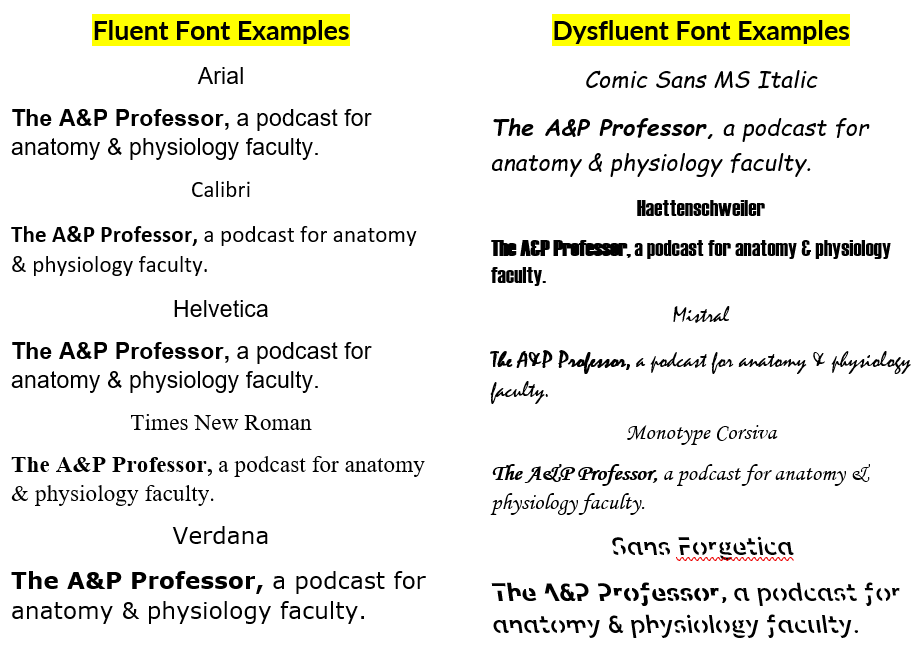
samples of fluent and dysfluent fonts


People

Contributors: David Curole, Terry Thompson

Mentions: Wendy Riggs, Natalie Wade, Jaime Chapman, Robert Bringhurst, Carla Delgado

Production: Aileen Park (announcer), Andrés Rodriguez (theme composer,  recording artist), Rev.com team (transcription), Kevin Patton (writer, editor, producer, host)


If the hyperlinks here are not active, go to TAPPradio.org to find the episode page.

★ More details at the episode page: theAPprofessor.org/podcast-episode-123.html

★ Transcript available in the transcript box: theAPprofessor.org/podcast-episode-123.html

★ Need help accessing resources locked behind a paywall? Check out this advice from Episode 32 to get what you need! my-ap.us/paywall

Take The A&P Professor experience to the next level!

theAPprofessor.org/community

Earn cash by referring other A&P faculty to this podcast:

theAPprofessor.org/refer

Tools & Resources

★ TAPP Science & Education Updates: theAPprofessor.org/updates

★ Amazon: amzn.to/2r6Qa3J

★ Text Expander: theapprofessor.org/textexpander

★ Rev.com: try.rev.com/Cw2nZ

★ Snagit & Camtasia: techsmith.pxf.io/9MkPW

★ Krisp Free Noise-Cancelling App: theAPprofessor.org/krisp

★ JotForm (build forms for free): theAPprofessor.org/jotform

★ QuillBot (writing tools): theAPprofessor.org/quillbot

★ The A&P Professor Logo Items: https://www.teepublic.com/stores/the-a-p-professor

Sponsors

★ Transcript and captions for this episode are supported by the American Association for Anatomy | anatomy.org

★ The Human Anatomy & Physiology Society provides marketing support for this podcast | theAPprofessor.org/haps

★ Distribution of this episode is supported by the Northeast College of Health Sciences online graduate program in Human Anatomy & Physiology Instruction (HAPI) | northeast.edu/hapi

Clicking on sponsor links helps let them know you appreciate their support of this podcast!

Follow The A&P Professor on  Twitter, Facebook, Blogger, Revue, Tumblr, or Instagram @theAPprofessor

The A&P Professor® and Lion Den® are registered trademarks of Lion Den Inc. (Kevin Patton)

As an Amazon Associate I earn from qualifying purchases. I may be compensated for links to sponsors and certain other links.


Click here to listen to this episode—or access the detailed notes and transcript.

Monday, January 28, 2019

Big Year in Anatomy & Physiology Teaching with The A&P Professor | Episode 36


0:42 | Adam Rich Asks About Student Feedback
10:32 | New Type of Vessel in Bones
14:17 | Big Ideas: Content Updates & Applications
20:15 | Big Ideas: This Podcast
20:45 | Big Ideas: Featured Ideas of the Year
29:45 | Big Ideas: Wrapping Up the Year

If you cannot see or activate the audio player click here.

Questions & Feedback: 1-833-LION-DEN (1-833-546-6336)
Follow The A&P Professor on Twitter, Facebook, Blogger, Nuzzel, Tumblr, or Instagram!

"Do what you can, with what you have, where you are."  (Theodore Roosevelt)

1 | Adam Rich Calls In

10 minutes
Kevin responds to a call from Adam Rich of SUNY Brockport regarding giving students feedback/corrected responses in online tests.

 Online testing


2 | New Type of Vessel in Bones

3.5 minutes
Scientists have discovered a system of small vessels that cross every part of a bone's cortical layers to supply most of the bone's blood—over 80% of the arterial supply and 59% of venous drainage. The proposed name is trans-cortical vessels (TCVs).
  • We’ve discovered a new type of blood vessel in our bones (brief article summarizing the discovery) my-ap.us/2B6tHce
  • A network of trans-cortical capillaries as mainstay for blood circulation in long bones (full research article) my-ap.us/2B6ttSq

 bone vessels


3 | Big Year: Content Updates & Applications

6 minutes
The first of several segments in a "debriefing" of the first year of this podcast.
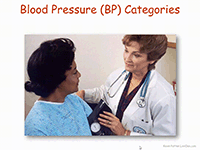
This year brought many content updates and brief teaching snippets, from using green pens for grading to the role of platelets in immunity. Too many to mention, but Kevin gives his best shot at listing some of those that seem to be most memorable.
 Animated BP Categories


4 | Big Year: Evolution of This Podcast

9.5 minutes
What are show notes and how do they differ from the episode page? How best to listen and share? What's the episode list (theAPprofessor.org/podlist)? Preview episodes! And a word about our sponsors:
HAPS logo
The Human Anatomy & Physiology Society (HAPS) is a sponsor of this podcast. Did you know there's a one-day regional HAPS conference in March? Check it out. You can help appreciate their support by clicking the link below and checking out the many resources and benefits found there.

American Association of Anatomists
The searchable transcript for this episode, as well as the captioned audiogram of this episode, are sponsored by The American Association of Anatomists (AAA) at anatomy.org


5 | Big Year: The Big Ideas of the Past Year

 11 minutes
Each full episode usually has a "featured topic." This segment reviews some of the major topics and themes that emerged during the first year of the podcast.  From caring-empathy-compassion to integrity to storytelling, and from testing-as-teaching to elephant skin to learning science, a lot was covered! And what about those guest interviews--the Learning Scientists, media expert Barbara Waxer, anatomy educator Aaron Fried, and artist-professor Paul Krieger? And let's not forget those "lucky numbers"!
 one year

5 | Big Year: Wrapping Up

2 minutes
What do you want me to cover? I have some ideas, of course. But I want to hear  your ideas, too!
1-833-LION-DEN
1-833-546-6336
podcast@theAPprofessor.org
@theAPprofessor (Facebook, Twitter, Instagram, Pinterest, and beyond)

If the hyperlinks here are not active, go to TAPPradio.org to find the episode page.

Amazon referrals help defray podcasting expenses.
Transcript and captions for this episode are supported by the
American Association of Anatomists.anatomy.org


The Human Anatomy & Physiology Societyalso provides support for this podcast. theAPprofessor.org/haps

(Clicking on sponsor links 
helps let them know you appreciatetheir support of this podcast!)

Click here to listen to this episode—or access the detailed notes and transcript.

Monday, January 14, 2019

Big Ideas: The Essential Concepts of A&P | TAPP Episode 35


0:39 | Cholesterol & ApoB in Cardiac Risk
5:48 | How Oxytocin Works
9:49 | Sponsored by HAPS
10:11 | Smell Affects Cortisol / Stress
14:38 | Sponsored by AAA
14:52 | Featured topic 2: Big Ideas - Essential Concepts in A&P
If you cannot see or activate the audio player click here.

Questions & Feedback: 1-833-LION-DEN (1-833-546-6336)
Follow The A&P Professor on Twitter, Facebook, Blogger, Nuzzel, Tumblr, or Instagram!
The big ideas are usually simple ideas. (David Ogilvy)

1 | Cholesterol & ApoB in Cardiac Risk

5 minutes
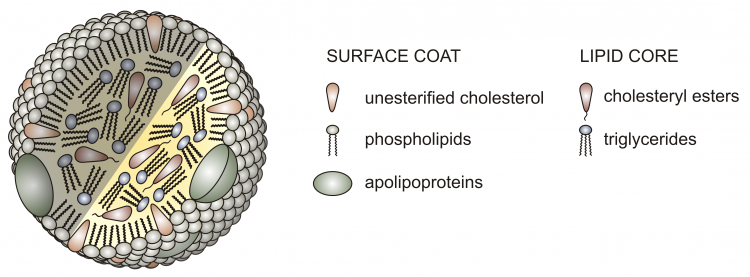
Apolipoprotein B (ApoB) is the protein part of the lipoprotein particles in our bloodstream that contain cholesterol. In primary medical care, we often measure total low-density lipoprotein (LDL) or non-high-density lipoprotein (non-HDL) to help us determine risk for cardiovascular disease. As protocols are reviewed, some believe measuring ApoB is a better measure of cardiovascular risk.

lipoprotein structure


2 | How Oxytocin Works

4 minutes
We know oxytocin (OT) promotes labor contractions of the uterine myometrium. But how? New evidences helps explain the mechanism.
  • Oxytocin can regulate myometrial smooth muscle excitability by inhibiting the Na+‐activated K+ channel, Slo2.1 (research article from The Journal of Physiology) my-ap.us/2AJsDLf

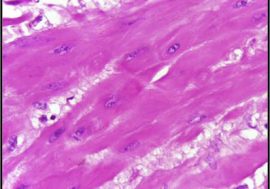
myometrium of uterus 


3 | Sponsored by HAPS

0.5 minutes
The Human Anatomy & Physiology Society (HAPS) is a sponsor of this podcast. Did you know there's a one-day regional HAPS conference in March? Check it out. You can help appreciate their support by clicking the link below and checking out the many resources and benefits found there.
Anatomy & Physiology Society 
theAPprofessor.org/haps
 HAPS logo


4 | Smell Affects Cortisol / Stress

4.5 minutes
Smells in our environment can increase or decrease blood cortisol levels, indicating modulation of our stress response. In particular, the smell of a romantic partner can reduce a woman's stress. Hmmm. Might it also reduce test anxiety? Interesting...
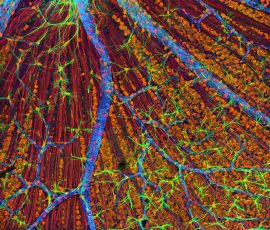
 smell


5 | Sponsored by AAA

0.5 minute
American Association of Anatomists
The searchable transcript for this episode, as well as the captioned audiogram of this episode, are sponsored by The American Association of Anatomists (AAA) at anatomy.org


6 | Big Ideas - Essential Concepts in A&P

11.5 minutes
When telling the story of human structure & function, we want our students to identify the "big ideas" and even just the "kinda big ideas," as well as both the "main characters" and "minor characters." By making a habit of looking for the kinda big ideas, perhaps running a concept list to collect them, students may begin to understand the essential concepts of A&P. And it may help them see the connectness of the structures and functions of the body.
big idea

If the hyperlinks here are not active, go to TAPPradio.org to find the episode page.

Amazon referrals help defray podcasting expenses.
Transcript and captions for this episode are supported by the
American Association of Anatomists.anatomy.org


The Human Anatomy & Physiology Societyalso provides support for this podcast. theAPprofessor.org/haps

(Clicking on sponsor links 
helps let them know you appreciatetheir support of this podcast!)

Click here to listen to this episode—or access the detailed notes and transcript.
Thursday, January 10, 2019

Episode 35 Intro | TAPP Radio Preview


Host Kevin Patton previews the content of the upcoming full episode, which focuses on the big ideas (essential concepts) of the A&P course.
 big idea

There's more... a few content updates... plus some word dissections, a toast to Elaine Marieb, and a recommendation from The A&P Professor Book Club.
If you cannot see or activate the audio player click here and scroll down to the Preview section.

Questions & Feedback: 1-833-LION-DEN (1-833-546-6336)
Follow The A&P Professor on Twitter, Facebook, Blogger, Nuzzel, Tumblr, or Instagram!

Topics
.5 minute
  • News about how smell relates to stress
  • News about how oxytocin works
  • Cholesterol testing for cardiac risk - are changes coming?
  • Big ideas - the essential concepts of A&P
  •  
Word Dissections
9.5 minutes
  • Dissection
    • Section
  • Concept
  • Gradient
  • Apolipoprotein B (ApoB)
Elaine Marieb
1.5 minute
Book Club
3.5 minutes
  • The Core Concepts of Physiology: A New Paradigm for Teaching Physiology
    • by Joel Michael , William Cliff, Jenny McFarland, Harold Modell, Ann Wright
  • Book details:
  • 15 core concepts of physiology
    • Explanations and applications of a concept-based approach to the physiology course
    • Concepts:
      • Evolution
      • Homeostasis
      • Causality
      • Energy
      • Structure/function
      • Cell theory
      • Levels of organization
      • Cell–cell communication
      • Cell membrane
      • Flow down gradients
      • Genes to proteins
      • Interdependence
      • Mass balance
      • Physics/chemistry
      • Scientific reasoning
If the hyperlinks here are not active, go to TAPPradio.org to find the episode page.
Amazon referrals help defray podcasting expenses.
Transcript and captions for this episode are supported by the 
also provides support for this podcast.theAPprofessor.org/haps

(Clicking on sponsor links 
helps let them know you appreciate their support of this podcast!)

Click here to listen to this episode—or access the detailed notes and transcript.
Monday, December 31, 2018

Power Tips for Dissection Activities | TAPP Episode 34


0:43 | Summer neuroscience workshop
3:45 | Ganglion cells
10:52 | Sponsored by HAPS
11:13 | Featured topic 1: Dissection lists
30:49 | Sponsored by AAA
31:02 | Featured topic 2: Pre-dissection practice

If you cannot see or activate the audio player click here.

Questions & Feedback: 1-833-LION-DEN (1-833-546-6336)
Follow The A&P Professor on Twitter, Facebook, Blogger, Nuzzel, Tumblr, or Instagram!

Students don't often realize that they are their own best teacher. (Sr. Virginia Brinks)

1 | Summer neuroscience workshop

3 minutes
Thirteenth Annual Summer Workshop: Hardware and Software Experiments to Teach Neuroscience. Kevin participated in an earlier version of this workshop and got a lot out of it.
  • During 2019, partial costs associated with the Workshop (lodging in MU dorms + meals) will be provided by a grant.
  • See Neuro Workshop Flyer Summer 2019
  • 1-week Summer Course
    • July 14 to July 20, 2019
    • Starts at 7 p.m. on Sunday, July 14, and ends at 5 p.m. on Saturday, July 20 (travel days of Sunday 14 July and Sunday 21 July)
    • Limited to 10 participants
    • Deadline of February 15, 2019
      • Review of applications may begin earlier


2 | Ganglion cells

7 minutes
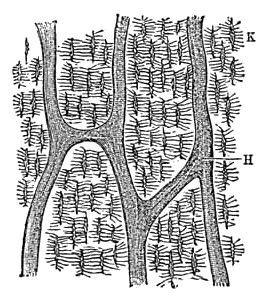
Light-sensitive ganglion cells contain the visual pigment melanopsin that is involved a non-imaging kind of vision that helps us detect sunlight levels in our environment. This information helps us sync our biological clocks to our environment—and may affect our mood.
  • Scientists Find A Brain Circuit That Could Explain Seasonal Depression (brief article and audio story)
  • Luxotonic signals in human frontal-polar cortex: A possible substrate for effects of light on mood (abstract of a presentation at Neuroscience 2018)
  • Light Affects Mood and Learning through Distinct Retina-Brain Pathways (research article)
  • Ganglion cell (overview of the ganglion cell of the retina)

 retina


3 | Sponsored by HAPS

0.5 minutes
The Human Anatomy & Physiology Society (HAPS) is a sponsor of this podcast. Did you know there's a one-day regional HAPS conference in March? Check it out. You can help appreciate their support by clicking the link below and checking out the many resources and benefits found there.
Anatomy & Physiology Society 
theAPprofessor.org/haps
 HAPS logo

4 | Dissections lists

19.5 minutes
Dissection lists are a type of "lab list" in which each structure required for discovery, familiarization, and/or mastery is listed in a clearly organized handout. This handout can be used by students for organizing learning and clarifying their learning objectives—and by teachers to help monitor student progress for effective coaching.
 checklist


5 | Sponsored by AAA

0.5 minute
The searchable transcript for this episode, as well as the captioned audiogram of this episode, are sponsored by The American Association of Anatomists (AAA) at anatomy.org

 American Association of Anatomists


6 | Pre-dissection practice activity

7 minutes
A simple handout with photographs of dissection specimens can be used by students to walk through their dissection activity before they arrive in the lab. This gives them a stronger preparation that a "cold start" in lab, which often gets chaotic of students aren't practiced in finding structures.
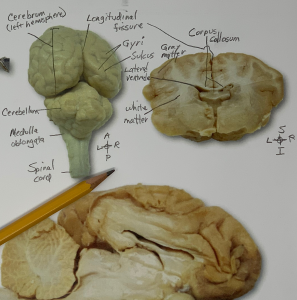
pre-dissection

If the hyperlinks here are not active, go to TAPPradio.org to find the episode page.
Amazon referrals help defray podcasting expenses.
Transcript and captions for this episode are supported by the
American Association of Anatomists.anatomy.org
The Human Anatomy & Physiology Societyalso provides support for this podcast.theAPprofessor.org/haps
(Clicking on sponsor links 
helps let them know you appreciatetheir support of this podcast!)

Click here to listen to this episode—or access the detailed notes and transcript.
Monday, December 17, 2018

Test Frequency in the A&P Course | TAPP Episode 33


0:41 | Hair color inheritance
7:07 | Sponsored by AAA
7:21 | Building body maps
10:14 | Preview episodes
11:39 | Sponsored by HAPS
12:11 | Featured: Test frequency in the A&P course

If you cannot see or activate the audio player click here.
Questions & Feedback: 1-833-LION-DEN (1-833-546-6336)
Follow The A&P Professor on Twitter, Facebook, Blogger, Nuzzel, Tumblr, or Instagram!

Every science begins as philosophy and ends as art. (Will Durant)

1 | Hair color inheritance

3.5 minutes
New information about the inheritance of red hair shows that there's a lot more to it than just having two copies of the red-hair version of the gene MC1R. A lot more. Maybe its not just polygenic, but perhaps omnigenic.
  • Hair colour gene study sheds new light on roots of redheads' locks (summary of the update) my-ap.us/2zYXkeL
  • Genome-wide study of hair colour in UK Biobank explains most of the SNP heritability (the research article in Nature Communications) my-ap.us/2zWWIpU
 red-haired boy


2 | Sponsored by AAA

0.5 minute
The searchable transcript for this episode, as well as the captioned audiogram of this episode, are sponsored by The American Association of Anatomists (AAA) at anatomy.org

 American Association of Anatomists


3 | Building body maps

3 minutes
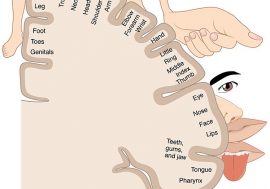
It turns out that all that kicking inside the uterus during the last trimester of pregnancy has a role in the mapping of our body in the somatosensory cortex.
  • Babies kicking in the womb are creating a map of their bodies (summary of the update; includes videos) my-ap.us/2A0t8jv
  • Newborn babies' brain responses to being touched on the face measured for the first time (some related news) my-ap.us/2zWX3ZI
  • Developmental trajectory of movement-related cortical oscillations during active sleep in a cross-sectional cohort of pre-term and full-term human infants (the research article in Scientific Reports) my-ap.us/2A0lcib
 Sensory homunculus


4 | Preview episodes

1.5 minutes
If you haven't been listening to the preview episodes released shortly before each full episode, try them out! Then let me know what you think.


5 | Sponsored by HAPS

0.5 minutes
The Human Anatomy & Physiology Society (HAPS) is a sponsor of this podcast. Did you know there's a one-day regional HAPS conference in March? Check it out. You can help appreciate their support by clicking the link below and checking out the many resources and benefits found there.
Anatomy & Physiology Society  |  theAPprofessor.org/haps
 HAPS logo

6 | Test frequency in the A&P course

13.5 minutes
Listener Krista Rompolski calls in and asks Kevin for his opinion on the best frequency of tests for the undergraduate A&P course.
Here are some previous episodes outlining Kevin's testing practices (and why he does it that way):
Here's the episode in which The Learning Scientists talk about the value of retrieval practice

tests & exams
If the hyperlinks here are not active, go to TAPPradio.org to find the episode page.
Amazon referrals help defray podcasting expenses.

Transcript and captions for this episode are supported by the American Association of Anatomists.anatomy.org

The Human Anatomy & Physiology Society also provides support for this podcast.theAPprofessor.org/haps

(Clicking on sponsor links helps let them know you appreciate their support of this podcast!)

Click here to listen to this episode—or access the detailed notes and transcript.

Monday, December 3, 2018

Helping Students With Test Anxiety | TAPP Episode 32 | BONUS


  0:53 | It's a BONUS episode!
  1:15 | Mitochondrial inheritance
  4:28 | Cardiac stem cells
  6:48 | Sponsored by HAPS
  7:20 | Help getting journal articles
11:18 | Sponsored by AAA
11:31 | Featured: Helping students with test anxiety

If you cannot see or activate the audio player click here.
Follow The A&P Professor on Twitter, Facebook, Blogger, Nuzzel, Tumblr, or Instagram!
I'm trying to stay as calm as possible and focus one day at a time, but when reality sets in, I feel everything: anxiety, excitement, nerves, pressure and joy. (Shawn Johnson)
This is a BONUS episode—which means it's a long one!

1 |Mitochondrial inheritance 3 minutes
New research shows that in some cases, paternal mtDNA may be passed along to offspring in a pattern that resembles autosomal dominant inheritance.
  • Biparental Inheritance of Mitochondrial DNA in Humans (research article) my-ap.us/2PeptDl
mtDNA
2 | Cardiac stem cells 2 minutes
Do cardiac stem cells exist? We thought so. But maybe not.
  • Dozens of Retractions Requested for Heart Stem Cell Studies (news item) my-ap.us/2PanzUx
  • Adult Cardiac Stem Cells Don’t Exist: Study (news item) my-ap.us/2Pdvdxg
  • More Doubt Cast Over Cardiac Stem Cells (older news item) my-ap.us/2Pd9a9O

3 | Sponsored by HAPS 0.5 minutes
The Human Anatomy & Physiology Society (HAPS) is a sponsor of this podcast. Did you know there's a reduced "early bird" registration rate for the annual HAPS confercnce in Portland OR next May? Check it out. You can help appreciate their support by clicking the link below and checking out the many resources and benefits found there.
Anatomy & Physiology Society  |  theAPprofessor.org/haps

HAPS logo

4 | Help getting journal articles 4 minutes
Follow one of my links (or some other hyperlink) and it takes you to journal article that's behind a paywall? Kevin explains a legal, ethical way to access the full article with no costs to you. You'll have to listen to hear this super secret trick!

5 | Sponsored by AAA 0.5 minute
The searchable transcript for this episode, as well as the captioned audiogram of this episode, are sponsored by The American Association of Anatomists (AAA) at anatomy.org
 American Association of Anatomists


6 | Helping students with text anxiety 45 minutes
Kevin's Theory of Test Anxiety states that we are ALL subject to test anxiety. Perhaps occasionally. Perhaps often. In any case, it can affect our ability to retrieve and apply the information we've practiced and thereby affect our performance—and score—on a test or exam. Sometimes significantly. What, if anything, can be done to avoid text anxiety or manage it once it strikes? What can teachers do? What can students do? Well, here's a place to start!
Here are some links you can share with your students:
test anxiety
If the hyperlinks here are not active, go to TAPPradio.org to find the episode page.
Amazon referrals help defray podcasting expenses.

Transcript and captions for this episode are supported by the American Association of Anatomists.

The Human Anatomy & Physiology Society also provides support for this podcast.

(Clicking on sponsor links helps let them know you appreciate their support of this podcast!)

Click here to listen to this episode—or access the detailed notes and transcript.
Monday, November 19, 2018

The Elephant Episode | TAPP Episode 31


0:41 | Homework!
2:03 | Netrin and memory
6:47 | Sponsored by HAPS
7:04 | Featured: Elephants and skin
23:29 | Sponsored by AAA
If you cannot see or activate the audio player click here.
Follow The A&P Professor on Twitter, Facebook, Blogger, Nuzzel, Tumblr, or Instagram!
People are so difficult. Give me an elephant any day. (Mark Shand)

1 | Homework! 1.5 minutes
Don't forget your homework assignments:
  1. Share this podcast with ONE other A&P colleague before the next episode arrives. Yes, I do accept late homework.
  2. Have questions, comments, stories, or ideas related to accommodating student needs? Pass them along for a future episode focused on this topic.
1·833·LION·DEN
(1·833·546·6336)
podcast@theAPprofessor.org (you can attach a sound file if you like! you get double extra credit if you do!)
 listen. learn. share.

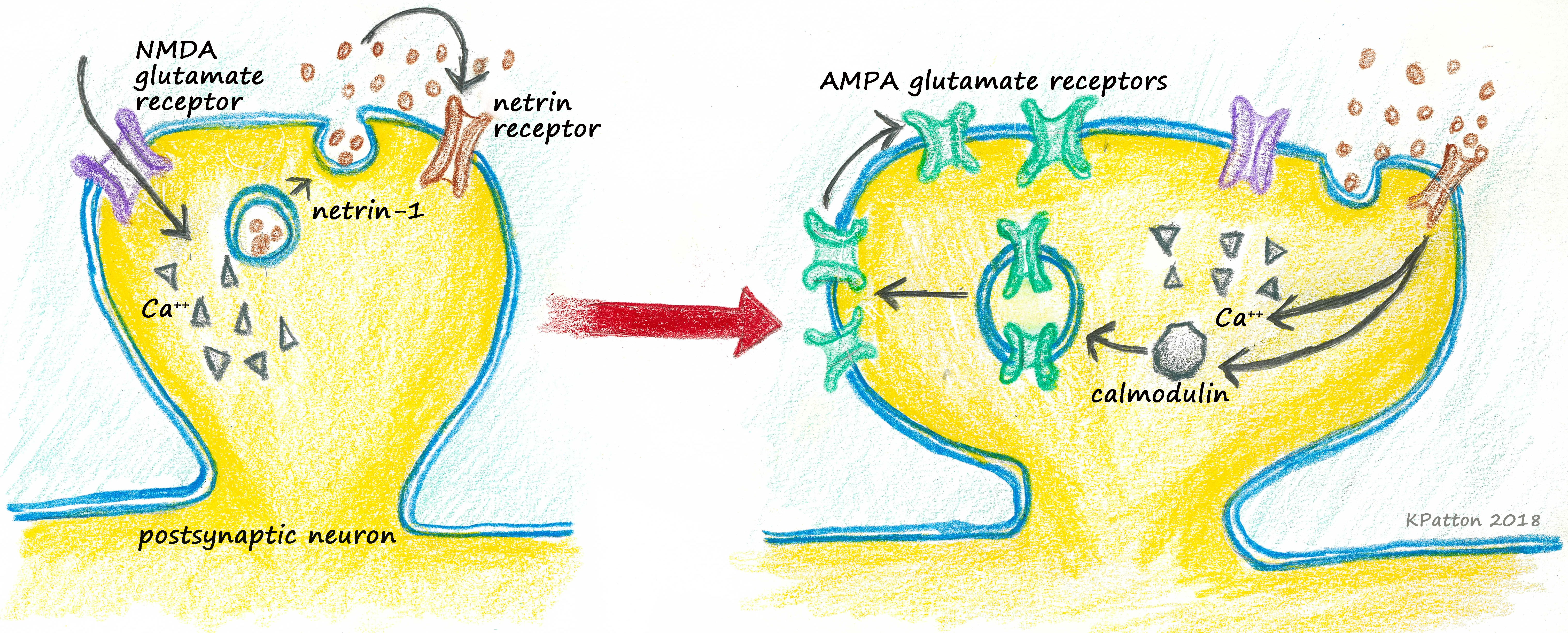
2 | Netrin and memory 4.5 minutes
New information about how memories form at synapses in the hippocampus tells us that netrin-1 is involved. (Click on the image to see details (you can use this image in your teaching, if you dare).
 netrin mechanisms

3 | Sponsored by HAPS 0.5 minutes
The Human Anatomy & Physiology Society (HAPS) is a sponsor of this podcast. Did you know there's a reduced "early bird" registration rate for the annual HAPS confercnce in Portland OR next May? Check it out. You can help appreciate their support by clicking the link below and checking out the many resources and benefits found there.
Anatomy & Physiology Society  |  theAPprofessor.org/haps
 HAPS logo

4 | Elephants and skin 16.5 minutes
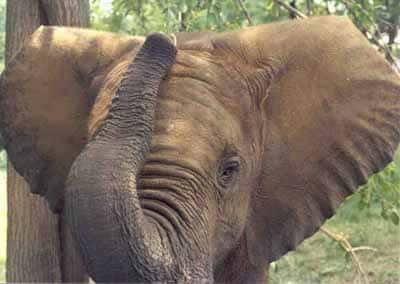
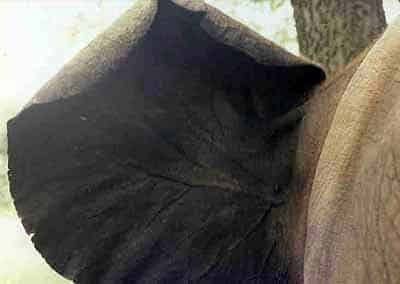
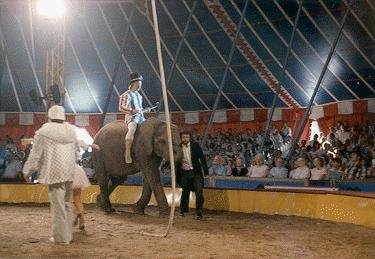
Kevin's experience in zoos, circuses, and on safari in Africa form the basis of some elephant stories he tells in his A&P courses to emphasize some concepts of the integumentary system. In this episode, he shares some elephant research updates, then goes into how elephant skin can help us better understand the thermoregulatory function of human skin. The images show Kevin (on ground in dark suit) and his elephant friend Flora, the retired namesake of Circus Flora. The anterior and posterior sides of Flora's ears pictured are referred to in Kevin' stories (you may use these images in your teaching with attribution).


5 | Sponsored by AAA 0.5 minute
The searchable transcript for this episode, as well as the captioned audiogram of this episode, are sponsored by The American Association of Anatomists (AAA) at anatomy.org
American Association of Anatomists

If the hyperlinks here are not active, go to TAPPradio.org to find the episode page.
Amazon referrals help defray podcasting expenses.

Transcript and captions for this episode
are supported by the
American Association of Anatomists.


The Human Anatomy & Physiology Societyalso provides support for this podcast.
(Clicking on sponsor links helps let them know you appreciate their support of this podcast!)

Click here to listen to this episode—or access the detailed notes and transcript.