Showing posts with label digestion. Show all posts

Tuesday, September 20, 2022

Fonts, Syllabi, and Poop | TAPP 123


Host Kevin Patton revisits the concept of using the syllabus and other course documents to build a positive and productive course culture. Poop—it's everywhere! Does the font or typeface we use affect students—especially regarding learning and memory? We look for answers in this episode!

00:00 | Introduction

00:52 | Revisiting the Syllabus

16:28 | Poop. Poop. Poop.

19:00 | Sponsored by AAA

19:59 | Fonts Are Important in Teaching & Learning

30:54 | Sponsored by HAPI

31:57 | Desirably Difficult Reading?

42:00 | Sponsored by HAPS

43:00 | Fluent & Dysfluent Fonts

56:12 | Staying Connected


★ If you cannot see or activate the audio player, go to: theAPprofessor.org/podcast-episode-123.html

🏅 Apply for your credential (badge/certificate) for listening to this episode: theAPprofessor.org/podcast-episode-123.html/#badge

❓ Please take the anonymous survey: theAPprofessor.org/survey

☝️ Questions & Feedback: 1-833-LION-DEN (1-833-546-6336)

✔️ Follow The A&P Professor on Twitter, Facebook, Blogger, Revue, Tumblr, or Instagram! @theAPprofessor

📰 Get the thrice-weekly TAPP Science & Education Updates theAPprofessor.org/updates


Typography must often draw attention to itself before it will be read. Yet in order to be read, it must relinquish the attention it has drawn. (Robert Bringhurst)


Revisiting the Syllabus

15.5 minutes

Creating and nurturing a course culture can be influenced by our syllabus and other course materials. We revisit this idea with a few more tips and tweaks.

Anatomy &; Physiology Syllabus: It's an Art | TAPP 120

Are We Answering Student Questions? | Science Updates | TAPP 92

★ Wendy Riggs has a huge collection of anatomy, physiology, and general bio, instructional videos she uses in her flipped classes youtube.com/user/wendogg1

★ Natalie Wade has engaging short videos about A&P content and study tips at The Anatomy Gal youtube.com/c/TheAnatomyGal

★ Jamie Chapman has a collection (Chapman Histology) of short (under 3 minutes) videos guiding students through lessons in histology youtube.com/c/ChapmanHistology
Fonts, Syllabi, and Poop | TAPP 123


Poop. Poop. Poop.

2.5 minutes

After releasing The Poop Episode | Using Fecal Changes to Monitor Health | TAPP 121, I learned of a whole movement of poop listening on smart speakers. And that there are actually poop songs that are viral hits. Really.

★ When kids yell 'Alexa, play poop,' you'll hear these songs (story from All Things Considered on National Public Radioo) AandP.info/wv2

The Foot Book (Bright & Early children's book by Dr. Seuss; can be read as The Poop Book) geni.us/afvGc

★ CHOC Stool Diary AandP.info/4yq

★ Bowel Symptom Journal (from Alberta Health Services) AandP.info/6fw

★ Poop Apps: 5 Tools for Tracking Your Stools AandP.info/5ow


Sponsored by AAA

56 seconds

A searchable transcript for this episode, as well as the captioned audiogram of this episode, are sponsored by the American Association for Anatomy (AAA) at anatomy.org.

Searchable transcript

Captioned audiogram 

Don't forget—HAPS members get a deep discount on AAA membership!

AMERICAN ASSOCIATION FOR ANATOMY STATEMENT OF RESPONSIBILITY FOR ITS HISTORY OF RACISM (Press release from AAA, giving the full text of the statement) AandP.info/eei

AAA logo


Fonts Are Important in Teaching & Learning

11 minutes

At the suggestion of listener Dr. David Curole, we examine the roles that different fonts can play in teaching, learning, and memory. This segment reviews some past discussions of fonts, then introduces some new concepts of using fonts in teaching. Featured is a Word Dissection of the terms fluent font and dysfluent (disfluent) font.

Communication, Clarity, & Medical Errors | Episode 55

Anatomy & Physiology Syllabus: It's an Art | TAPP 120

Why Anatomy & Physiology Students Need Sectional Anatomy | TAPP 116


Sponsored by HAPI Online Graduate Program

59 seconds

The Master of Science in Human Anatomy & Physiology Instruction—the MS-HAPI—is a graduate program for A&P teachers, especially for those who already have a graduate/professional degree. A combination of science courses (enough to qualify you to teach at the college level) and courses in contemporary instructional practice, this program helps you be your best in both on-campus and remote teaching. Kevin Patton is a faculty member in this program at Northeast College of Health Sciences. Check it out!
northeastcollege.edu/hapi

Logo of Northeast College of Health Sciences, Human Anatomy & Physiology Instruction

Desirably Difficult Reading?

10 minutes

The article How Fonts Affect Learning and Memory by Carla Delgado takes our conversation a step further by looking the potential role of dysfluent fonts in learning.

★ How Fonts Affect Learning and Memory (article in Discover Magazine by Carla Delgado mentioned in this segment) AandP.info/wof

★ A Review of the Cognitive Effects of Disfluent Typography on Functional Reading (review article from The Design Journal) AandP.info/mwt

★ Fortune Favors the Bold (and the Italicized): Effects of Disfluency on Educational Outcomes (article from Proceedings of the Annual Meeting of the Cognitive Science Society) AandP.info/jjt

★ Changing Fonts in Education: How the Benefits Vary with Ability and Dyslexia (article from The Journal of Educational Research) AandP.info/yt4

★ Fluency and the Detection of Misleading Questions: Low Processing Fluency Attenuates the Moses Illusion (article from the journal Social Cognition) AandP.info/jul


Sponsored by HAPS

56 seconds

The Human Anatomy & Physiology Society (HAPS) is a sponsor of this podcast.  You can help appreciate their support by clicking the link below and checking out the many resources and benefits found there. Watch for virtual town hall meetings and upcoming regional meetings!

Anatomy & Physiology Society

theAPprofessor.org/haps

HAPS logo


Fluent & Dysfluent Fonts

13 minutes

We identify some potentially fluent fonts, as well as a few dysfluent fonts (see image below or at AandP.info/ihy). Sans Forgetica font was developed specifically to be dysfluent in a way that promotes remembering what is read. Does it work? Should we incorporate dysfluent fonts in our teaching materials?

★ Fonts and Fluency: The Effects of Typeface Familiarity, Appropriateness, and Personality on Reader Judgments (thesis by Tim Wang) AandP.info/0hf

★ Previously claimed memory boosting font 'Sans Forgetica' does not actually boost memory (story from ScienceDaily) AandP.info/zp4

★ The science of Sans Forgetica - The font to remember (video from the creators of Sans Forgetica) AandP.info/ox5

★ An unforgettable year – Sans Forgetica turns one (article from the RMIT University website) AandP.info/fo3

★ Sans Forgetica: Study Mode by RMIT University (plugin for Chrome browser lets you read any web page in Sans Forgetica) AandP.info/fc3

★ Sans Forgetica (free download for personal use) AandP.info/o4g

★ Can very small font size enhance memory? (article from journal Memory & Cognition) AandP.info/rlk

★ Sans Forgetica is not desirable for learning (article from the journal Memory) AandP.info/hmu

★ The role of font size and font style in younger and older adults' predicted and actual recall performance (article from
Neuropsychology, development, and cognition. Section B, Aging, Neuropsychology and Cognition) AandP.info/r6s
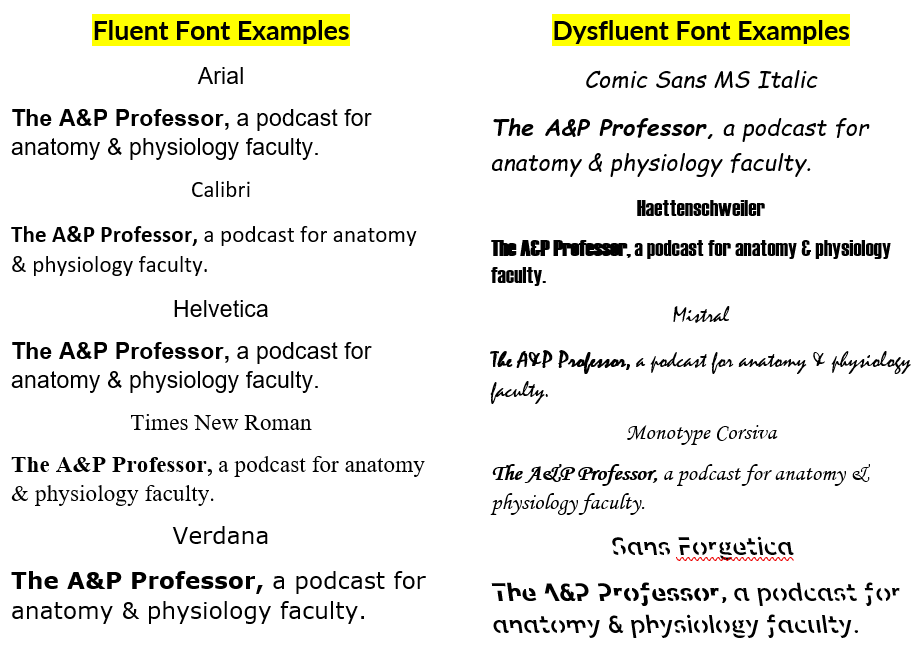
samples of fluent and dysfluent fonts


People

Contributors: David Curole, Terry Thompson

Mentions: Wendy Riggs, Natalie Wade, Jaime Chapman, Robert Bringhurst, Carla Delgado

Production: Aileen Park (announcer), Andrés Rodriguez (theme composer,  recording artist), Rev.com team (transcription), Kevin Patton (writer, editor, producer, host)


If the hyperlinks here are not active, go to TAPPradio.org to find the episode page.

★ More details at the episode page: theAPprofessor.org/podcast-episode-123.html

★ Transcript available in the transcript box: theAPprofessor.org/podcast-episode-123.html

★ Need help accessing resources locked behind a paywall? Check out this advice from Episode 32 to get what you need! my-ap.us/paywall

Take The A&P Professor experience to the next level!

theAPprofessor.org/community

Earn cash by referring other A&P faculty to this podcast:

theAPprofessor.org/refer

Tools & Resources

★ TAPP Science & Education Updates: theAPprofessor.org/updates

★ Amazon: amzn.to/2r6Qa3J

★ Text Expander: theapprofessor.org/textexpander

★ Rev.com: try.rev.com/Cw2nZ

★ Snagit & Camtasia: techsmith.pxf.io/9MkPW

★ Krisp Free Noise-Cancelling App: theAPprofessor.org/krisp

★ JotForm (build forms for free): theAPprofessor.org/jotform

★ QuillBot (writing tools): theAPprofessor.org/quillbot

★ The A&P Professor Logo Items: https://www.teepublic.com/stores/the-a-p-professor

Sponsors

★ Transcript and captions for this episode are supported by the American Association for Anatomy | anatomy.org

★ The Human Anatomy & Physiology Society provides marketing support for this podcast | theAPprofessor.org/haps

★ Distribution of this episode is supported by the Northeast College of Health Sciences online graduate program in Human Anatomy & Physiology Instruction (HAPI) | northeast.edu/hapi

Clicking on sponsor links helps let them know you appreciate their support of this podcast!

Follow The A&P Professor on  Twitter, Facebook, Blogger, Revue, Tumblr, or Instagram @theAPprofessor

The A&P Professor® and Lion Den® are registered trademarks of Lion Den Inc. (Kevin Patton)

As an Amazon Associate I earn from qualifying purchases. I may be compensated for links to sponsors and certain other links.


Click here to listen to this episode—or access the detailed notes and transcript.

Thursday, February 9, 2017

How Dietary Fiber Prevents Disease

So why, exactly, is it that we should consume a lot of fiber in our diet to remain healthy? Are refined fiber supplements just as good as, say, an "apple a day?"

Recently, an article in the journal Cell answer seems to verify some of the answers for us.

As the paper cited below indicates, research seems to confirm that dietary fiber provides nutrients for the inhabitants of our intestinal microbiome.  When dietary fiber is missing, then the microbes undergo a shift in populations and start consuming our GI mucus as an alternate source of nutrition.  That, as you might guess, reduces the thickness of the protective mucus—hus increasing the likelihood that pathogens can more easily attack the intestinal lining. Ouch.

Apparently, refined prebiotic fibers don't fix the problem.

Here are some highlights of the research article (quoted from their online preview):

  • Characterized synthetic bacterial communities enable functional insights in vivo
  • Low-fiber diet promotes expansion and activity of colonic mucus-degrading bacteria
  • Purified prebiotic fibers do not alleviate degradation of the mucus layer
  • Fiber-deprived gut microbiota promotes aggressive colitis by an enteric pathogen

Image for unlabelled figure


What can we use from this in teaching undergraduate A&P?


  • When asked by students about dietary fiber, you have more information from which to draw an answer.
  • When discussing any of these topics, you'll now have a bit more to add to your story:
    • nutrition
    • function of mucus
    • the human microbial system (or specifically, the GI microbiome)
    • how pathogens cause disease (or specifically, GI disorders)

Want to know more?


Veggies and Intact Grains a Day Keep the Pathogens Away

  • Francesca S. Gazzaniga. Dennis L. Kasper. Cell. Available online 17 November 2016
  • Brief preview of the M. Desai article cited below.
  • my-ap.us/2lijkbE


A Dietary Fiber-Deprived Gut Microbiota Degrades the Colonic Mucus Barrier and Enhances Pathogen Susceptibility

  • Mahesh S. Desai et al. Cell, Volume 167, Issue 5, 17 November 2016, Pages 1339-1353.e21
  • The detailed research article.
  • my-ap.us/2lijz6w

Microbiome articles

  • Kevin Patton. The A&P Professor. Various dates.
  • Collection of previous posts on this topic from this blog.
  • my-ap.us/2liCrSP


Photos: Youssef KH (top) Cell (bottom)

Friday, September 19, 2014

Sweeteners Alter Gut Microbiome to Promote Glucose Intolerance


I'll never forget when Ira Fritz, my doctoral committee chair, practically slapped a packet of artificial sweetener out of my hand as I was about to put it into my iced tea.  "That stuff will kill you!" he said as he extracted from me an oath to swear off the stuff.  I'm not sure I quite believed him, but to this day I still drink my iced tea unsweetened.

As usual, Ira was right.  Recently another brick has been added to the foundation of his concern about sugar substitutes. Researchers have found that sweeteners such as saccharine, sucralose, aspartame can alter the microbial ecosystem of our gut in a way that promotes the development of glucose intolerance.  Glucose intolerance is part of metabolic syndrome, one of the most significant epidemics of our (or any) era.

At least as interesting as this microbial mediation between our diet and our metabolic function is the fact that only those human subjects who were responders exhibited the changes observed.  This underscores our emerging view about the individualized nature of human nutrition and metabolism.


What can we use from this in teaching undergraduate A&P?


  • We have yet another example to share regarding why and how the human microbial system plays such a vital role in our body.

  • This may be an interesting story to bring up when discussing immunity in our A&P course, perhaps giving a preview of later topics on the gut microbiome and nutrition/metabolism.

  • Nutrition and metabolism are not the same for everyone.  So the basic principles learned in an A&P course are likely to be generally true for humans, but not necessarily entirely true for every individual.

  • Yet another example of the principle "you are what you eat."

  • And here's another case of continued scientific research refining the story of what we know about human structure and function.  Consider mentioning it when you are explaining scientific methodology and it's relevance to A&P at the start of your course.  An interesting discussion may ensue after asking, "does this mean we should stop using sugar substitutes?"


Want to know more?


Artificial Sweeteners Linked to Glucose Intolerance

  • Beth Skwarecki. Medscape Medical News. September 17, 2014
  • Article summarizing the recent research.
  • my-ap.us/1pkI645


Sugar Substitutes, Gut Bacteria, and Glucose Intolerance

  • Anna Azvolinsky. TheScientist. September 17, 2014
  • Another plain-English article covering how the consumption of artificial sweeteners results in glucose intolerance is mediated by changes in the gut microbiota in both mice and humans.
  • my-ap.us/1qOBVvw


Artificial sweeteners induce glucose intolerance by altering the gut microbiota


  • Jotham Suez, et al. Nature. doi:10.1038/nature13793 September 17, 2014
  • Research article outlining the discovery of the sweetener-gut-glucose intolerance  link. Includes numerous illustrations.
  • my-ap.us/1uLs0Hc


Metabolic Syndrome 

  • S Wang, et al. Medscape. Updated 23 April 2014
  • Detailed Medscap entry summarizing various aspects of metabolic syndrome.
  • my-ap.us/1uLrNUE


Diet Sodas, as Well as Regular Ones, Raise Diabetes Risk

  • Miriam E. Tucker. Medscape Medical News. February 14, 2013
  • Article summarizing research showing that women who drink large amounts of diet soda are at increased risk of developing type 2 diabetes mellitus.
  • my-ap.us/1uLrY20


Consumption of artificially and sugar-sweetened beverages and incident type 2 diabetes in the Etude Epidémiologique auprès des femmes de la Mutuelle Générale de l'Education Nationale–European Prospective Investigation into Cancer and Nutrition cohort

  • Guy Fagherazzi, et al. American Journal of Clinical Nutrition. January 30, 2013. 
  • Original research article about the diet soda-diabetes link.
  • my-ap.us/1BQOTLP


Photo: S. Snodgrass

Monday, August 18, 2014

Human Microbial System


A recent article in The Scientist once again reminds us of the ongoing explosion in the scientific understanding of the human microbial system.  In a few short years, this area of exploration has moved to the forefront of medical and basic science research in human biology.

I think it's becoming clear that the most useful way to think of human body function is to recognize that an "organism" is really a sort of "habitat."  And like any habitat, it functions best when all the inhabitants are within a limited range of balanced relationships.

Who are the inhabitants?  Besides our own cells?  Well, one could think of mitochondria and cilia and other organelles as symbiotic internal inhabitants of our cells.  They're not that literally, of course, but I think its a useful metaphor for understanding the human body.  Then there are the many microbes and animals that cover our internal and external surfaces, burrow into some of our pores and glands, and inhabit our body fluids.

I call the balanced functional relationship among the various microbomes of the body and our own tissues the human microbial system.  And I am certain that it won't be long before we will be discussing this system alongside the major organ systems of the body.  That is if we truly want to understand how the body really works.

The article in The Scientist I mention is a great summary of some of the major roles that the human microbial system plays in the human body—and a good survey of some of the areas of the body where the human-microbial functional relationships play out.  See the link to the article below.


What can we use from this in teaching undergraduate A&P?


  • Why not introduce the concept of the human microbial system at the beginning of our A&P course, when we set the stage by explain how scientists understand the body and its functions as an integrated system of different parts?
  • We can mention the different microbiomes of the body when we explore each organ system where they play an important role—which is pretty much all of them!
  • Consider discussing what happens to normal human function when microbiomes get out of balance.  For example, in the gut a microbial imbalance can lead to ulcers, diarrhea, and other dysfunctions.  On the skin a pathogenic microbe may become dominant and cause a rash.
  • Promote a discussion of what kinds of wellness strategies might be employed to prevent microbial imbalances.
  • Our students can leave our A&P course with an up-to-date understanding of human biology that will help them understand new clinical concepts and treatment strategies.

Want to Know More?

The Body’s Ecosystem

  • By The Scientist Staff.  The Scientist. August 1, 2014
  • Plain-English article (cited above) on how research on the human microbiome is booming, and scientists have moved from simply taking stock of gut flora to understanding the influence of microbes throughout the body.
  • my-ap.us/1vgOu5y

Articles from The A&P Professor


Moving pictures of the human microbiome

  • J Gregory Caporaso et al. Genome Biology 2011, 12:R50  doi:10.1186/gb-2011-12-5-r50
  • Open-access journal article that includes FREE videos that show how dynamic the human microbial system is
  • my-ap.us/V7St3Q

Human Microbiome Project


The Microbiome and Disease

  • List of diseases associated with microbiome imbalances from Genetic Science Learning Center
  • my-ap.us/1nDpxr1

Audio

  • Radio stories from National Public Radio on human microbiomes and their role in health and disease.  The growing number of these stories tells us something as A&P teachers: maybe we better be covering this!
  • my-ap.us/1uA7Qyg

Wednesday, June 8, 2011

That weird E. coli epidemic

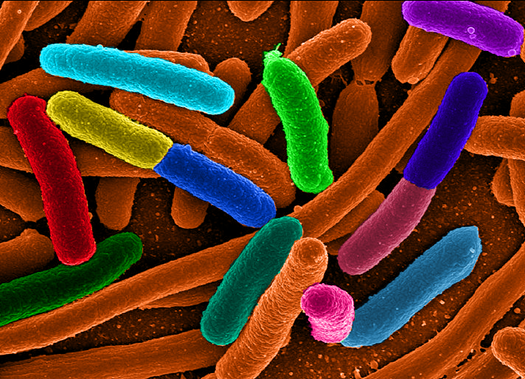
Remember my previous post, in which I gave you a free slide show on the role of the appendix in keeping the gut microbiome happy?  Well, to sort of "prove the point" of the importance of a healthy gut microbiome, we've been hearing all about that weird Escherichia coli (E. coli) epidemic in Europe.

If you're like me, you'll want to take the opportunity to emphasize concepts learned in class by applying them to "real life" events reported in the news.  If you're like me, you may want to check out these journal articles:

Deadly bugs: Toxin-producing E. coli strain causes outbreak in Germany
Tina Hesman Saey
Science News web edition : Tuesday, June 7th, 2011

my-ap.us/lfMeYE
[Brief, highly readable introduction to the current outbreak in Europe.  Plus a cool photo!]

Bacterial infections: new and emerging enteric pathogens
Sherman, P et al.
Current Opinion in Gastroenterology:January 2010 - Volume 26 - Issue 1 - p 1-4
doi: 10.1097/MOG.0b013e328333d73b
my-ap.us/lJv8PC
[from the abstract: "The aim of this review is to highlight recent advances in knowledge of bacterial enteric infections. We focus on understanding of enterohemorrhagic Escherichia coli O157:H7 and Campylobacter jejuni infections, and to link these acute events with long-term consequences in a susceptible host, including irritable bowel syndrome and chronic inflammatory bowel diseases."]

Clinical Relevance of Shiga Toxin Concentrations in the Blood of Patients With Hemolytic Uremic Syndrome
Brigotti, Maurizio et al.
Pediatric Infectious Disease Journal: June 2011 - Volume 30 - Issue 6 - pp 486-490
doi: 10.1097/INF.0b013e3182074d22
my-ap.us/j72bUA

[from the abstract: "Intestinal infections with Shiga toxin-producing Escherichia coli (STEC) in children can lead to the hemolytic uremic syndrome (HUS). Shiga toxins (Stx) released in the gut by bacteria enter the blood stream and target the kidney causing endothelial injury. Free toxins have never been detected in the blood of HUS patients, but they have been found on the surface of polymorphonuclear leukocytes (PMN)."]

Infectious colitis
Navaneethan, Udayakumar and Giannella, Ralph A
Current Opinion in Gastroenterology: January 2011 - Volume 27 - Issue 1 - p 66–71
doi: 10.1097/MOG.0b013e3283400755

my-ap.us/mTOlpN
[from the abstract: "The incidence of gastrointestinal infections continues to increase and infectious colitis contributes to significant morbidity and mortality worldwide. The purpose of this review is to highlight the recent advances in knowledge of pathogens causing infectious colitis. We describe the various pathogens and specifically focus on enterohemorrhagic Escherichia coli (EHEC) O157:H7, Salmonella, Shigella, Campylobacter, and Entamoeba histolytica infections, and their impact on long-term effects, including postinfectious irritable bowel syndrome and inflammatory bowel disease."]

An inside job: subversion of the host secretory pathway by intestinal pathogens
Sharp, Tyler M and Estes, Mary K
Current Opinion in Infectious Diseases: October 2010 - Volume 23 - Issue 5 - p 464–469
doi: 10.1097/QCO.0b013e32833dcebd

my-ap.us/leb7Le
[from the abstract: "The cellular secretory pathway, composed of the endoplasmic reticulum, Golgi apparatus, and cellular vesicles, mediates the intracellular trafficking of proteins and lipids. Gastrointestinal pathogens frequently affect the functions of enterocytes, the differentiated cells involved in secretion and absorption of extracellular molecules. Microbial pathogenesis can be enhanced by altering the trafficking of key molecules such as brush border enzymes, soluble immune mediators such as cytokines and chemokines, and MHC Class I molecules, all of which rely on the secretory pathway for their appropriate cellular localization. This review focuses on our current understanding of the distinct mechanisms employed by enteric pathogens to antagonize the secretory pathway."]


Probiotics: progress toward novel therapies for intestinal diseases
Yan et al.
Current Opinion in Gastroenterology: March 2010 - Volume 26 - Issue 2 - p 95–101
doi: 10.1097/MOG.0b013e328335239a

my-ap.us/iH93qP
[from the abstract "As the beneficial effects of probiotics on health and disease prevention and treatment have been well recognized, the demand for probiotics in clinical applications and as functional foods has significantly increased in spite of limited understanding of the mechanisms. This review focuses on the most recent advances in probiotic research from genetics to biological consequences regulated by probiotics and probiotic-derived factors."]

For a really cool, copyright-free image to use in your course, go to my-ap.us/lVEg69

Monday, May 9, 2011

FREE animated function of the appendix

When in comes to explaining the role of the human vermiform appendix, I must dispel students' belief that it has no role. And then I must try to convey that it has an immune function while at the same time promoting microbial growth.

Being a visual learner by preference, and therefore preferentially a visual teacher, I find any concept easier to teach if I can draw a picture of it.  Even better if I can put that picture into motion.

I recently uploaded a new set of animated PowerPoint slides that anyone can use to explain the immune function of the appendix.

To download and view the FREE set of slides, go to http://www.mediafire.com/file/jqgizrv1xr8s6kd/AppendixFunction-LionDen-KPatton.pptx

To access the file, you'll need a password.  If you don't already have a current password to the Lion Den Slide Collection, you can get one by filling out the form at http://my-ap.us/eOtyVq

Feel free to use it in your classroom or website (or both).

I'll be adding a narrated version to my YouTube channel soon at youtube.com/user/kevintpatton

Want to know more?
New "old" news about the appendix
K. Patton
The A&P Professor 24 Aug 2009
[From the archive of this blog, includes some interesting comments from our readers plus links to journal articles]
http://my-ap.us/eIHUKI

The Cecal Appendix: One More Immune Component With a Function Disturbed By Post-Industrial Culture
Michel Laurin et al.
The Anatomical Record. Article first published online: 2 MAR 2011 DOI: 10.1002/ar.21357
[Recent review article that outlines an interesting perspective on the function of the appendix.]
http://my-ap.us/fUeGPX

Sunday, April 3, 2011

Plaque-fighting bacteria

Have you noticed that the microbiome of the human body has taken off as one of the hottest areas?  Each month, new concepts of how our microbial partners keeps us healthy are revealed.  Last week, we were discussing teeth in my A&P 2 course and I wish I'd had this new tidbit to share with my students:

Researchers recently found that Streptococcus salivarius, one of the microbes in our mouth, can help fight the buildup of plaque on our teeth.  It does so by producing the enzyme FruA, which breaks down carbohydrates in our mouth more efficiently than can the bacteria that form plaque biofilms.  Thus, the plaque-forming bacteria are robbed of their nutrients.

I'll bet S. salivarius will become popular as an oral probiotic.  And its discovery may help us find better ways to manage our mouth's ecosystem to promote good health.

Want to know more?

Inhibition of Streptococcus mutans Biofilm Formation by Streptococcus salivarius FruA 
A. Ogawa, et al.
Applied and Environmental Microbiology Vol. 77, March 2011, p. 1572 doi:10.1128/AEM.02066-10, published online January 14, 2011
[Original research article]
http://my-ap.us/h7RuaA

Bacterial fight dental plaque
Tina Hesman Saey
Science News Published online April 1, 2011
[Brief summary of the discovery]
http://my-ap.us/hsj1nb
Click the image above to access a FREE animation of tooth decay you can use in your course as you explain the process.

Monday, February 22, 2010

FREE digestion images

http://bit.ly/ciKu0T
Although there's still a lot more to go, I have recently updated the library of images for digestion in the FREE Image Library at The A&P Professor website.


In a previous post I outlined a few of the many ways you could use supplemental images like these.  In this batch, there are some dramatic images of gall stones, laparoscopic views of digestive organs that I may use to spice up our classroom discussions a bit.

Monday, August 24, 2009

New "old" news about the appendix


A recent article in ScienceDaily discusses a new article in the Journal of Evolutionary Biology regarding the evolution of the human appendix.

As you know, Darwin thought that the vermiform appendix was a vestigial, nonfunctional structure "left over" from our evolutionary past.

And if you been using my A&P textbooks for the last ten years or so, you also know that biologists have long suspected (and recently confirmed) that the appendix is no such thing. Its function is to incubate intestinal flora (gut bacteria)—which helps keep the ecosystem of the gut in a healthy balance by repopulating the colon with beneficial bacteria after an illness or other disturbance.

The new journal article, written by some of the same researchers involved in the most recent confirmation of the "incubator model of the appendix," tackles the evolutionary aspects of the appendix.

Want to know more?

Evolution Of The Human Appendix: A Biological 'Remnant' No More.
Duke University Medical Center
ScienceDaily Duke University Medical Center. 21 August 2009.
[Summary of the journal article and its context]
Comparative anatomy and phylogenetic distribution of the mammalian cecal appendix
Smith, et al.Journal of Evolutionary Biology. published online 12 August 2009
[Abstract of the journal article, published in advance of the print version]


Click here for a FREE surgical photo of a human vermiform appendix.

Tuesday, July 21, 2009

FREE video on renewal of intestinal lining


A recent "Hot Paper" summary in The Scientist not only brings us up to date on the latest skirmish in the battle over which cell is THE stem cell of the intestinal crypts, it also gives us a great Flash video that we can use to illustrate the process of maintaining the lining of the small intestine.

In my textbook Anatomy & Physiology 7th edition, Figure 25-18 (p. 853) shows the process by which stem cells in the intestinal crypts (of Lieberkuhn) produce daughter cells that move up and out of the crypt to replace cells lost at the apices of the intestinal villi.

The video embedded in the article in The Scientist is not narrated, and rather slow-moving at times, but it does a fantastic job of animating the process shown in textbook figure 25-18.

To link directly to the video, go to:
http://images.the-scientist.com/supplementary/video/keller/kellermcgill_clonalconveyorbelt.swf

To view the video within the article go to . . .
Gut Churning: The discovery of an intestinal stem cell marker fuels an ongoing debate over the cells' location and properties
Alla Katsnelson
The Scientist Volume 23, Issue 7, Page 51
No matter how you get there, I suggest previewing it (duh-uh) and taking note of particular times in the sequence to which you may want to quickly navigate to avoid the slow parts (or skip parts not useful in your course). Or just slide the timing bar to the spot you want.

BONUS! Here are some FREE images of the intestinal villi and intestinal crypts from an early edition of Gray's Anatomy: