Showing posts with label seminars/workshops. Show all posts

Monday, December 31, 2018

Power Tips for Dissection Activities | TAPP Episode 34


0:43 | Summer neuroscience workshop
3:45 | Ganglion cells
10:52 | Sponsored by HAPS
11:13 | Featured topic 1: Dissection lists
30:49 | Sponsored by AAA
31:02 | Featured topic 2: Pre-dissection practice

If you cannot see or activate the audio player click here.

Questions & Feedback: 1-833-LION-DEN (1-833-546-6336)
Follow The A&P Professor on Twitter, Facebook, Blogger, Nuzzel, Tumblr, or Instagram!

Students don't often realize that they are their own best teacher. (Sr. Virginia Brinks)

1 | Summer neuroscience workshop

3 minutes
Thirteenth Annual Summer Workshop: Hardware and Software Experiments to Teach Neuroscience. Kevin participated in an earlier version of this workshop and got a lot out of it.
  • During 2019, partial costs associated with the Workshop (lodging in MU dorms + meals) will be provided by a grant.
  • See Neuro Workshop Flyer Summer 2019
  • 1-week Summer Course
    • July 14 to July 20, 2019
    • Starts at 7 p.m. on Sunday, July 14, and ends at 5 p.m. on Saturday, July 20 (travel days of Sunday 14 July and Sunday 21 July)
    • Limited to 10 participants
    • Deadline of February 15, 2019
      • Review of applications may begin earlier


2 | Ganglion cells

7 minutes
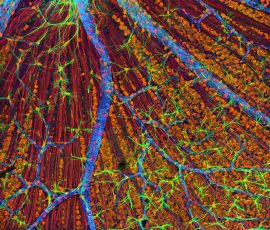
Light-sensitive ganglion cells contain the visual pigment melanopsin that is involved a non-imaging kind of vision that helps us detect sunlight levels in our environment. This information helps us sync our biological clocks to our environment—and may affect our mood.
  • Scientists Find A Brain Circuit That Could Explain Seasonal Depression (brief article and audio story)
  • Luxotonic signals in human frontal-polar cortex: A possible substrate for effects of light on mood (abstract of a presentation at Neuroscience 2018)
  • Light Affects Mood and Learning through Distinct Retina-Brain Pathways (research article)
  • Ganglion cell (overview of the ganglion cell of the retina)
 retina


3 | Sponsored by HAPS

0.5 minutes
The Human Anatomy & Physiology Society (HAPS) is a sponsor of this podcast. Did you know there's a one-day regional HAPS conference in March? Check it out. You can help appreciate their support by clicking the link below and checking out the many resources and benefits found there.
Anatomy & Physiology Society 
theAPprofessor.org/haps
 HAPS logo

4 | Dissections lists

19.5 minutes
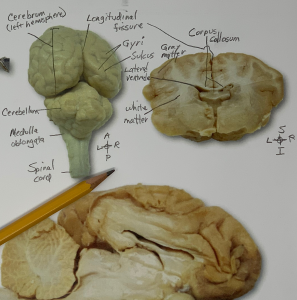
Dissection lists are a type of "lab list" in which each structure required for discovery, familiarization, and/or mastery is listed in a clearly organized handout. This handout can be used by students for organizing learning and clarifying their learning objectives—and by teachers to help monitor student progress for effective coaching.
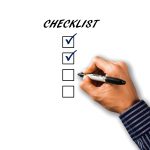
 checklist


5 | Sponsored by AAA

0.5 minute
The searchable transcript for this episode, as well as the captioned audiogram of this episode, are sponsored by The American Association of Anatomists (AAA) at anatomy.org

 American Association of Anatomists


6 | Pre-dissection practice activity

7 minutes
A simple handout with photographs of dissection specimens can be used by students to walk through their dissection activity before they arrive in the lab. This gives them a stronger preparation that a "cold start" in lab, which often gets chaotic of students aren't practiced in finding structures.
pre-dissection

If the hyperlinks here are not active, go to TAPPradio.org to find the episode page.
Amazon referrals help defray podcasting expenses.
Transcript and captions for this episode are supported by the
American Association of Anatomists.anatomy.org
The Human Anatomy & Physiology Societyalso provides support for this podcast.theAPprofessor.org/haps
(Clicking on sponsor links 
helps let them know you appreciatetheir support of this podcast!)

Click here to listen to this episode—or access the detailed notes and transcript.

Monday, August 13, 2018

The Syllabus Episode | Bonus | TAPP Episode 24


Introduction (2 min)
Do students read the syllabus? What is a syllabus? (8 min)
Reading and raiding the syllabus (14.5 min)
First-day activities | A syllabus quiz? (18.5 min)

Basic elements of a syllabus (13.5 min)
More things to put in a syllabus (12 min)
Study strategies, extra topics, & FAQs (8.5 min)
Conclusion (1 min)

If you cannot see or activate the audio player click here.
Follow The A&P Professor on Twitter, Facebook, Blogger, Nuzzel, Tumblr, or Instagram!

There is a peculiar aesthetic pleasure in constructing the form of a syllabus, or a book of essays, or a course of lectures. Visions and shadows of people and ideas can be arranged and rearranged like stained-glass pieces in a window, or chessmen on a board.
A. S. Byatt

woman leaning forward

(0:58) It's a BONUS episode, meaning that you get bonus minutes, meaning that it's a really, really long episode!
  • How eccentric do you think Kevin is? Other listeners want to know! Really.
    • 1-833-LION-DEN or 1-833-546-6336
    • podcast@theAPprofessor.org


(3:03) Do students read the syllabus? Maybe half? It's the other half who drive us nuts. Wait! do we always read the directions before asking questions?
What is a syllabus? It can be different things, right? Why do administrators seem to love the syllabus so much?

who needs a syllabus?


(11:09) Some general considerations when designing a syllabus include make sure that students can both read the syllabus through, and raid the syllabus for key information when they need it. The key is simplicity and logic in syllabus design.

(25:36) Is it just "here's the syllabus; see ya next class"—or is it an engaged look at important syllabus elements? The first day of class is key to starting things off on a good foot. What I learned from Krista, Michael, and Richard—and my own sideways twist on those first steps. What about a syllabus quiz? Is that a good or bad idea?

lecture hall

(44:24) What exactly goes into a syllabus? Who decides? What are the essentials? This isn't comprehensive, but it gets you

(57:47) Frank O'Neill recommends video walk-throughs, which have the added benefit of letting students know that you really do care about them. Consider also a table contents, abstract/summary, and/or index if the syllabus is long. How about a disclaimer, some playful tidbits, and links to external resources. And make sure your supervisors know what's in your syllabus!

(1:09:38) Consider putting hyperlinks or URLs in the syllabus to take students to other resources. Consider linking to a FAQ page, wher you explain your rationals for doing things the way that you do them in your course.

(1:18:07) Final thoughts. Okay, no real thoughts. Just be glad you made it this far!

If the hyperlinks here are not active, go to TAPPradio.org to find the episode page.
Amazon referrals help defray podcasting expenses.


Click here to listen to this episode—or access the detailed notes and transcript.

Thursday, June 22, 2017

Why You Want Your A&P Students to Fail

I want my students to fail. Of course I don't want them to fail the course, but I do want to give them a lot of opportunities to get things wrong as they learn new facts, apply new knowledge, and build their conceptual frameworks.

Learning scientists have plenty of research that shows that failing to get things right at first, then correcting one's thinking by relearning forgotten facts and applying knowledge in better ways, strengthens mastery. And it reinforces long-term memory of facts—and long-term memory of how to solve problems.

So I give my A&P students a lot of opportunities to fail. So that they can stop failing and be more consistent in succeeding.

One way I do that is by using clickers—a student response system—during lectures, labs, and discussion. I do assign "participation points" for answering questions using this system in class, but I do not assign points based on whether the answers were correct or incorrect. I want them take risks—to fail sometimes.

By failing to get something right on a "clicker question," they wake up to where their deficiencies in learning are. Then we work together to correct their knowledge. It's more likely that when they encounter a similar challenge later on in my course, they'll be in a better position to succeed.

I also give my students a lot of opportunity to fail in taking online tests. In my courses, I give a lot of online tests that act primarily as formative assessments. That is tests that help them gain knowledge at the beginning of their learning and tell them how they are doing—not tests that primarily evaluate if they've succeeded at the end of their learning process (summative testing). Most of my summative testing is instead done in written exams.

My frequent online tests do have grade points associated with them, but because multiple attempts are allowed, they have a built-in formative component. Because the questions are randomly drawn from question sets containing many items, each test attempt has different items—but is testing the same set of learning objectives. Students fail, then fail again, then succeed in such tests.

Because those online tests are cumulative—testing over all prior concepts—they get continuous practice in retrieving and applying concepts. And ongoing opportunities to fail—then succeed. By the time we get to their midterm and final exams, they are ready to succeed.

But wait! There's more.

I also require my student to take pretests before they begin their online testing. The pretests come before any learning activity in a new unit. Thus, they have an initial opportunity to fail—and fail miserably—by taking a test on a new set of topics that they may have never seen before. Learning research—and my own experience—shows that such pretests really prime student learning. Maybe a miserable failure at the start gets our brains into a mode that helps us really figure out how to avoid such failure again!

I realize that it may seem counterintuitive for either teachers or learners to embrace failure as desirable. But considering how we really learn—by falling, then getting up and trying again—it makes a lot of sense. And the science of learning backs up this approach.

What can we use from this in teaching undergraduate A&P?

  • Consider adding opportunities for students to fail early in their learning by using low-stakes or zero-stakes tests and quizzes.

  • Consider using clickers or mobile-based student response systems to embed questions in lectures, labs, group activities, and discussions.

  • Consider embedding quiz items in your pre-class "flipped" course materials.

  • Encourage students to test each other outside of class to give additional opportunities for failure. Flash cards, concept maps, and similar study activities also provide failure opportunities that enhance learning.

Want to know more?


Small Teaching: Everyday Lessons from the Science of Learning
  • James M. Lang, John Wiley & Sons, Feb 16, 2016 
  • Book that summarizes many different ideas about how to apply learning science to your courses, it gives practical advice and a lot of examples of how to do "small" things in your course to promote the kinds of failure that promote learning.
  • my-ap.us/2l1lfEr

Failure is an Option: Helping Students Learn from Mistakes
  • John Orlando, PhD, Faculty Focus, 
    May 16, 2011
  • Brief column on the value of failure as a teaching tool. And mentions the idea that even the toughest teacher can have a class full of "A students" when we let them fail, then succeed.
  • my-ap.us/2twYZCW

What is the difference between formative and summative assessment?
  • Carnegie Mellon University (Eberly Center | Teaching Excellence & Educational Innovation), accessed June 15, 2017
  • Brief webpage contrasting formative and summative assessment.
  • my-ap.us/2twHnqD

Testing as a Learning Tool | UPDATE
  • Kevin Patton, The A&P Professor blog, May 19, 2015
  • My most recent post that further explains the testing methods mentioned above. With links to additional resources.
  • http://my-ap.us/1R7Tjpgmy-ap.us/1R7Tjpg

Cumulative Testing Enhances Learning
  • Kevin Patton, The A&P Professor blog, September 5, 2016
  • Briefly explains my use of cumulative testing in A&P courses. With links to additional resources.
  • my-ap.us/2kydGBW

Student Response Systems: Trying Clickers in Your Course
  • Kevin Patton, The A&P Professor website, accessed June 16, 2017
  • My weminar on using clickers in the A&P course. With links to additional resources.
  • my-ap.us/2twZIDM
Top photo: Sigurd Decroos
Middle photo: ilker

Tuesday, January 5, 2016

Engaging Students on the First Day of Class

When I was an undergraduate—back in the olden days—the first day of every class was always the same. The professor would come in a few minutes after the published start time, hand out a stack of syllabi still fresh with the fumes of the spirit duplicator solvent, and tell us about all the course policies and procedures (anticipating that we would not really read the syllabus). Perhaps there would be a few questions answered. Possibly, we'd get a content-based lecture that first day, but more often we'd just get an early release from class.

http://my-ap.us/1FDKa5Y
When I started teaching college, I did the same thing. I thought that this was how it was supposed to be done. And, despite having had some courses in how to teach effectively, I just fell into the ritual with which I'd grown up.

It didn't even occur to me how boring or pointless this activity was until I was at a HAPS meeting decades ago and went to a workshop entitled something like Engaging Students on the First Day of Class. Although the title was mildly intriguing, the main reason I went was to support my friends Richard Faircloth and Michael Glasgow from Anne Arundel Community College, who presented the workshop. Those of you who've given workshops know that it helps to have a few folks in the crowd who can be counted on to smile back at you even when you're sweating!

It turned out to be one of those many how-did-I-survive-without-knowing-about-this-before-now moments that one experiences at a HAPS Conference. I learned that I could make that first day into something much, much better than the traditional "here's what I expect" sermon.

Richard and Michael had us form small groups and showed us how we could make "syllabus day" a fun, active learning experience for students. An experience that could be far more effective in getting the essential messages across than what I had been doing. It must have worked because I can still see and hear some of what happened nearly two decades ago in my small group—and I took their message home and implemented it.

Their method boils down to this:
  1. Get your students into small groups. Right away—before you've handed out the syllabi or other materials.

  2. Give them a brief handout outlining what they are to do. Or you can project the directions on the screen. For example:

    1. Have them introduce themselves and briefly explain why they are taking A&P.

    2. Have them discuss and write down what pressing questions they have about the course.

    3. Tell them to send someone up to the professor to grab enough syllabi for everyone in the group.

    4. Ask them to use the syllabus and try to find the answers to the questions the group had written down.

  3. It's important NOT to answer their questions as you stroll around to chat and listen in on the groups—they have to find the answers in the syllabus.

  4. Have them re-assemble into a large group and ask them what questions they had that were not answered by their search or that need additional clarification.

By doing this, the students get to know a few other students right away—even the introverts. They get to be active, instead of passively sitting there "absorbing" from an active professor. Students are forced to think about what's important for them to know as they begin a new, perhaps scary-sounding, course. They learn how the syllabus is constructed as they explore it collaboratively looking for critical information. So they know how to find answers to questions they have later in the course. How many times have we wondered if they even looked as the syllabus once?

This method allows the professor to focus their efforts that day on the information that students really want to hear from them at that moment. And it tells you where your syllabus needs to be corrected or clarified!

I was very happy with the way my first experiment with this approach worked. Perhaps more importantly, my students were very happy with it. Ever since that first time, I've regularly had students tell me, "that was fun, I wish all my profs did their first day this way." It even shows up on the end-of-semester course evaluations—so it must have made an impression!

Over the years (nearly twenty), I've tweaked the process and adapted it to my particular course quirks. Because I always get certain questions, I often follow up with a demonstration of how to login to their course in the LMS, how to access the publisher website, and how to register their clickers. I also introduce them to the idea of human science—anatomy and physiology in particular. Ask them to think about why are here—and we discuss those goals and how they can be acheived. I sometimes even give them my secret methods for finding a parking space quickly.

If you'd like a starting point for creating your own first-day experiment, download these example handouts:


Photo (top): Griszka Niewiadomski
Photo (bottom): Gokhan Okur
Updated 6 January 2016

Tuesday, May 19, 2015

Testing as a Learning Tool | UPDATE

I radically changed my approach to testing my A&P students about 13 years ago. It was was one of those experiments that had me questioning my sanity leading up to its roll-out. That's because in some fundamental ways, it challenged my experience of how I and others had always thought about the role of testing in the learning process.

But when it did finally roll out in the first set classes in which I tried it, my new method of using tests as learning tools was a phenomenal success. The class averages on my exams went up by a whole letter grade! Students were working harder—but grumbling less. And student attitudes, which I'm grateful have always been pretty positive anyway, suddenly became downright sunny!

About six years ago, I published an article about online testing as a method of teaching in my blog The Electronic Professor. In the article, I shared my experience in using frequent online tests in my anatomy & physiology courses as a way to get students engaged with the material on an ongoing basis. It outlines how they used testing as a way of learning—promoting construction of a cognitive framework of concepts that helped them prepare for their in-class exams.

Almost a year later, research published in Science further supported this idea. Not that I needed the support . . . my own experience over many years has confirmed for me that it works. In fact, it works VERY well in enhancing student learning. But as a scientist, a variety of independent confirmations of a topic is always valuable and appreciated.

Of course, the concept of frequent, online formative testing (as opposed to summative testing) is not at all new. But like a lot of breakthroughs in teaching and learning, it hasn't caught on with many professors "out in the trenches" yet. But it's really worth taking a look at--and trying it out yourself.

First, check out an updated version of a seminar that I've given on this topic several times over the years.
Seminar: Testing as Teaching
  • Kevin Patton The A&P Professor.
  • Narrated presentation outlining a method to produce randomzed formative tests for A&P.
  • my-ap.us/qtAclX
Next, check out my article from 2009 to get my take on some reactions I've gotten from other professors.
Teaching as Testing
  • Kevin Patton. The Electronic Professor. 27 Feb 2009.
  • Article outlining my use of online, randomized formative tests in teaching A&P.
  • my-ap.us/p3rM6B
After that, take a look at the research published in Science a year ago.
To Really Learn, Quit Studying and Take a Test
  • Pam Belluck. The New York Times. 20 January 2011.
  • Brief summary of the research, including a graph of the results.
  • my-ap.us/yP6jZ0 
Retrieval Practice Produces More Learning than Elaborative Studying with Concept Mapping
  • J.D. Karpicke, J. R. Blunt. Science. Published Online January 20 2011. DOI: 10.1126/science.1199327
  • Original research mentioned above.
  • my-ap.us/yTr2b7
Next, read these brief articles on a few of the many adaptive learning tools that are now available to accompany many of the major A&P textbooks. Oh, if only I'd had something like this back then!
Students Have Fun and Learn Quickly with EAL Adaptive Learning
  • Kevin Patton. Anatomy & Physiology 18 March 2015
  • Article outlining a self-quizzing tool based on the popular Cerego system.
  • my-ap.us/1zgNLEg
Adaptive Quizzing Helps Students Get Ready for Tests and Exams
  • Kevin Patton. Anatomy & Physiology 25 March 2015
  • Brief article outlining a quizzing system that helps students prepare for their exams.
  • my-ap.us/1xzwB3W
Lastly, just take the plunge and try it. Come on—the water's fine and you'll have a blast!

Content updated from a
previous post in
The A&P Professor 
Photo: M. Bowden

Monday, September 8, 2014

Pre-A&P


A story broadcast recently on National Public Radio (NPR) highlighted the role of a Pre-A&P course in student success.

Listen to the story yourself (link below) and tell me you don't recognize the issues brought up there.  Students failing A&P because they just don't know how to read a science textbook, don't know how to study, and don't have higher-order thinking skills.

You may recall my bringing up some of these issues in a recent blog post Help Your Students Get Off to a Good Start.

The story mentions a course to help students through these difficulties at West Kentucky Community and Technical College.  But I know of a lot of colleges that are taking this approach to improving student success, including my own.

Some of you have already participated in one of my past seminars on how we did it.  It involves a two-phase approach:

  • Pre-A&P Foundations in Science
    • An elective, developmental-level one-credit course.
    • Completely online, self-paced course.
    • Ten modules reviewing basic concepts needed for success in A&P:
      • Science Basics
      • Introductory Chemistry
      • Biological Chemistry
      • Introduction to Cells
      • Cell Transport
      • Getting Energy
      • Making Proteins
      • Introductory Genetics
      • Tissues
      • The Human Body
    • Each module is comprehensive, reviewing all prior modules.
    • Mastery-based: students proceed to the next module only if they pass the current module by 85% or better. 
    • Passing the comprehensive final exam at mastery level earns a "Pass" grade.

  • A&P 1 Supplement
    • An elective, 200-level one-credit course.
    • Runs concurrently with A&P 1 lecture/lab sequence.
    • Addresses basic study skills, as applied to what students are studying in A&P
    • Specifically addresses "trouble spots" typically encountered
    • Provides coaching and support of students in real time


What can we use from this in teaching undergraduate A&P?


Look at what others have done and consider trying your own version of Pre-A&P and/or supplemental A&P study-skills courses! 

If you are interested in our take on this, then listen to my seminar (link below). But I've helped several other colleges get their own version of this strategy off the ground, and it's working. 


Want to know more?


The Toughest Class In Nursing School Is The First One

  • Zoe Chace. Planet Money (NPR). September 02, 2014
  • Radio story of one example of Pre-A&P helping students (and increasing A&P success rates).
  • my-ap.us/1AfRNXV

Helping Students Succeed: Using Supplemental Courses to Reinforce Concepts and Promote Learning Skills

  • Kevin Patton. The A&P Professor. Accessed 5 September 2014.
  • Narrated video seminar with handout outlining my two-phase approach to helping A&P students succeed.
  • my-ap.us/1rIhHCD

Pre-A&P Foundations in Science

  • Kevin Patton. Lion Den. Accessed 5 September 2014.
  • Peek at some course documents describing my course.  Includes a brief video "rationale" for such a course (used to recruit students).
  • my-ap.us/1hZrKBm

A&P 1 Supplement

  • Kevin Patton. Lion Den. Accessed 5 September 2014.
  • Peek at some course documents describing my course.
  • my-ap.us/1rQkc8b

Survival Guide for Anatomy & Physiology

  • Kevin Patton. Lion Den. Accessed 5 September 2014.
  • In case you haven't seen it yet, this is a short description of my handy student-success handbook.
  • my-ap.us/16aa5zg

Thanks Maureen Loomer at Wayne Community College for passing along the NPR story!


Friday, June 13, 2014

Online lectures and previews


For many years, I've been producing online lecture presentations as previews and supplements to the classroom experience in my A&P courses. Sometimes, I use these to keep "teaching" while away at a conference or meeting.

In 2006, long before "flipping" became a common phrase among professors, I decided to make my classroom more interactive by putting some of the "you don't really need me in person for this"  material online for preview before coming to class. I wasn't creative enough to call it something catchy and cool like flipping, but simply it "Preview Presentations." For each module in the course, students were required to watch these before coming to class for discussion, questions, and additional lecture presentations on the "hard to understand" concepts that require some back-and-forth between me and my students.

I summarized my case of putting interactive, narrated PowerPoints that include built-in self-testing quizzes in an online presentation on our companion website The A&P Professor.  That was a version of a well-received workshop I presented at a regional HAPS conference in Macon GA a few years ago.

Recently, I re-created my presentation to focus on the latest generation of software plugin that allows for video or audio narration and more types of interactivity in quizzes.

Rather than summarize my experience here and suggest ways that you might consider adapting some of it to your A&P course, I'll just give you the link to my presentation (using said technology) that includes a summary handout that you can print out:

Sunday, May 26, 2013

Student success strategies at HAPS 2013

If you happen to be here in Las Vegas at the 2013 Human Anatomy and Physiology Society (HAPS) Conference, then you may want to check out my workshop on Tuesday morning:

105

Helping A&P Students Succeed: 
Using Supplemental Courses and Workshops to Reinforce Concepts and Promote Learning Skills

LAS 221
Kevin Patton and Suzanne Hembrough
St. Charles Community College, Cottleville, MO 

Do your A&P students struggle with the whole process of learning? Do they seem ill prepared in their study skills and their knowledge of basic principles of biology? Explore case studies in which optional student workshops and short supplemental courses provide underprepared and unskilled students with knowledge and skills that make them better able to succeed in the A&P course and beyond. You will also receive free resources to help your own students succeed.

Monday, January 21, 2013

Start A&P 2 with a Final Exam

I always start my A&P 2 with a final exam. WHAT?! Yep, that's right. I start with a FINAL exam!

It's a version of the final exam that I give my A&P 1 students. I warn them in A&P 1 that they need to retain all these concepts . . . they'll surely see them again. Then when they return from their break to start A&P 2, WHAM! Right in the face.

I call this exam that starts off my A&P 2 course "Test Zero." It's before the first regular test of A&P 2, Test One, so that makes sense. But it does "count" toward their course grade. It's a randomized, online test that they can do up to three times (each attempt is a different version of the exam).

Test Zero reviews the entire A&P 1 course--including the hard parts. It helps them brush up on what I want them to know to be successful in their A&P 2 course. And later courses.

It's also another opportunity for them to practice. As we all know, if we don't use it, we'll lose it.

I've done this for many years now and it works wonderfully. I can really see a difference each time we encounter an "old" idea from A&P 1.

Want to know more?

  • Teaching as Testing.
    • Kevin Patton
    • The Electronic Professor 27 Feb 2009
    • [Article outlining my use of randomized online testing as a mechanism of needed practice. Includes links to a full video presentation.]
    • my-ap.us/p3rM6B


  • Practice. Practice. Practice.
    • Kevin Patton
    • Lion Tamers Guide to Teaching 3 December 2010
    • [Article on the role of practice in teaching and learning, using the analogy of taming lions.]
    • my-ap.us/WjNHLn


Saturday, January 21, 2012

Testing as a Learning Tool

Almost two years ago, I published an article about testing as a method of teaching in my blog The Electronic Professor. In the article, I shared my experience in using frequent online tests in my anatomy & physiology courses as a way to get students engaged with the material on an ongoing basis.

Almost a year later, research published in Science further supported this idea.  Not that I needed the support . . . my own experience over several years has confirmed for me that it works.  In fact, it works VERY well in enhancing student learning.  But as a scientist, a variety of independent confirmations of a topic is appreciated.

Of course, the concept of frequent, online formative testing (as opposed to summative testing) is not at all new.  But like a lot of breakthroughs in teaching and learning, it hasn't caught on with many professors "out in the trenches" yet.  But it's really worth taking a look at.

First, check out my article from 2009 to get an idea of what I'm talking about.
Teaching as Testing
Kevin Patton
The Electronic Professor. 27 Feb 2009.
[Article outlining my use of online, randomized formative tests in teaching A&P.]
my-ap.us/p3rM6B
Then check out the seminar that I gave on this topic a few years ago.
Seminar: Testing as Teaching
Kevin Patton
The A&P Professor. Accessed Jan 2012.
[Narrated presentation outlining a method to produce randomzed formative tests for A&P.]
my-ap.us/qtAclX

After that, take a look at the research published in Science a year ago.
To Really Learn, Quit Studying and Take a Test
Pam Belluck
The New York Times. 20 January 2011.
[Brief summary of the research, including a graph of the results.]

my-ap.us/yP6jZ0 

Retrieval Practice Produces More Learning than Elaborative Studying with Concept Mapping
J.D. Karpicke, J. R. Blunt
Science. Published Online January 20 2011. DOI: 10.1126/science.1199327

[Original research mentioned above.]
my-ap.us/yTr2b7