Monday, March 14, 2022

Digesting Foods and Fads - A Chat with Judi Nath | TAPP 111


Author Judi Nath stops by once more for a chat about another of her new books, this one titled Digesting Foods and Fads. We discuss the book's content, why Judi wrote it, and how we can use the book's content to become better teachers of human anatomy & physiology.

00:00 | Introduction

00:42 | Introducing Judi Nath

03:56 | Sponsored by AAA

03:12 | Digesting Food and Fads

18:11 | Sponsored by HAPI

19:00 | Stories for Learning

29:14 | Sponsored by HAPS

30:21 | Million Dollar Words Explained

39:13 | Staying Connected


★ If you cannot see or activate the audio player, go to: theAPprofessor.org/podcast-episode-111.html

🏅 Apply for your credential (badge/certificate) for listening to this episode: theAPprofessor.org/podcast-episode-111.html/#badge

❓ Please take the anonymous survey: theAPprofessor.org/survey

☝️ Questions & Feedback: 1-833-LION-DEN (1-833-546-6336)

✔️ Follow The A&P Professor on Twitter, Facebook, Blogger, Revue, Tumblr, or Instagram! @theAPprofessor

📰 Get the almost-daily TAPP Science & Education Updates theAPprofessor.org/updates


Everything in moderation, including moderation. (Oscar Wilde)


Introducing Judi Nath

3 minutes

Before we begin our chat, Kevin reintroduces his friend Judi Nath. And he addresses a rumor regarding bobsledding.

★ Judi's website judinath.com/

★ Toplight (imprint of McFarland, publisher of Digesting Food and Fads by Judi Nath) mcfarlandbooks.com

★ Digesting Foods and Fads (the book by Judi Nath discussed in this episode) geni.us/t0sAgv

★ Sins Against Science: How Misinformation Affects Our Lives and Laws (another book by Judi Nath) geni.us/1s1VF

★ Earn digital credentials in professional development when you read Judi's books at TAPP Education | Credentials | B Group

★ Do A&P Textbooks Have Too Much Content? | TAPP 94 (where I toasted Judi Nath's HAPS President's Medal)

Photo of Judi Nath with Episode 111 title: Digesting Foods and Fads, a chat with Judi Nath


Sponsored by AAA

1 minute

A searchable transcript for this episode, as well as the captioned audiogram of this episode, are sponsored by the American Association for Anatomy (AAA) at anatomy.org.

Searchable transcript

Captioned audiogram 

Don't forget—HAPS members get a deep discount on AAA membership!

AAA logo


Digesting Foods and Fads

14 minutes

Judi tells us how she came to write this book and explains its goals. And more!

★ Judi's website judinath.com/

★ Toplight (imprint of McFarland, publisher of Digesting Food and Fads by Judi Nath) mcfarlandbooks.com

★ Digesting Foods and Fads (the book by Judi Nath discussed in thisepisode) geni.us/t0sAgv

★ Read Kevin's review of Digesting Foods and Fads in The A&P Professor Book Club

★ Earn a digital credential in professional development by reading this book

book cover of Digesting Foods and Fads, a chat with Judi Nath


Sponsored by HAPI Online Graduate Program

1 minute

The Master of Science in Human Anatomy & Physiology Instruction—the MS-HAPI—is a graduate program for A&P teachers, especially for those who already have a graduate/professional degree. A combination of science courses (enough to qualify you to teach at the college level) and courses in contemporary instructional practice, this program helps you be your best in both on-campus and remote teaching. Kevin Patton is a faculty member in this program at Northeast College of Health Sciences. Check it out!
northeastcollege.edu/hapi

Logo of Northeast College of Health Sciences, Human Anatomy & Physiology Instruction


Stories For Learning

10 minutes

We can use the stories in this book to extend and expand and inform our teaching of anatomy & physiology.


Sponsored by HAPS

1 minute

The Human Anatomy & Physiology Society (HAPS) is a sponsor of this podcast.  You can help appreciate their support by clicking the link below and checking out the many resources and benefits found there. Watch for virtual town hall meetings and upcoming regional meetings!
Anatomy & Physiology Society

theAPprofessor.org/haps

HAPS logo


Million Dollar Words Explained

9 minutes

Our A&P students can use those "million-dollar words" they learn from us (such as adrenocorticotropic hormone or carbaminohemoglobin) to impress their friends and family. But, more importantly, the nutrition concepts they learn from this book can help our students, as well as others in their lives.

★ Bonus recipe (not mentioned in this episode) is Kevin's Stress Diet for Anatomy & Physiology Students (you can link to it or adapt it for your own A&P students) lionden.com/kevins_diet.htm


If the hyperlinks here are not active, go to TAPPradio.org to find the episode page.

★ More details at the episode page: theAPprofessor.org/podcast-episode-111.html

★ Transcript available in the transcript box: theAPprofessor.org/podcast-episode-111.html

★ Need help accessing resources locked behind a paywall? Check out this advice from Episode 32 to get what you need! my-ap.us/paywall

Take The A&P Professor experience to the next level!

★ theAPprofessor.org/community

Earn cash by referring other A&P faculty to this podcast:

★ theAPprofessor.org/refer

Tools & Resources

★ TAPP Science & Education Updates: theAPprofessor.org/updates

★ Amazon: amzn.to/2r6Qa3J

★ Text Expander: theapprofessor.org/textexpander

★ Rev.com: try.rev.com/Cw2nZ

★ Snagit & Camtasia: techsmith.pxf.io/9MkPW

★ Krisp Free Noise-Cancelling App: theAPprofessor.org/krisp

★ JotForm (build forms for free): theAPprofessor.org/jotform

★ The A&P Professor Logo Items: https://www.teepublic.com/stores/the-a-p-professor

Sponsors

★ Transcript and captions for this episode are supported by the American Association for Anatomy | anatomy.org

★ The Human Anatomy & Physiology Society provides marketing support for this podcast | theAPprofessor.org/haps

★ Distribution of this episode is supported by the Northeast College of Health Sciences online graduate program in Human Anatomy & Physiology Instruction (HAPI) | northeast.edu/hapi

Clicking on sponsor links helps let them know you appreciate their support of this podcast!

Follow The A&P Professor on  Twitter, Facebook, Blogger, Revue, Tumblr, or Instagram @theAPprofessor

The A&P Professor® and Lion Den® are registered trademarks of Lion Den Inc. (Kevin Patton)

As an Amazon Associate I earn from qualifying purchases. I may be compensated for links to sponsors and certain other links.


Click here to listen to this episode—or access the detailed notes and transcript.

Tuesday, March 1, 2022

Sins Against Science - A Chat with Judi Nath | TAPP 110


Author Judi Nath stops by for a chat about her new book Sins Against Science: How Misinformation Affects Our Lives and Laws. We discuss the origins of the book, its central message, and how we can use the book's content to become better teachers of human anatomy & physiology.

00:00 | Introduction

00:42 | Introducing Judi Nath

03:56 | Sponsored by AAA

04:47 | Sins Against Science

14:13 | Sponsored by HAPI

15:01 | Stories About Science

25:17 | Sponsored by HAPS

26:24 | Hard Topics

35:40 | Staying Connected

★ If you cannot see or activate the audio player, go to: theAPprofessor.org/podcast-episode-110.html


🏅 Apply for your credential (badge/certificate) for listening to this episode: theAPprofessor.org/podcast-episode-110.html/#badge

❓ Please take the anonymous survey: theAPprofessor.org/survey

☝️ Questions & Feedback: 1-833-LION-DEN (1-833-546-6336)

✔️ Follow The A&P Professor on Twitter, Facebook, Blogger, Revue, Tumblr, or Instagram! @theAPprofessor

📰 Get the almost-daily TAPP Science & Education Updates theAPprofessor.org/updates

Get your facts first, then you can distort them as much as you please. (Mark Twain)


Introducing Judi Nath

3 minutes

Before we begin our chat, Kevin introduces his friend Judi Nath. There is nothing in this segment about Olympic bobsledding—but a lot about the accomplishments of a real hero of A&P teaching.

★ Judi's website judinath.com/

★ McFarland (publisher of Sins Against Science: How Misinformation Affects Our Lives and Laws by Judi Nath) mcfarlandbooks.com

★ Sins Against Science: How Misinformation Affects Our Lives and Laws (the book by Judi Nath discussed in this episode) geni.us/1s1VF

★ Digesting Foods and Fads (another book by Judi Nath) geni.us/t0sAgv

★ Do A&P Textbooks Have Too Much Content? | TAPP 94 (where I toasted Judi Nath's HAPS President's Medal)

★ Read Kevin's review of Sins Against Science: How Misinformation Affects Our Lives and Laws in The A&P Professor Book Club

★ Earn a digital credential in professional development by reading this book 

photo of world with two human hands around it and text: Sins Against Science - A Chat with Judi Nath


Sponsored by AAA

1 minute

A searchable transcript for this episode, as well as the captioned audiogram of this episode, are sponsored by the American Association for Anatomy (AAA) at anatomy.org.

Searchable transcript

Captioned audiogram 

Don't forget—HAPS members get a deep discount on AAA membership!

AAA logo


Sins Against Science

9.5 minutes

Judi tells us how she came to write this book and explains its goals. She also discusses how she wants to meet her readers where they are—much like we do with our A&P students.

★ Judi's website judinath.com/

★ McFarland (publisher of Sins Against Science: How Misinformation Affects Our Lives and Laws by Judi Nath) mcfarlandbooks.com

★ Sins Against Science: How Misinformation Affects Our Lives and Laws (the book by Judi Nath discussed in this episode) geni.us/1s1VF

photo of Judi Nath with book cover of Sins Against Science: How Misinformation Affects Our Lives and Laws


Sponsored by HAPI Online Graduate Program

1 minute

The Master of Science in Human Anatomy & Physiology Instruction—the MS-HAPI—is a graduate program for A&P teachers, especially for those who already have a graduate/professional degree. A combination of science courses (enough to qualify you to teach at the college level) and courses in contemporary instructional practice, this program helps you be your best in both on-campus and remote teaching. Kevin Patton is a faculty member in this program at Northeast College of Health Sciences. Check it out!

northeastcollege.edu/hapi

Logo of Northeast College of Health Sciences, Human Anatomy & Physiology Instruction


Stories About Science

10 minutes

Judi explains that she's happy for us to use her stories of science and how it works and what we know so far in our teaching of A&P.  She also discusses why she begins each chapter with a landmark court case.


Sponsored by HAPS

1 minute

The Human Anatomy & Physiology Society (HAPS) is a sponsor of this podcast.  You can help appreciate their support by clicking the link below and checking out the many resources and benefits found there. Watch for virtual town hall meetings and upcoming regional meetings!

Anatomy & Physiology Society

theAPprofessor.org/haps

HAPS logo


Hard Topics

9 minutes

What was the hardest topic for Judi to research and write about? It turns out that was a topic that was both the most interesting to learn about ...and the most heartbreaking.  She also dives into the process of writing and how the Textbook & Academic Authors Association (TAA) got her on the right track to getting her book developed and published.

★ Textbook & Academic Authors Association (TAA) (an organization that has helped Judi, Kevin, and countless others, in their writing and publishing journeys) taaonline.net

★ Abstract (the TAA blog mentioned by Judi) blog.taaonline.net/

★ McFarland (publisher of Sins Against Science: How Misinformation Affects Our Lives and Laws by Judi Nath) mcfarlandbooks.com


If the hyperlinks here are not active, go to TAPPradio.org to find the episode page.

★ More details at the episode page: theAPprofessor.org/podcast-episode-110.html

★ Transcript available in the transcript box: theAPprofessor.org/podcast-episode-110.html

★ Need help accessing resources locked behind a paywall? Check out this advice from Episode 32 to get what you need! my-ap.us/paywall

Take The A&P Professor experience to the next level!

★ theAPprofessor.org/community

Earn cash by referring other A&P faculty to this podcast:

★ theAPprofessor.org/refer

Tools & Resources

★ TAPP Science & Education Updates: theAPprofessor.org/updates

★ Amazon: amzn.to/2r6Qa3J

★ Text Expander: theapprofessor.org/textexpander

★ Rev.com: try.rev.com/Cw2nZ

★ Snagit & Camtasia: techsmith.pxf.io/9MkPW

★ Krisp Free Noise-Cancelling App: theAPprofessor.org/krisp

★ JotForm (build forms for free): theAPprofessor.org/jotform

★ The A&P Professor Logo Items: https://www.teepublic.com/stores/the-a-p-professor

Sponsors

★ Transcript and captions for this episode are supported by the American Association for Anatomy | anatomy.org

★ The Human Anatomy & Physiology Society provides marketing support for this podcast | theAPprofessor.org/haps

★ Distribution of this episode is supported by the Northeast College of Health Sciences online graduate program in Human Anatomy & Physiology Instruction (HAPI) | northeast.edu/hapi

Clicking on sponsor links helps let them know you appreciate their support of this podcast!

Follow The A&P Professor on  Twitter, Facebook, Blogger, Revue, Tumblr, or Instagram @theAPprofessor

The A&P Professor® and Lion Den® are registered trademarks of Lion Den Inc. (Kevin Patton)

As an Amazon Associate I earn from qualifying purchases. I may be compensated for links to sponsors and certain other links.


Click here to listen to this episode—or access the detailed notes and transcript.

Tuesday, February 15, 2022

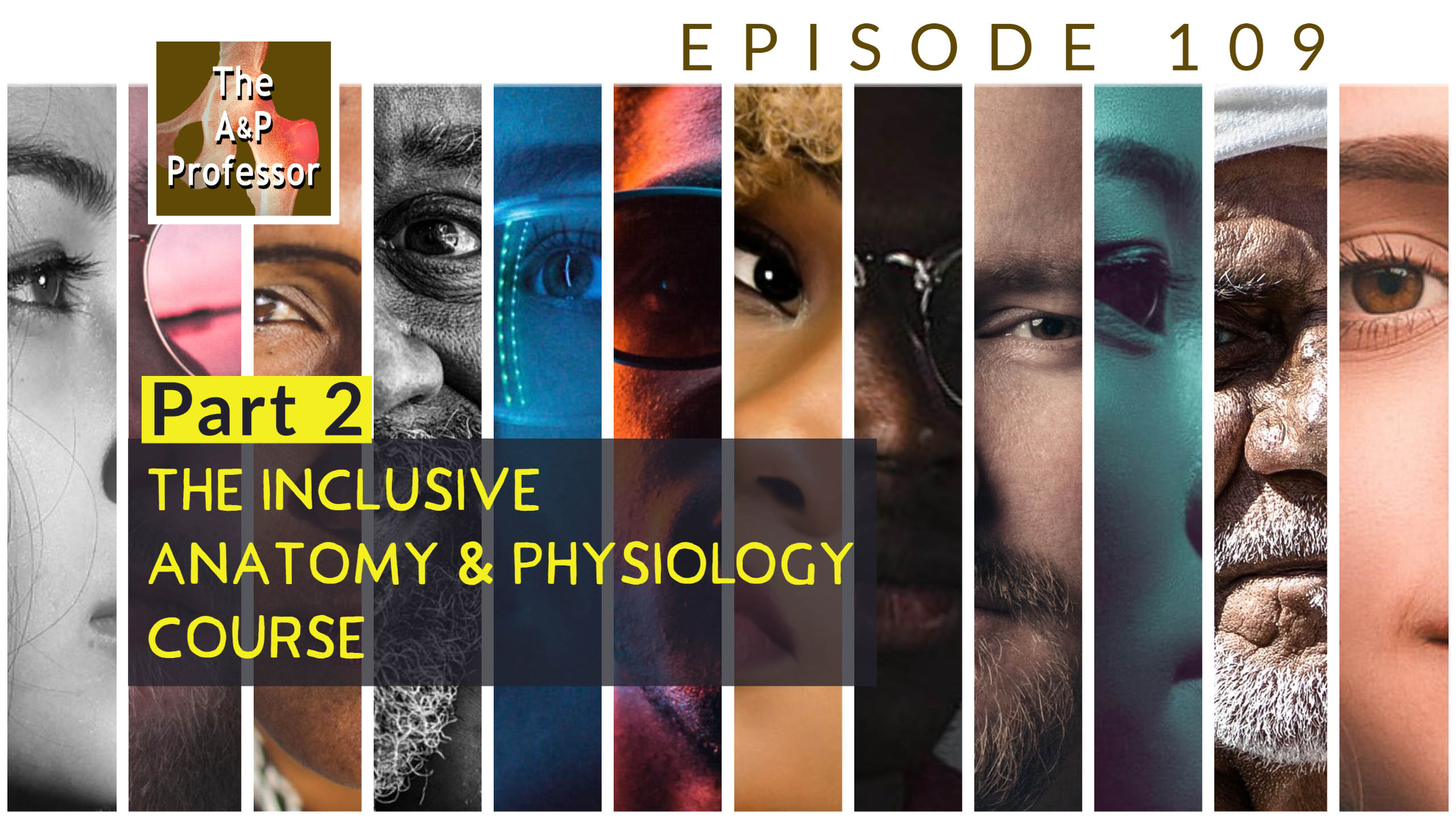
The Inclusive Anatomy & Physiology Course | Part 2 | TAPP 109


This episode continues a discussion of the many simple strategies available for making our anatomy and physiology course more inclusive. Here, we learn eight more easy ways to make our courses work better for all learners.

0:00:00 | Introduction

0:00:46 | More on the Inclusive Course

0:07:51 | Sponsored by AAA

0:08:38 | 8. Student Interest Survey

0:14:35 | 9. Inclusive Office Hours

0:24:22 | Sponsored by HAPI

0:25:27 | 10. Valuing Diverse Viewpoints

0:29:08 | 11. Inclusive Classroom Demeanor

0:55:44 | Sponsored by HAPS

0:56:38 | 12. Learning from Mistakes

0:58:56 | 13. Suggest a Different Instructor

1:08:33 | 14. Many Challenges Are Invisible

1:13:12 | 15. Practice Love

1:16:01 | Staying Connected

★ If you cannot see or activate the audio player, go to: theAPprofessor.org/podcast-episode-109.html

🏅 Apply for your credential (badge/certificate) for listening to this episode: theAPprofessor.org/podcast-episode-109.html/#badge

❓ Please take the anonymous survey: theAPprofessor.org/survey

☝️ Questions & Feedback: 1-833-LION-DEN (1-833-546-6336)

✔️ Follow The A&P Professor on Twitter, Facebook, Blogger, Revue, Tumblr, or Instagram! @theAPprofessor

📰 Get the almost-daily TAPP Science & Education Updates theAPprofessor.org/updates

Good teaching cannot be reduced to technique; good teaching comes from the identity and integrity of the teacher. (Parker Palmer)


More on the Inclusive Course

7 minutes

This episode—and the previous one—discuss a large basket of practical ways we can make our anatomy and physiology course more inclusive. Here, we review the previous 7 tips and then set the stage for 8 more tips. And some news and updates.

★ Association of College & University Eductators (ACUE) toolkit (various resources for the inclusive course) AandP.info/inclusive-teaching-6be1c1

★ ADVANCING DIVERSITY AND INCLUSION IN HIGHER EDUCATION (report on benefits of making courses inclusive) AandP.info/8879cb

★ Burnout! A Chat with Rebecca Pope-Ruark | TAPP 91

★ Unraveling Faculty Burnout: Pathways to Reckoning and Renewal Paperback by Rebecca Pope-Ruark (Author) geni.us/EBSTK

★ Dr. Amanda J. Meyer on Twitter @amandameyerphd

★ ★ Use services like https://cloud.name-coach.com or https://namedrop.io to get students to pronounce their preferred names (and pronouns if they want) so you can learn the correct way to address them

★ HAPS Town Hall Archives AandP.info/HAPStownhall


Sponsored by AAA

1 minute

A searchable transcript for this episode, as well as the captioned audiogram of this episode, are sponsored by the American Association for Anatomy (AAA) at anatomy.org.

Searchable transcript

Captioned audiogram 

Don't forget—HAPS members get a deep discount on AAA membership!

AAA logo

8. Student Interest Survey

6 minutes

The more we know about students, the more we can figure out ways to include them in our course.

★ Answer Garden (the Answer Garden for Kevin's Pre-A&P course) https://answergarden.ch/164268

★ ACUE toolkit #8 (resources related to this tip)AandP.info/inclusive-teaching-2986ca


9. Inclusive Office Hours

9.5 minutes

Are our office hours set up for our own convenience? Or do they instead reflect the diverse needs of our students? Learn how Kevin customizes his office hours by using an online scheduler.

★ ACUE toolkit #9 (resources related to this tip) AandP.info/inclusive-teaching-e4fcde

★ Kevin's online scheduler (combined view at AcuityScheduling; only the "student' appointment is linked in the course syllabus) AandP.info/kevin-schedule

★ Link to other scheduling apps: AandP.info/best-scheduling-79b8df


Sponsored by HAPI Online Graduate Program

1 minute

The Master of Science in Human Anatomy & Physiology Instruction—the MS-HAPI—is a graduate program for A&P teachers, especially for those who already have a graduate/professional degree. A combination of science courses (enough to qualify you to teach at the college level) and courses in contemporary instructional practice, this program helps you be your best in both on-campus and remote teaching. Kevin Patton is a faculty member in this program at Northeast College of Health Sciences. Check it out!

northeastcollege.edu/hapi

Logo of Northeast College of Health Sciences, Human Anatomy & Physiology Instruction


10. Valuing Diverse Viewpoints

3.5 minutes

If we set expectations for valuing diverse viewpoints in our course—especially with the help (and buy-in) of our students—we can ramp up the inclusiveness of our course.

★ ACUE toolkit #10 (resources related to this tip) AandP.info/inclusive-teaching-086228


11. Inclusive Classroom Demeanor

26.5 minutes

A playful class atmosphere is—by its very nature—an inclusive classroom atmosphere. The more flexible and playful our course is, the more inclusive it can become.

★ Playful & Serious Is the Perfect Combo for A&P | Episode 13

★ Why Deadlines Are Important (blog post for A&P students; recommends meeting deadlines but suggests asking for flexibility when needed; link to this post from your course) theAPstudent.blogspot.com/2013/10/why-deadlines-are-important.html

★ Faculty Mindsets & Minority Student Achievement Gaps | Journal Club | TAPP 71


Sponsored by HAPS

1 minute

The Human Anatomy & Physiology Society (HAPS) is a sponsor of this podcast.  You can help appreciate their support by clicking the link below and checking out the many resources and benefits found there. Watch for virtual town hall meetings and upcoming regional meetings!

Anatomy & Physiology Society

theAPprofessor.org/haps

HAPS logo


12. Learning from Mistakes

2.5 minutes

We cannot evolve to be more inclusive faculty if we do not recognize and correct our mistakes.

★ Making Mistakes Teaching Anatomy & Physiology | Episode 63


13. Suggest a Different Instructor

9.3 minutes

Sometimes, things simply do not click between you and a student—possibly thwarting their success. If possible, a student may benefit from switching to a section with a different instructor.

★ The relationship between psychological identification with instructors and student ratings of college courses (research article from Instructional Science) AandP.info/psychological-identification-ad33fa


14. Many Challenges Are Invisible

4.5 minutes

If we are on the lookout only for visible diversity and visible challenges our students may face, we are going to miss the many different invisible challenges. If we want our course to be more inclusive, we must consider the invisible.

★ Invisible Disabilities and Postsecondary Education (article from DO-IT) AandP.info/invisible-disabilities-cc24a5

★ Disability and Higher Education: “But You Don’t Look Disabled": Legitimizing Invisible Disabilities (article from the UN) AandP.info/disability-higher-d12803


15. Practice Love

5 minutes

Practicing love—compassion, empathy, and kindness—for all our students is the foundational strategy that underlies all the tips the given in these two episodes on making our course more inclusive.

★ The Value of Empathy in Academia: Why You Should Care (article from American Society for Microbiology) AandP.info/value-empathy-795792


If the hyperlinks here are not active, go to TAPPradio.org to find the episode page.

★ More details at the episode page: theAPprofessor.org/podcast-episode-109.html

★ Transcript available in the transcript box: theAPprofessor.org/podcast-episode-109.html

★ Need help accessing resources locked behind a paywall? Check out this advice from Episode 32 to get what you need! my-ap.us/paywall

Take The A&P Professor experience to the next level!

★ theAPprofessor.org/community

Earn cash by referring other A&P faculty to this podcast:

★ theAPprofessor.org/refer

Tools & Resources

★ TAPP Science & Education Updates: theAPprofessor.org/updates

★ Amazon: amzn.to/2r6Qa3J

★ Text Expander: theapprofessor.org/textexpander

★ Rev.com: try.rev.com/Cw2nZ

★ Snagit & Camtasia: techsmith.pxf.io/9MkPW

★ Krisp Free Noise-Cancelling App: theAPprofessor.org/krisp

★ JotForm (build forms for free): theAPprofessor.org/jotform

★ The A&P Professor Logo Items: https://www.teepublic.com/stores/the-a-p-professor

Sponsors

★ Transcript and captions for this episode are supported by the American Association for Anatomy | anatomy.org

★ The Human Anatomy & Physiology Society provides marketing support for this podcast | theAPprofessor.org/haps

★ Distribution of this episode is supported by the Northeast College of Health Sciences online graduate program in Human Anatomy & Physiology Instruction (HAPI) | northeast.edu/hapi

Clicking on sponsor links helps let them know you appreciate their support of this podcast!

Follow The A&P Professor on  Twitter, Facebook, Blogger, Revue, Tumblr, or Instagram @theAPprofessor

The A&P Professor® and Lion Den® are registered trademarks of Lion Den Inc. (Kevin Patton)

As an Amazon Associate I earn from qualifying purchases. I may be compensated for links to sponsors and certain other links.


Click here to listen to this episode—or access the detailed notes and transcript.

Tuesday, February 1, 2022

The Inclusive Anatomy & Physiology Course | Part 1 | TAPP 108


As anatomy and physiology faculty, we put a lot of effort into developing strategies for learning the core concepts of human biology. It's easy to forget to build in some inclusive strategies that help all students grow and succeed. In this first of two episode, host Kevin Patton begins a list of simple and effective ways to make our A&P course more inclusive.

00:00 | Introduction

00:46 | The Inclusive Course

04:45 | 1. Reflect Diversity

12:21 | 2. Accessible Resources

21:06 | Sponsored by AAA

21:52 | 3. Inclusive Syllabus

26:03 | 4. Use Inclusive Language

30:25 | Sponsored by HAPI

31:30 | 5. Gender Pronouns

34:09 | 6. Use Preferred Names

40:47 | Sponsored by HAPS

41:40 | 7. Small Group Introductions

46:26 | Staying Connected


★ If you cannot see or activate the audio player, go to: theAPprofessor.org/podcast-episode-108.html

🏅 Apply for your credential (badge/certificate) for listening to this episode: theAPprofessor.org/podcast-episode-108.html/#badge

❓ Please take the anonymous survey: theAPprofessor.org/survey

☝️ Questions & Feedback: 1-833-LION-DEN (1-833-546-6336)

✔️ Follow The A&P Professor on Twitter, Facebook, Blogger, Revue, Tumblr, or Instagram! @theAPprofessor

📰 Get the almost-daily TAPP Science & Education Updates theAPprofessor.org/updates

Inclusive, good-quality education is a foundation for dynamic and equitable societies. (Desmond Tutu)


The Inclusive Course

4 minutes

This episode—and the next one—discuss a large basket of practical ways we can make our anatomy and physiology course more inclusive.

★ Association of College & University Eductators (AUCE) toolkit (various resources for the inclusive course) AandP.info/inclusive-teaching-6be1c1

★ ADVANCING DIVERSITY AND INCLUSION IN HIGHER EDUCATION (report on benefits of making courses inclusive) AandP.info/8879cb

collage of varied faces with text: The Inclusive Anatomy & Physiology Course | Part 1 | TAPP 108


1. Reflect Diversity

7.5 minutes

Think about how we can reflect diversity in our society and in our world.

★ AUCE toolkit #1 (resources related to this tip) AandP.info/inclusive-teaching-da7061

★ Finding Media | Images and More for Teaching Anatomy & Physiology

★ Mind The Gap: Black and Brown Skin (example from the TAPP Finding Media page) AandP.info/mind-gap-b1b44b


2. Accessible Resources

7.5 minutes

Are our resources accessible to all students—and not just those students in our course right now?

★ AUCE toolkit #2 (resources related to this tip) AandP.info/inclusive-teaching-cf24ea

★ Episode page transcript link (for this episode) theAPprofessor.org/podcast-episode-108.html#episode-transcript

★ TAPPapp | The Free App for Listening to The A&P Professor podcast (each episode has an embedded transcript)

★ The A&P Professor at ListenNotes.com (time-coded transcript of each episode available) AandP.info/TAPPlistennotes


Sponsored by AAA

1 minute

A searchable transcript for this episode, as well as the captioned audiogram of this episode, are sponsored by the American Association for Anatomy (AAA) at anatomy.org.

Searchable transcript

Captioned audiogram 

Don't forget—HAPS members get a deep discount on AAA membership!

AAA logo


3. Inclusive Syllabus

4 minutes

Are there opportunities in our syllabus to be more inclusive?

★ AUCE toolkit #3 (resources related to this tip) https://aandp.info/inclusive-teaching-4e7522

★ The Syllabus Special | TAPP 75 (includes discussion of Test Zero)

★ Diversity Statement On a Syllabus (one of many how-to articles available to help you) AandP.info/diversity-statement-ee204a

★ Kevin's syllabus (my Pre-A&P syllabus has a number of features that promote inclusion; did I miss something? If so, let me know!) lionden.com/fis.htm

★ Kevin's pronoun page (every time I use (he/him), including my syllabus, I link it to this page) lionden.com/pronouns.htm


4. Use Inclusive Language

4.5 minutes

Our language is evolving to be more inclusive—both in science and in society at large. Keeping up with and using inclusive language makes our course more inclusive.

★ AUCE toolkit #4 (resources related to this tip) AandPaandp.info/inclusive-teaching-99dda9

★ Doing the Work of Diversity, Equity, and Inclusion (my essay on inclusion in textbboks) AandP.info/935b73


Sponsored by HAPI Online Graduate Program

1 minute

The Master of Science in Human Anatomy & Physiology Instruction—the MS-HAPI—is a graduate program for A&P teachers, especially for those who already have a graduate/professional degree. A combination of science courses (enough to qualify you to teach at the college level) and courses in contemporary instructional practice, this program helps you be your best in both on-campus and remote teaching. Kevin Patton is a faculty member in this program at Northeast College of Health Sciences. Check it out!

northeastcollege.edu/hapi

Logo of Northeast College of Health Sciences, Human Anatomy & Physiology Instruction


5. Gender Pronouns

2.5 minutes

Using our preferred gender pronouns invites students to be their authentic selves in our course.

★ AUCE toolkit #5 (resources related to this tip) https://aandp.info/inclusive-teaching-040d88

★ More on Eponyms in A&P Terminology | Episode 41 (episode where I discuss preferred pronouns)

★ Kevin's pronoun page (every time I use (he/him) I link it to this page) lionden.com/pronouns.htm


6. Use Preferred Names

6.5 minutes

Using a student's preferred name—not necessarily the one on the roster and not necessarily the version can can pronounce more easily—values a student's personal identity and therefore improves inclusion in our course. Preferred pronunciation of their name is important, too.

★ AUCE toolkit #6 (resources related to this tip) AandP.info/inclusive-teaching-e8c082
Ep 41

★ More on Eponyms in A&P Terminology | Episode 41 (episode where I discuss using personal names)


Sponsored by HAPS

1 minute

The Human Anatomy & Physiology Society (HAPS) is a sponsor of this podcast.  You can help appreciate their support by clicking the link below and checking out the many resources and benefits found there. Watch for virtual town hall meetings and upcoming regional meetings!

Anatomy & Physiology Society

theAPprofessor.org/haps

HAPS logo


7. Small Group Introductions

5 minutes

Starting the course with opportunities for students to introduce themselves in small groups can jumpstart the building of an inclusive course culture.

★ AUCE toolkit #7 (resources related to this tip) https://aandp.info/inclusive-teaching-e08b9e

★ The Syllabus Special | TAPP 75 (where I describe my first-day, small-group introduction activity)


If the hyperlinks here are not active, go to TAPPradio.org to find the episode page.

★ More details at the episode page: theAPprofessor.org/podcast-episode-108.html

★ Transcript available in the transcript box: theAPprofessor.org/podcast-episode-108.html

★ Need help accessing resources locked behind a paywall? Check out this advice from Episode 32 to get what you need! my-ap.us/paywall

Take The A&P Professor experience to the next level!

★ theAPprofessor.org/community

Earn cash by referring other A&P faculty to this podcast:

★ theAPprofessor.org/refer

Tools & Resources

★ TAPP Science & Education Updates: theAPprofessor.org/updates

★ Amazon: amzn.to/2r6Qa3J

★ Text Expander: theapprofessor.org/textexpander

★ Rev.com: try.rev.com/Cw2nZ

★ Snagit & Camtasia: techsmith.pxf.io/9MkPW

★ Krisp Free Noise-Cancelling App: theAPprofessor.org/krisp

★ JotForm (build forms for free): theAPprofessor.org/jotform

★ The A&P Professor Logo Items: https://www.teepublic.com/stores/the-a-p-professor

Sponsors

★ Transcript and captions for this episode are supported by the American Association for Anatomy | anatomy.org

★ The Human Anatomy & Physiology Society provides marketing support for this podcast | theAPprofessor.org/haps

★ Distribution of this episode is supported by the Northeast College of Health Sciences online graduate program in Human Anatomy & Physiology Instruction (HAPI) | northeast.edu/hapi

Clicking on sponsor links helps let them know you appreciate their support of this podcast!

Follow The A&P Professor on  Twitter, Facebook, Blogger, Revue, Tumblr, or Instagram @theAPprofessor

The A&P Professor® and Lion Den® are registered trademarks of Lion Den Inc. (Kevin Patton)

As an Amazon Associate I earn from qualifying purchases. I may be compensated for links to sponsors and certain other links.


Click here to listen to this episode—or access the detailed notes and transcript.

Wednesday, January 19, 2022

Directions in A&P Teaching | Where We've Been & Where We Are Going | Future Trends | TAPP 107


Episode 107 of The A&P Professor podcast for anatomy & physiology faculty starts off its fifth season with a debriefing of the last year, just like we do with our teaching, plus a look ahead. We'll review host Kevin Patton's predictions from last year and make some new predictions for this year. And makes some plans, too.

0:00:00 | Introduction

0:01:19 | Look Back: Milestones & New Projects

0:19:17 | 2021 Topics: Teaching & Learning

0:35:29 | Remembering Linda Swisher

0:37:00 | 2021 Topics: Science Updates

0:43:22 | Our Sponsors

0:47:23 | 2021 Predictions Revisited

0:58:06 | Look Forward: New Habits

1:02:04 | Look Forward: 2022 Predictions

1:17:05 | Staying Connected

★ If you cannot see or activate the audio player, go to: theAPprofessor.org/podcast-episode-107.html

🏅 Apply for your credential (badge/certificate) for listening to this episode: theAPprofessor.org/podcast-episode-107.html/#badge

❓ Please take the anonymous survey: theAPprofessor.org/survey

☝️ Questions & Feedback: 1-833-LION-DEN (1-833-546-6336)

✔️ Follow The A&P Professor on Twitter, Facebook, Blogger, Revue, Tumblr, or Instagram! @theAPprofessor

📰 Get the almost-daily TAPP Science & Education Updates theAPprofessor.org/updates

May this be the day
We come together.


Mourning, we come to mend,
Withered, we come to weather,


Torn, we come to tend,
Battered, we come to better.


Tethered by this year of yearning,
We are learning
That though we weren't ready for this,
We have been readied by it.


Steadily we vow that no matter
How we are weighed down,
We must always pave a way forward.

(Amanda Gorman)


Look Back: Milestones & New Projects

18 minutes

We look back at some significant events new initiatives of the past year/season.

★ Test Debriefing Boosts Student Learning | Episode 11

★ theAPprofessor.org/2021

★ theAPprofessor.org/bookclub

★ theAPprofessor.org/updates

★ theAPprofessor.org/107

★ theAPprofessor.org/youtube

★ theAPprofessor.org/listennotes

★ theAPprofessor.org/TAPP app

★ theAPprofessor.org/pandemicteaching

★ theAPprofessor.org/community

★ linkedin.com/company/theapprofessor

★ theAPprofessor.org/survey

Directions in A&P Teaching | Where We've Been & Where We Are Going | Future Trends | TAPP 107


2021 Topics: Teaching & Learning

16 minutes

We look at the major themes and topics in teaching and learning over the past season. It's a good way to remind ourselves of topics we want to go back and revisit, as well as remind ourselves of what we heard over the last year.

★ theAPprofessor.org/2021

★ theAPprofessor.org/journalclub

★ theAPprofessor.org/bookclub


Remembering Linda Swisher

1.5 minutes

A brief tribute to nurse and A&P educator Linda Swisher.

★ AandP.info/linda-0f88b6


2021 Topics: Science Updates

6.5 minute

Wow. We covered a lot of different discoveries and other updates in the concepts and content of human science.

★ theAPprofessor.org/2021


Our Sponsors

4 minutes

Thanks to our three faithful sponsors! They're our sponsors because of a shared mission. And because they're really nice! Please remember to thank them next time you interact with them. Or maybe just do it now.

★ American Association for Anatomy (AAA)  anatomy.org

★ ★ Searchable transcript

★ ★ Captioned audiogram 

★ Master of Science in Human Anatomy & Physiology Instruction (the HAPI degree) northeastcollege.edu/hapi

★ Human Anatomy & Physiology Society (HAPS) the APprofessor.org/haps


2021 Predictions Revisited

10.5 minute

How did Kevin do in his predictions from last year's debriefing episode?

★ theAPprofessor.org/community

★ 86 | What a Year! | Pandemic Teaching & More | A Reflection (last year's January episode)


Look Forward: New Habits

4 minutes

Find out Kevin's commitment to a new habit. And a request for your help!

★ theAPprofessor.org/community


Look Forward: 2022 Predictions

15 minutes

Hmmm. What are Kevin's psychic predictions for 2022? What are YOUR predictions? (Let us know!)

★ Textbook & Academic Authors Association (TAA) initiative on diversity, equity, and inclusion AandP.info/diversity-equity-ff35d3


If the hyperlinks here are not active, go to TAPPradio.org to find the episode page.

★ More details at the episode page: theAPprofessor.org/podcast-episode-107.html

★ Transcript available in the transcript box: theAPprofessor.org/podcast-episode-107.html

★ Need help accessing resources locked behind a paywall? Check out this advice from Episode 32 to get what you need! my-ap.us/paywall

Take The A&P Professor experience to the next level!

★ theAPprofessor.org/community

Earn cash by referring other A&P faculty to this podcast:

★ theAPprofessor.org/refer

Tools & Resources

★ TAPP Science & Education Updates: theAPprofessor.org/updates

★ Amazon: amzn.to/2r6Qa3J

★ Text Expander: theapprofessor.org/textexpander

★ Rev.com: try.rev.com/Cw2nZ

★ Snagit & Camtasia: techsmith.pxf.io/9MkPW

★ Krisp Free Noise-Cancelling App: theAPprofessor.org/krisp

★ JotForm (build forms for free): theAPprofessor.org/jotform

★ The A&P Professor Logo Items: https://www.teepublic.com/stores/the-a-p-professor

Sponsors

★ Transcript and captions for this episode are supported by the American Association for Anatomy | anatomy.org

★ The Human Anatomy & Physiology Society provides marketing support for this podcast | theAPprofessor.org/haps

★ Distribution of this episode is supported by the Northeast College of Health Sciences online graduate program in Human Anatomy & Physiology Instruction (HAPI) | northeast.edu/hapi

Clicking on sponsor links helps let them know you appreciate their support of this podcast!

Follow The A&P Professor on  Twitter, Facebook, Blogger, Revue, Tumblr, or Instagram @theAPprofessor

The A&P Professor® and Lion Den® are registered trademarks of Lion Den Inc. (Kevin Patton)

As an Amazon Associate I earn from qualifying purchases. I may be compensated for links to sponsors and certain other links.


Click here to listen to this episode—or access the detailed notes and transcript.
Tuesday, December 7, 2021

Ungrading With Standards-Based Grading | A Chat With Staci Johnson | TAPP 106


Dr. Staci Johnson joins host Kevin Patton for a chat about how she uses ungrading with standards-based grading in her anatomy and physiology course. What is ungrading? Can one ease into it? Does it work? Plus, a related Book Club recommendation!

00:00 | Introduction

00:48 | Ungrading

03:05 | Sponsored by AAA

03:41 | Dr. Staci Johnson

24:06 | Sponsored by HAPI

24:55 | More Ungrading

45:12 | Sponsored by HAPS

45:52 | Long Winter's Nap

48:32 | Book Club: Ungrading

51:43 | Staying Connected

★ If you cannot see or activate the audio player, go to: theAPprofessor.org/podcast-episode-106.html

🏅 Apply for your credential (badge/certificate) for listening to this episode: theAPprofessor.org/podcast-episode-106.html/#badge

❓ Please take the anonymous survey: theAPprofessor.org/survey

☝️ Questions & Feedback: 1-833-LION-DEN (1-833-546-6336)

✔️ Follow The A&P Professor on Twitter, Facebook, Blogger, Revue, Tumblr, or Instagram! @theAPprofessor

📰 Get the almost-daily TAPP Science & Education Updates theAPprofessor.org/updates

The more their attention is directed to how well they’re doing, the less engaged they tend to be with what they’re doing. (Susan D. Blum)


Ungrading

2 minutes

Recent episodes of this podcast have called into question the common practices in grading, which leads us to a discussion of the movement called ungrading in this episode. In later segments, we chat with Dr. Staci Johnson of Southern Wesleyan University, who is experimenting with ungrading in her courses.

★ Staci Johnson's website stacinjohnson.com

★ Grading for Proficiency | Book Club: The One World School House | TAPP 103

★ twitter.com/theAPprofessor Please follow @theAPprofessor to join the conversation!

★ Ungrading: an FAQ (from Jesse Stommel, a veteran of ungrading) AandP.info/ungrading-faq-1fcf92

★ Grades are dehumanising, but ‘ungrading’ is no simple solution (also from Jesse Stommel) AandP.info/grades-dehumanising-e6a0dc

Ungrading With Standards-Based Grading | A Chat With Staci Johnson


Sponsored by AAA

0.5 minutes

A searchable transcript for this episode, as well as the captioned audiogram of this episode, are sponsored by the American Association for Anatomy (AAA) at anatomy.org.

Searchable transcript

Captioned audiogram 

Don't forget—HAPS members get a deep discount on AAA membership!

AAA logo


Dr. Staci Johnson

20.5 minutes

The first of a two-part conversation, Staci Johnson explains what she means by ungrading with standards-based grading. Then she begins her description of ways she's been implementing these strategies in her courses.

★ Ungrading (episode 350 of Teaching in Higher Ed podcast with guest Susan D. Blum, editor of Ungrading book; mentioned in this episode) AandP.info/susan-blum-dcf0a1

★ Ungrading: Why Rating Students Undermines Learning (and What to Do Instead) (book by Susan D. Blum mentioned in this episode) https://geni.us/GY9Ds6

★ Specifications Grading: Restoring Rigor, Motivating Students, and Saving Faculty Time (book by Linda B. Nilson mentioned in this episode)  geni.us/QBoWd9W

★ HAPS Learning Outcomes (from  home page, navigate to Resources > Learning Outcomes) theAPprofessor.org/haps

Sponsored by HAPI Online Graduate Program

0.5 minute

The Master of Science in Human Anatomy & Physiology Instruction—the MS-HAPI—is a graduate program for A&P teachers, especially for those who already have a graduate/professional degree. A combination of science courses (enough to qualify you to teach at the college level) and courses in contemporary instructional practice, this program helps you be your best in both on-campus and remote teaching. Kevin Patton is a faculty member in this program at Northeast College of Health Sciences. Check it out!

northeastcollege.edu/hapi

Logo of Northeast College of Health Sciences, Human Anatomy & Physiology Instruction


More Ungrading

20 minutes

Second of our two-part conversation with Staci Johnson about ungrading with standards-based grading in the anatomy and physiology course. In this segment we learn more about how things are working in Staci's courses.


Sponsored by HAPS

0.5 minute

The Human Anatomy & Physiology Society (HAPS) is a sponsor of this podcast.  You can help appreciate their support by clicking the link below and checking out the many resources and benefits found there. Watch for virtual town hall meetings and upcoming regional meetings!

Anatomy & Physiology Society

theAPprofessor.org/haps

HAPS logo


Long Winter's Nap

2.5 minutes

This is the last episode of 2021. The next episode is planned for release in the third week of January 2022. That episode will be a look back at the last year, including checking out how Kevin's predictions from last year's January episode worked out. There will be new predictions for the coming year, plus some goals for new habits and new things to try. Why not call in your predictions or plans for the upcoming year? The hotline is open!

86 | What a Year! | Pandemic Teaching & More | A Reflection (last year's January episode)


Book Club

3 minutes

Our new recommendation for The A&P Professor Book Club for Anatomy and Physiology Faculty is:

★ Ungrading: Why Rating Students Undermines Learning (and What to Do Instead)

★ Edited by Susan D. Blum

★ geni.us/GY9Ds6

★ Book club entry: TAPP Book Club #42

★ Get your digital credential for reading this book: TAPP Credential B042

Book cover of Ungrading: Why Rating Students Undermines Learning (and What to Do Instead) Susan D. Blum


If the hyperlinks here are not active, go to TAPPradio.org to find the episode page.

★ More details at the episode page: theAPprofessor.org/podcast-episode-106.html

★ Transcript available in the transcript box: theAPprofessor.org/podcast-episode-106.html

★ Need help accessing resources locked behind a paywall? Check out this advice from Episode 32 to get what you need! my-ap.us/paywall

Take The A&P Professor experience to the next level!

★ theAPprofessor.org/community

Earn cash by referring other A&P faculty to this podcast:

★ theAPprofessor.org/refer

Tools & Resources

★ TAPP Science & Education Updates: theAPprofessor.org/updates

★ Amazon: amzn.to/2r6Qa3J

★ Text Expander: theapprofessor.org/textexpander

★ Rev.com: try.rev.com/Cw2nZ

★ Snagit & Camtasia: techsmith.pxf.io/9MkPW

★ Krisp Free Noise-Cancelling App: theAPprofessor.org/krisp

★ JotForm (build forms for free): theAPprofessor.org/jotform

★ The A&P Professor Logo Items: https://www.teepublic.com/stores/the-a-p-professor

Sponsors

★ Transcript and captions for this episode are supported by the American Association for Anatomy | anatomy.org

★ The Human Anatomy & Physiology Society provides marketing support for this podcast | theAPprofessor.org/haps

★ Distribution of this episode is supported by the Northeast College of Health Sciences online graduate program in Human Anatomy & Physiology Instruction (HAPI) | northeast.edu/hapi

Clicking on sponsor links helps let them know you appreciate their support of this podcast!

Follow The A&P Professor on  Twitter, Facebook, Blogger, Revue, Tumblr, or Instagram @theAPprofessor

The A&P Professor® and Lion Den® are registered trademarks of Lion Den Inc. (Kevin Patton)

As an Amazon Associate I earn from qualifying purchases. I may be compensated for links to sponsors and certain other links.


Click here to listen to this episode—or access the detailed notes and transcript.

Tuesday, November 16, 2021

Is Anatomy Finished? | A Review of New Discoveries | TAPP 105


Are there really no more discoveries in human anatomy? In this episode, I'll review some recent discoveries: the rise of the fabella, macrophage barriers, the interstitium, button and zipper junctions, lymph node micro-organs, new vessels in bones, and tubarial salivary glands.

00:00 | Introduction

00:41 | Is Anatomy Finished?

03:44 | Sponsored by AAA

04:16 | Rise of the Fabella

11:52 | Sponsored by HAPI

12:38 | Macrophage Barriers

23:18 | Sponsored by HAPS

23:55 | Interstitium

27:48 | Button and Zipper Junctions

35:28 | Lymphatic Micro-Organ

40:05 | Free Update Newsletter

41:05 | New Vessels in Bones

44:44 | Tubarial Salivary Glands

52:37 | Staying Connected

★ If you cannot see or activate the audio player, go to: theAPprofessor.org/podcast-episode-105.html

🏅 Apply for your credential (badge/certificate) for listening to this episode: theAPprofessor.org/podcast-episode-105.html/#badge

❓ Please take the anonymous survey: theAPprofessor.org/survey

☝️ Questions & Feedback: 1-833-LION-DEN (1-833-546-6336)

✔️ Follow The A&P Professor on Twitter, Facebook, Blogger, Revue, Tumblr, or Instagram! @theAPprofessor

📰 Get the almost-daily TAPP Science & Education Updates theAPprofessor.org/updates

It is not over, unless you stop trying. (Nabil N. Jamal)


Is Anatomy Finished?

3 minutes

It's easy to fall into that mindset that anatomy is "finished"—that there are no new discoveries to be made in the structure of the human body. But that's simply not the case. In this episode, Kevin reviews seven anatomical discoveries discussed in the last few years of this podcast.


Sponsored by AAA

0.5 minutes

A searchable transcript for this episode, as well as the captioned audiogram of this episode, are sponsored by the American Association for Anatomy (AAA) at anatomy.org.

Searchable transcript

Captioned audiogram 

Don't forget—HAPS members get a deep discount on AAA membership!

AAA logo


Rise of the Fabella

7.5 minutes

The fabella (pl., fabellae) is a small, beanlike bone that may (or not) occur behind the knee joint. Recent evidence shows that it's showing up  more frequently in the population. Why?

T★ he original version of this segment aired in Anatomic Variations in Humans | Fabella | Situs Inversus | Episode 43

★ Fabella prevalence rate increases over 150 years, and rates of other sesamoid bones remain constant: a systematic review (recent research article) my-ap.us/2WkRSMs

★ Sore knee? Maybe you have a fabella (plain English report from the BBC) my-ap.us/2Wmd6cN

★ Fabella x-radiograph (to use in your course) my-ap.us/2Wm6Di3

★ An illustration you can download as a PDF and use is available in the free TAPP APP theAPprofessor.org/TAPPapp

★ Improbable Destinies: Fate, Chance, and the Future of Evolution by Jonathan B. Losos  (book  on  updated  ideas  of  evolution) amzn.to/2L9fzCE

★ ★ Browse The A&P Professor Book Club my-ap.us/bookclub


fabella Fabella image: Jmarchn (my-ap.us/2Wm6Di3)


Sponsored by HAPI Online Graduate Program

0.5 minute

The Master of Science in Human Anatomy & Physiology Instruction—the MS-HAPI—is a graduate program for A&P teachers, especially for those who already have a graduate/professional degree. A combination of science courses (enough to qualify you to teach at the college level) and courses in contemporary instructional practice, this program helps you be your best in both on-campus and remote teaching. Kevin Patton is a faculty member in this program at Northeast College of Health Sciences. Check it out!

northeastcollege.edu/hapi

Logo of Northeast College of Health Sciences, Human Anatomy & Physiology Instruction


Barrier Macrophages

10.5 minutes

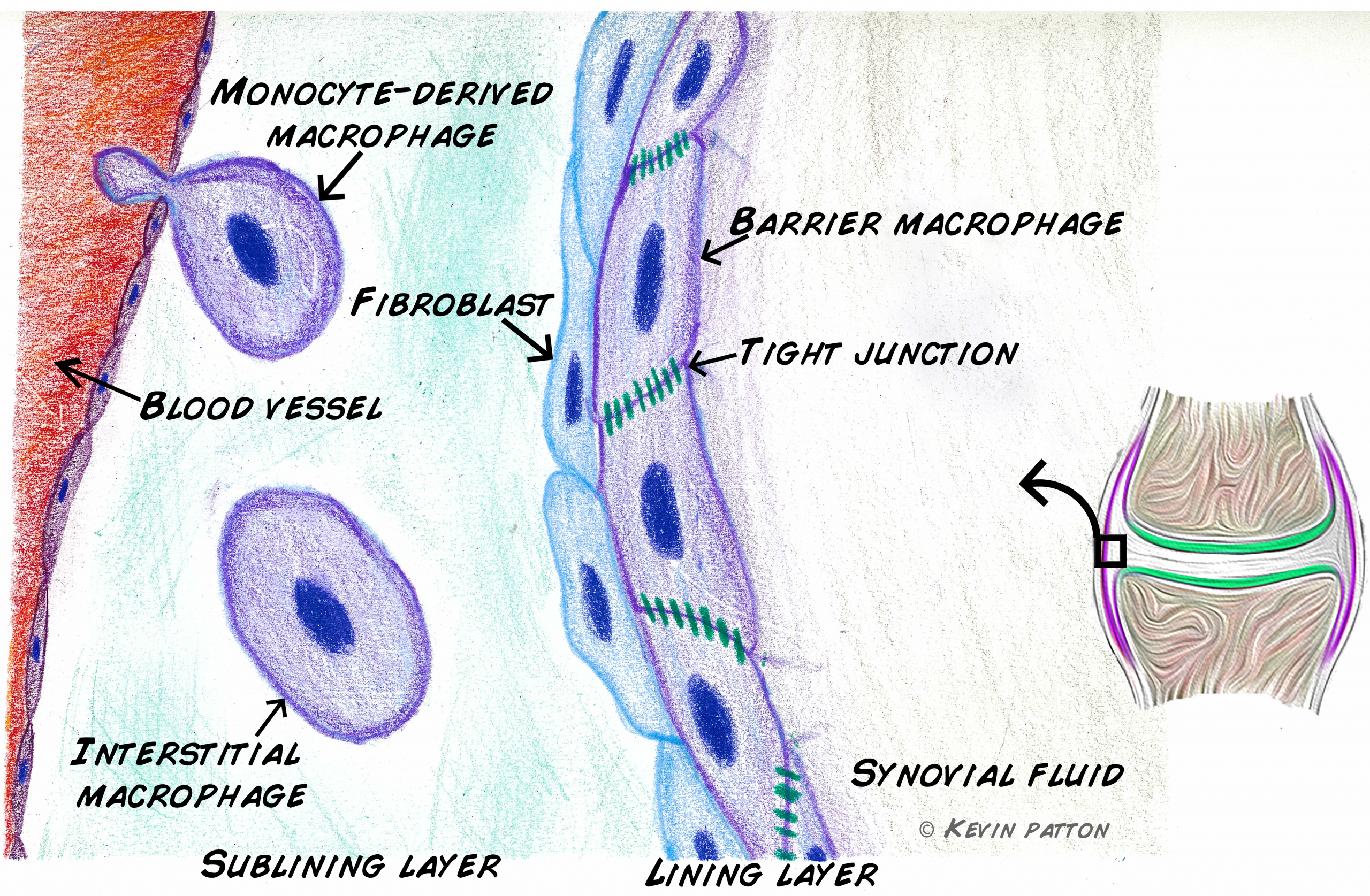
We knew there were macrophages within, and upon, the synovial membrane that lines synovial joints. What we have just learned is that macrophages on the synovial membrane surface can bind with tight junctions to form a barrier layer. Go figure.

★ The original version of this segment aired in More on Spelling, Case, & Grammar | Episode 56

★ Macrophages form a protective cellular barrier in joints (news summary) my-ap.us/33KVuLm

★ Locally renewing resident synovial macrophages provide a protective barrier for the joint (research article) my-ap.us/33H5e9H

barrier macrophages


Sponsored by HAPS

0.5 minute

The Human Anatomy & Physiology Society (HAPS) is a sponsor of this podcast.  You can help appreciate their support by clicking the link below and checking out the many resources and benefits found there. Watch for virtual town hall meetings and upcoming regional meetings!

Anatomy & Physiology Society

theAPprofessor.org/haps

HAPS logo


Interstitium

3.5 minutes

Has a new human organ discovered? Or is this news mostly hype? Or is the answer somewhere in the middle?

★ The original version of this segment first aired in Test Debriefing Boosts Student Learning | Episode 11

★ Structure and Distribution of an Unrecognized Interstitium in Human Tissues (original research report)

★ Newly-discovered human organ may help explain how cancer spreads (article about the original report)

★ That “New Organ” Everyone Is Freaking Out About Is Probably Not New (article outlining criticism of the original report)

★ Is the Interstitium Really a New Organ? (another article interprets the original report)

★ Is This Tissue a New Organ? Maybe. A Conduit for Cancer? It Seems Likely. (yet another opinion)

★ The Human Organ Discovered in 2018 (and we have another opinion)

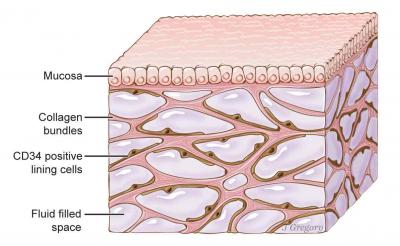
interstitium Interstitium. Illustration by Jill Gregory. Printed with permission from Mount Sinai Health System, licensed under CC-BY-ND.


Button and Zipper Junctions

7.5 minutes

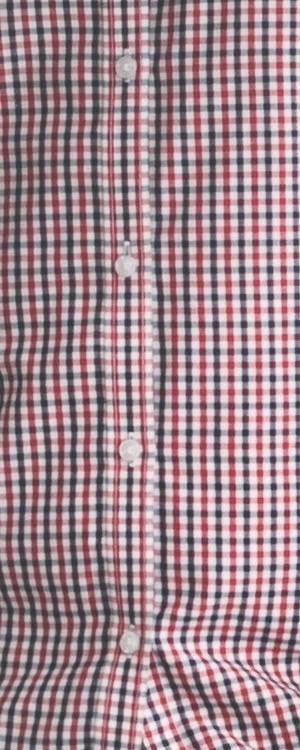
Are you familiar with the button junctions that connect overlapping endothelial cells in lymphatic capillaries in a way that forms valves? What about zippers? Where do they fit into the story? (They do.) Here are some links to the details behind a great demo that Kevin shares for understanding lymphatic structure and function.

★ The original version of this segment aired in Promoting Academic Integrity in Our Course | Episode 25

★ Functionally specialized junctions between endothelial cells of lymphatic vessels (2007 research article outlining button and zipper junctions; great images)

★ Plasticity of button-like junctions in the endothelium of airway lymphatics in development and inflammation. (2012 research article shows that zippers predominate in early development, but are then convert to buttons; also has some really cool images showing these junctions)

★ Lacteal junction zippering protects against diet-induced obesity (2018 research article)

★ ★ Tighter lymphatic junctions prevent obesity (perspective and summary of the research article; includes a nice slide you can use in teaching)

buttons


Lymphatic Micro-Organ

4.5 minutes

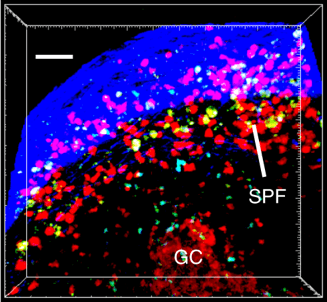
One headline announced the discovering of a new human micro-organ. It turns out, researchers have found a distinct structure just beneath the capsule of lymph nodes called the subcapsular proliferative focus (SPF) where memory B cells hang out—not deep in the germinal center (GC).  This puts them in a good position to be activated by macrophages acting as antigen-presenting cells (APCs) and mount a strong secondary immune response.

★ The original version of this segment first aired in Modeling Professional Integrity | Episode 26

★ Researchers Discover New ‘Micro-Organ’ in Human Immune System (news item about the discovery)

★ Memory B cells are reactivated in subcapsular proliferative foci of lymph nodes (research article from Nature Communications)

★ Second Harmonic Generation Imaging Microscopy: Applications to Diseases Diagnostics (describes the SHG method used to visualize the lymph node cells; see image)


Free Update Newsletter from The A&P Professor

1 minute

A newly envisioned, newly styled, digital newsletter from The A&P Professor features news stories and updates in human science and education curated by Kevin Patton. To get your copy 2-3 times each week—or to simply check out previous editions—of this free newsletter, go to theAPprofessor.org/updates 

Revue (by Twitter) logoOr fill out the form...


[revue_subscribe]


New Vessels in Bone

3.5 minutes

Scientists have discovered a system of small vessels that cross every part of a bone's cortical layers to supply most of the bone's blood—over 80% of the arterial supply and 59% of venous drainage. The proposed name is trans-cortical vessels (TCVs).

★ The original version of this segment aired in Big Year in Anatomy & Physiology Teaching with The A&P Professor | Episode 36

★ We’ve discovered a new type of blood vessel in our bones (brief article summarizing the discovery) my-ap.us/2B6tHce

★ A network of trans-cortical capillaries as mainstay for blood circulation in long bones (full research article) my-ap.us/2B6ttSq

★ Video (gif) showing a virtual trip through a TCV my-ap.us/2B6XX6H


Tubarial Salivary Glands

8 minutes

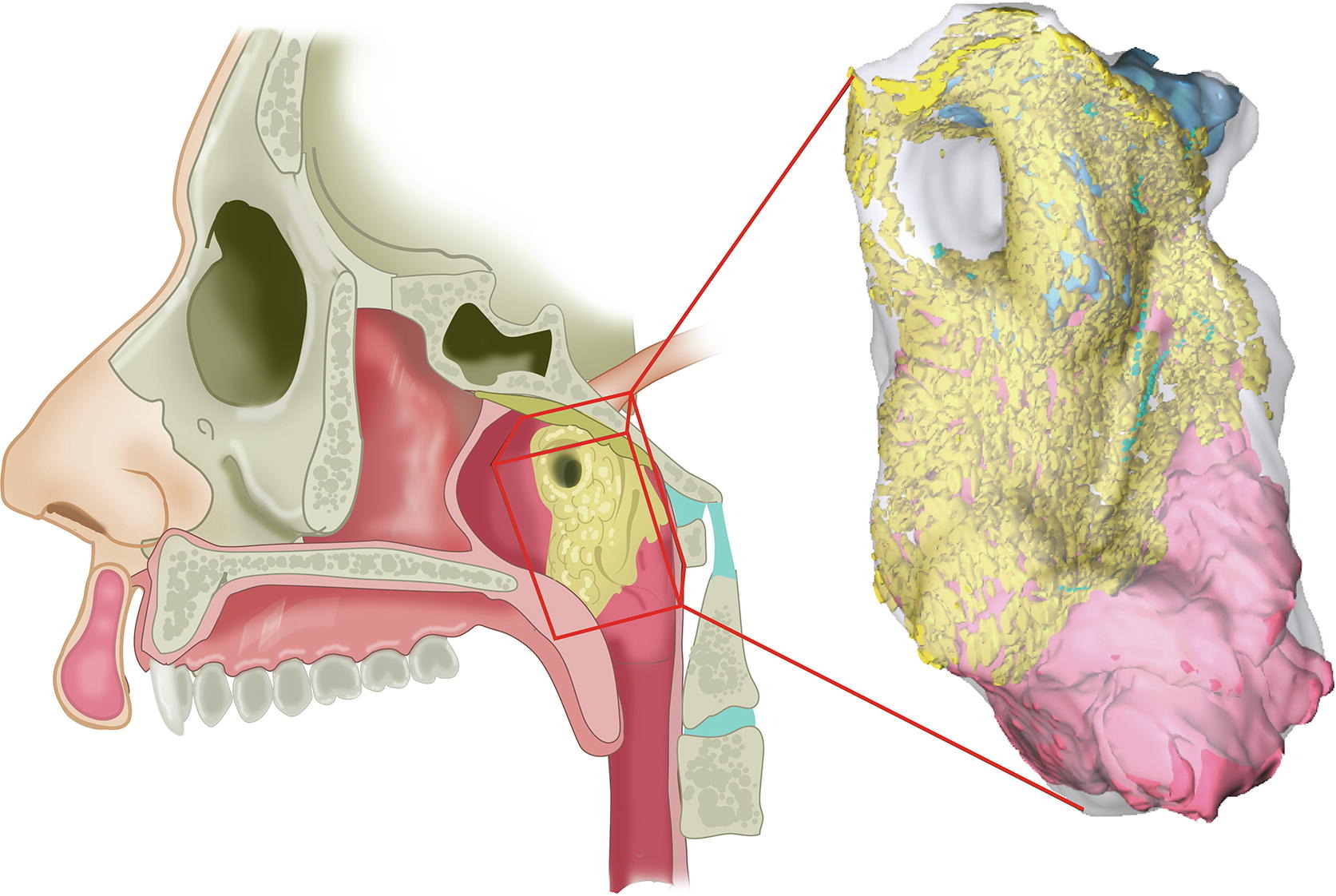
A recent paper proposes the existence of a new organ—the paired tubarial salivary gland. It's suggested that this be added as a major salivary gland along with the parotid, submandibular, and submaxillary salivary glands.

★ The original version of this segment aired in New Organ | Dam Protons | Our Secret Language | TAPP 80

★ The tubarial salivary glands: A potential new organ at risk for radiotherapy (original research article) my-ap.us/3khGFZe

★ Doctors May Have Found Secretive New Organs in the Center of Your Head (newspaper article) my-ap.us/31L4RvV

★ Cancer researchers discover new salivary gland (press release about discovery) my-ap.us/3m9mc9w

★ Image: my-ap.us/3jgsO3T (CC license)

tubarial salivary gland surrounding pharyngeal opening of auditory tube


If the hyperlinks here are not active, go to TAPPradio.org to find the episode page.

★ More details at the episode page: theAPprofessor.org/podcast-episode-105.html

★ Transcript available in the transcript box: theAPprofessor.org/podcast-episode-105.html

★ Need help accessing resources locked behind a paywall? Check out this advice from Episode 32 to get what you need! my-ap.us/paywall

Take The A&P Professor experience to the next level!

★ theAPprofessor.org/community

Earn cash by referring other A&P faculty to this podcast:

★ theAPprofessor.org/refer

Tools & Resources

★ TAPP Science & Education Updates: theAPprofessor.org/updates

★ Amazon: amzn.to/2r6Qa3J

★ Text Expander: theapprofessor.org/textexpander

★ Rev.com: try.rev.com/Cw2nZ

★ Snagit & Camtasia: techsmith.pxf.io/9MkPW

★ Krisp Free Noise-Cancelling App: theAPprofessor.org/krisp

★ JotForm (build forms for free): theAPprofessor.org/jotform

★ The A&P Professor Logo Items: https://www.teepublic.com/stores/the-a-p-professor

Sponsors

★ Transcript and captions for this episode are supported by the American Association for Anatomy | anatomy.org

★ The Human Anatomy & Physiology Society provides marketing support for this podcast | theAPprofessor.org/haps

★ Distribution of this episode is supported by the Northeast College of Health Sciences online graduate program in Human Anatomy & Physiology Instruction (HAPI) | northeast.edu/hapi

Clicking on sponsor links helps let them know you appreciate their support of this podcast!

Follow The A&P Professor on  Twitter, Facebook, Blogger, Revue, Tumblr, or Instagram @theAPprofessor

The A&P Professor® and Lion Den® are registered trademarks of Lion Den Inc. (Kevin Patton)

As an Amazon Associate I earn from qualifying purchases. I may be compensated for links to sponsors and certain other links.


Click here to listen to this episode—or access the detailed notes and transcript.